


In addition to JMU’s fundamental interest in maintaining an environmentally conscious campus, the university must also comply with several regulations administered by the Environmental Protection Agency (EPA) and the Virginia Department of Environmental Quality (DEQ). Regulations governing stormwater management practices include the Virginia Erosion and Stormwater Management Program (VESMP) Regulations, the Chesapeake Bay Preservation Act (CPBA) Regulations, and the Municipal Separate Storm Sewer System (MS4) Permit Regulations. These programs were developed to ensure that construction activities and campus operations are conducted in a manner that will protect and improve water quality. It is the responsibility of the Facilities Management Engineering & Sustainability Department to ensure compliance with state and federal regulations.
STORMWATER POLLUTION REPORTING
If you notice any illicit discharges (pollution), improper disposal or spills, have concerns about land disturbing activities, or have other potential stormwater pollution concerns, please report pollution incidents on campus to our stormwater team. You may report pollution by contacting the Stormwater Coordinator by phone at (540) 568-3174 or email at stormwater@jmu.edu.
OR you may report anonymously via our NEW Online reporting tool.
Please be prepared to give the following information if possible:
- Source of pollution
- Location of problem
- Responsible party (if known)
- Date and time
PUBLIC COMMENT PERIOD OPEN FOR BLACKS RUN & COOKS CREEK TMDL ACTION PLAN
A public comment period is now open for the Blacks Run and Cooks Creek TMDL JMU Action Plan. The public comment period will run for at least 15 days, but comments will continue to be accepted year round for this action plan. Comments on the action plan are being accepted via email to stormwater@jmu.edu by mail to JMU Stormwater Cooordinator at 181 Patterson Street, Harrisonburg, VA 22807, or by phone at 540-568-3174.
Review and download JMU's Blacks Run and Cooks Creek TMDL Action Plan.
The official public comment period has closed and the action plan has been submitted to DEQ. Public comments are still welcome and will continue to be received at any time via the contact information and methods detailed above.
STORMWATER BMP RELATED RESOURCES
Check out our over 120 stormwater management facilities on campus: Campus Stormwater BMP Map
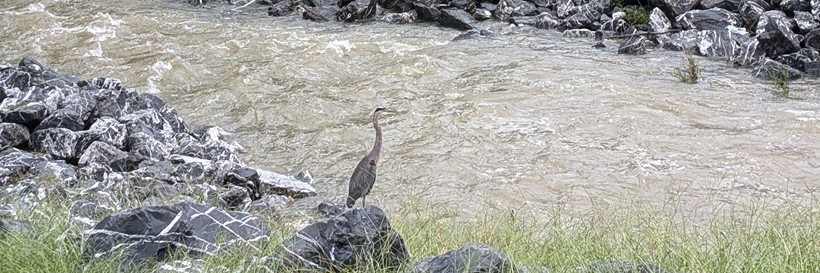
Native wildlife, such as Great Blue Herons and Black-crowned Night Herons, utilize our stormwater wet ponds for habitat: Photography - Herons of JMU
Check out our JMU Stream Buffer Maintenance Guidebook, this guides the vegetative management of our campus riparian buffers.
