


Energy Management
Reducing energy use on campus is a major priority in Facilities Management's sustainability plan. The University's guidelines for reducing energy on both an individual and management level are outlined in JMU Policy 1704. Benchmarking, commissioning, and energy auditing are a few avenues Facilities Management has undertaken or is exploring to assess energy usage on campus. In addition, Facilities Management has and will continue to engage in small maintenance projects for existing buildings that will assist in maximizing energy performance. These include LED retrofitting, HVAC upgrades, and boiler and chiller replacements.
Since 2018, Facilities Management began tracking such projects using GRITS, a sustainable project-tracking tool sponsored by the Sustainable Endowments Institute. Below is a live embedded dashboard from GRITS that shows estimated energy savings and CO2 reduction from maintenance projects undertaken by JMU since the beginning of 2018. See below for more details on these projects.
2023
2021
2019
- Boiler Replacement (Bell Hall)
- Building Setback (CHBS)
- Building Setback (Madison Hall)
- Building Setback (Showker Hall)
- Building Setback (USB Annex)
- Chiller Replacement (Jackson/Harrison Hall)
- HVAC Replacement (Anthony Seeger Hall)
- HVAC Replacement (Hillcrest House)
- HVAC Replacement (Mike Mart(JMAC))
- LED Retrofit (Champeons Parking Deck)
- LED Retrofit (East Campus Lighting)
2018
Energy & Utilities
The Facilities Management Energy and Utilities department oversees the operations and maintenance of high voltage electric systems, three steam and chiller plants, water storage and pumping facilities, and the associated distribution systems needed to transport these services to University buildings.
Energy and Utilities consists of four divisions:
Heating, Ventilation, and Air-Conditioning (HVAC)
Building Automation Shop
Our Building Automation Shop staff monitors major equipment such as air handlers, chillers, and boilers to ensure proper operation of the equipment and save energy. BAS has adopted the following sustainable measures to ensure operations are socially, economically, and environmentally responsible:
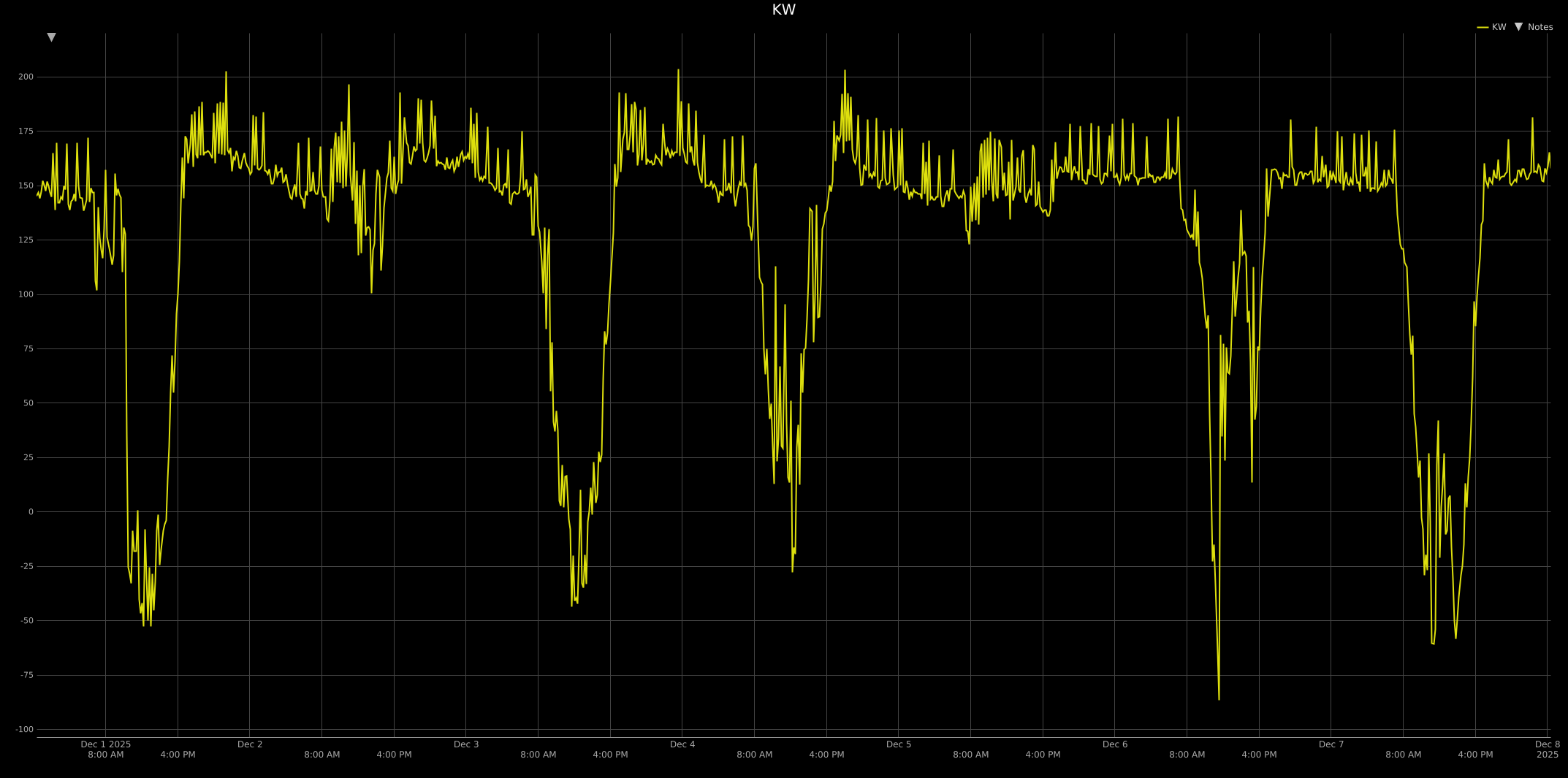
- Over 90 buildings across campus have full-featured building automation systems that allow BAS to optimize the performance and energy usage of all types of HVAC equipment by using reset schedules, trim-and-respond logic, and occupancy schedules.
- Demand ventilation systems based on CO2 levels have been installed in various buildings on campus. Demand ventilation using CO2 sensing is a combination of two technologies, a strategy that adjusts the amount of outside air based on the number of occupants and the ventilation demands those occupants create. This strategy is used to both control energy costs and assure sufficient ventilation.
- Electricitiy usage is curtailed during demand response events when requested by the Regional Transmission Organization, PJM Interconnection. Participating in demand response events enables JMU to reduce the risk of blackouts and ensure the stability of the electricity grid.
- BAS maintains a network of 119 electric meters, 63 water meters, and 27 steam meters to automate utility data collection.
Heating, Ventilation, Air-Conditioning (HVAC) and Refrigeration
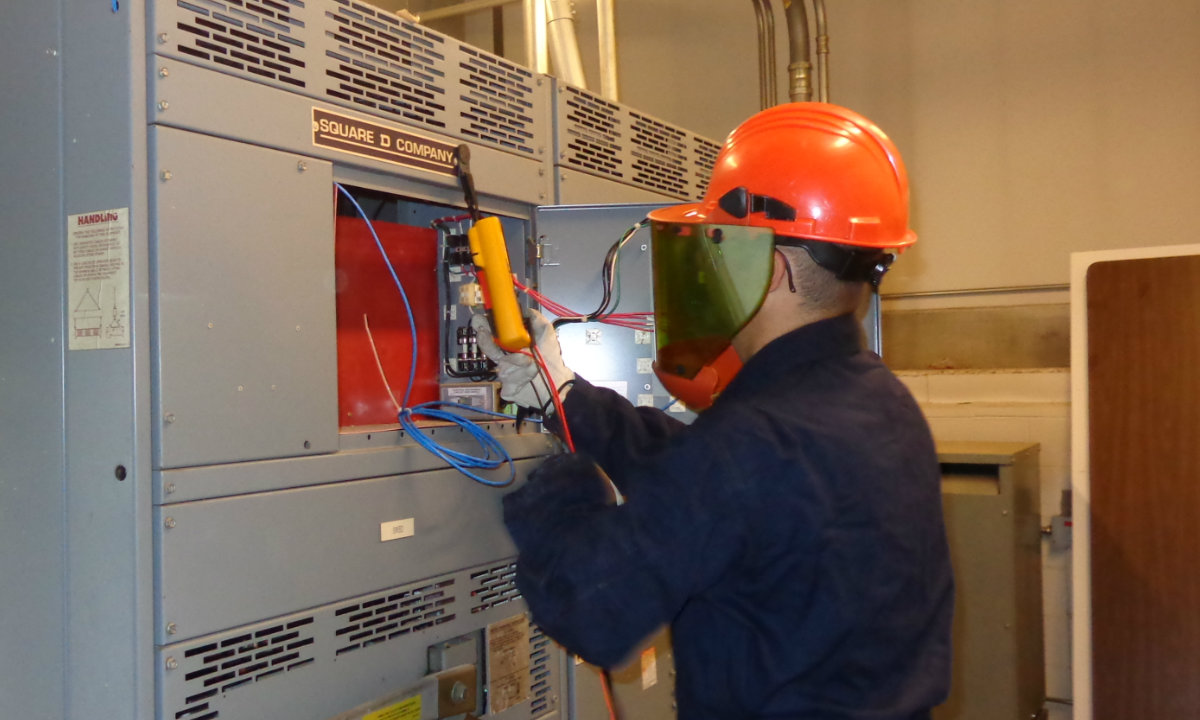
The HVAC team is responsible for providing and maintaining the heating, cooling, and ventilation systems on campus. In addition, HVAC monitors humidity and indoor air quality across a range of buildings that require special environmental conditions, including library special collections, storage units, IT rooms, as well as wood-working and metals shops. HVAC is also responsible for refrigeration operations on campus, both for dining services and athletics in addition to various specialty applications including the refrigeration of science labs, environmental capsules, and cryogenic labs. To ensure sustainability in its operations, the HVAC team has adopted the following practices:
-
-
A well-organized preventative maintenance schedule has been established to ensure optimal life expectancy of our equipment at peak performance levels.
-
Biodegradable, environmentally friendly Envircoil™ coil cleaner is used to clean AC coils.
-
Surplus equipment is donated to Massanutten Vo-Tech to provide students with training equipment and reduce the amount of units sent to the landfill.
-
Power Plants
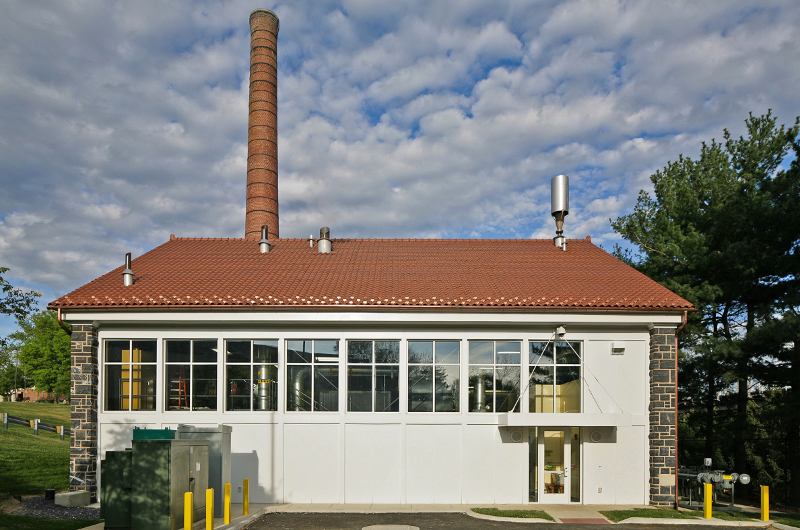
The Power Plant staff manages the steam and chiller plants on campus, which provide heating and cooling services to over 5.2 million square feet of building space on campus. Charged by JMU's commitment to sustainability, the Power Plants team has adopted the following measures:
-
-
JMU Power Plant staff has implemented a campus-wide steam trap survey to ensure peak operating efficiency. JMU currently has approximately 2,000 steam traps that are inspected twice a year.
-
Monthly inspections are performed on steam and condensate equipment in the mechanical rooms to locate and repair leaks, which reduces loss of energy campus wide.
-
Cleaning and inspection of heat exchangers and converters on hot water heaters in the central steam plant are performed annually to increase thermal efficiency of various components throughout the steam and condensate systems.
-
Combustion analysis on the central steam plant boilers are performed semi-annually to increase and maintain combustion efficiencies.
-
Variable frequency drives have been installed on all motors 5HP and above to decrease energy consumption.
-
The Power Plant staff is implementing combustion technologies with newly designed combustion controls on boilers to increase steam production and decrease emissions.
-
Burner Shop
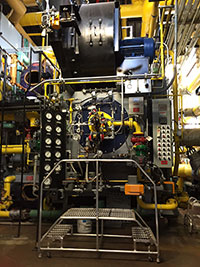
The Burner Shop staff maintains the small packaged unit boilers on campus and has adopted the following practices to incorporate sustainability in its operations:
-
-
Perform annual combustion analysis, maintain and ensure combustion efficiencies are at optimum conditions.
-
Perform annual cleaning and inspection ensure thermal efficiencies are maintained.
-
In an effort to decrease energy consumption, Energy Star™ rated products are purchased when available.
-
Use of modern combustion control systems decreases emissions and increases efficiencies.
-
