


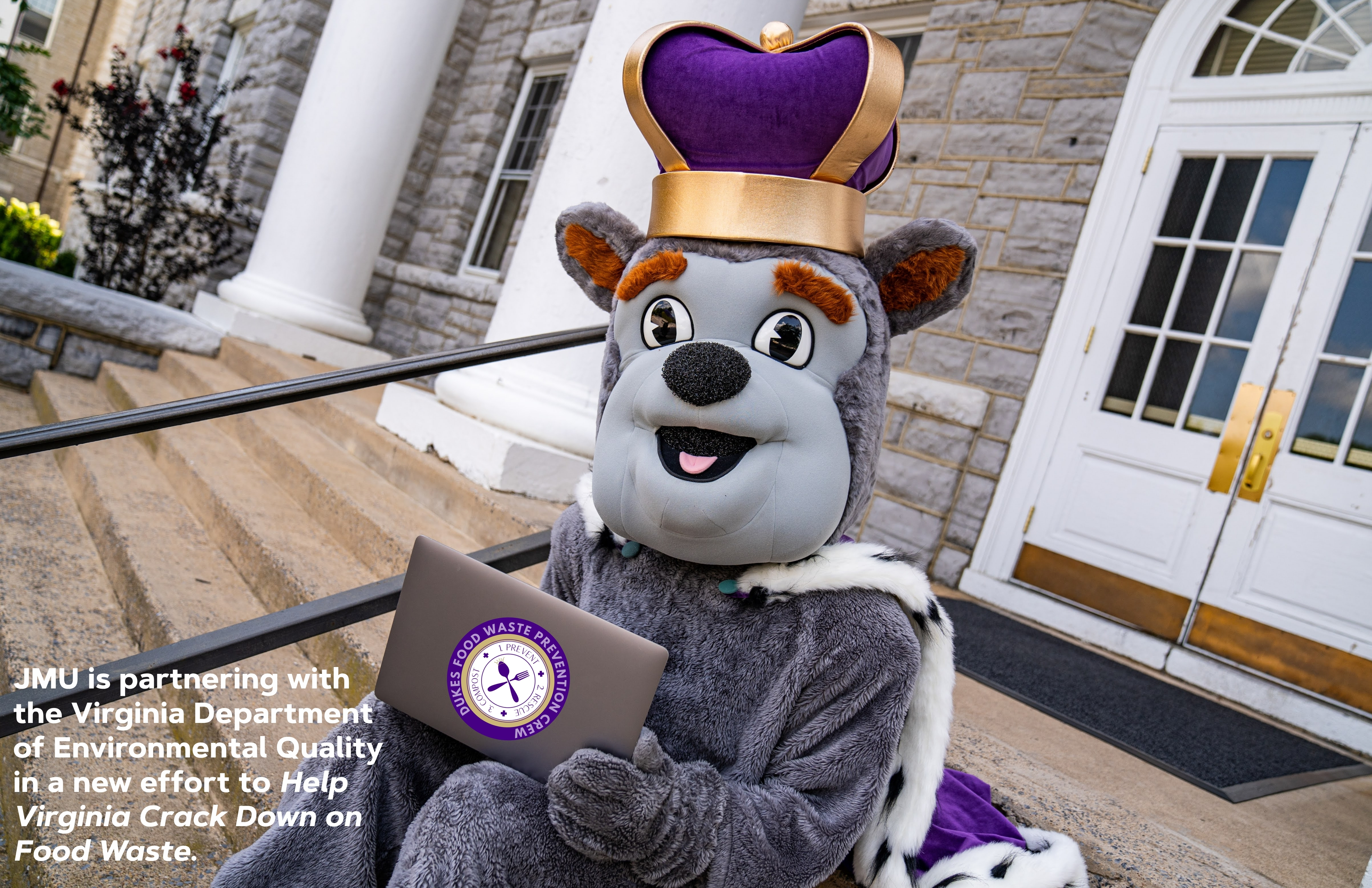
JMU has teamed with the Virginia Department of Environmental Quality (VDEQ) and other universities and colleges across Virginia to tackle food waste through prevention, rescue, and composting.
Addressing food waste offers opportunities to conserve resources, reduce greenhouse gas emissions, save money, and increase food security. In the U.S., 30 to 40 percent of the food supply is never eaten, wasting the resources used to produce food and creating many environmental impacts1. The average American spends $14 a week on the food that they don’t eat2. Food is the largest stream of materials in American trash, which once it reaches landfills, produces methane, a powerful greenhouse gas3. In 2021, 10.2 percent of U.S. households were food insecure at some time during the year. Wholesome, nutritious food should feed people, not landfills3.
While the universities can put in place tools and services, individual actions will largely determine the success of the effort. To decrease the amount of food waste sent to landfill and to support local food systems, JMU Dukes should
- Prevent waste. Take only what you will eat D-hall and E-hall, select the "low waste" option (under the "Environmental" drop box at check-out) when ordering catering online at JMU, and adopt many of the other strategies listed in the VDEQ guide.
- Rescue food. Volunteer with the JMU Community Engagement & Volunteer Center to rescue food.
- Compost. Use the composting bins at select JMU events which offer the bins. Carefully follow the signs on the bins. Expansion of the JMU consumer composting program will depend upon only accepted materials being placed in the bins. With support of volunteers from Harrisonburg Composts, community members can drop off specific compostable items anytime year-round in the permanent Black Bear Compost bins located in the gravel lot at S. Liberty and Warren Streets.


