

JMU Receives $243,387 Award to Reduce Food Waste
Environmental Stewardship


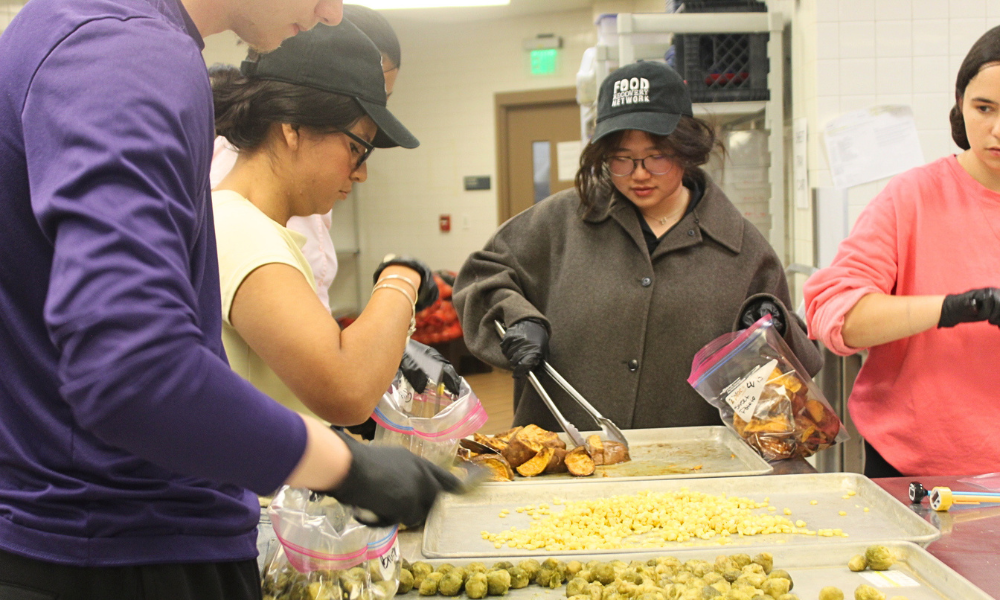
James Madison University was awarded $243,387 from the Virginia Department of Environmental Quality (DEQ) to decrease the amount of food being sent to landfill and support local food systems.
JMU is one of 12 Virginia colleges and universities competitively selected by DEQ. The funding, provided through the U.S. Environmental Protection Agency’s Climate Pollution Reduction Grant Program, will support food waste prevention, food rescue and composting initiatives.
Program activities at JMU will include:
- expanding the student-focused Wipe Out Waste interactive experience in residential dining halls
- creating a permanent student volunteer-based food recovery program
- piloting the collection, characterization, and composting of food waste generated at departmental events
- extending the dining hall composting program through summers.
The campus collaborators who will execute the program are JMU Institute for Stewardship of the Natural World, Community Engagement & Volunteer Center (CEVC), Facilities Management, Department of Engineering, and Dining Services. The initial community partners are the Food Recovery Network and Salvation Army of Harrisonburg & Rockingham County.
Christie-Joy Hartman, the project coordinator and Executive Director of JMU Institute for Stewardship of the Natural World, said, “I’m especially excited about the opportunities JMU students will have to contribute to sustainability on campus and in the community.”
JMU’s food recovery effort alone will involve hundreds of student volunteers over the three-year period of the award. Misty Newman, Associate Director of CEVC, explained that since becoming an official chapter of the Food Recovery Network in September 2024, CEVC has built a foundation for campus food recovery, in cooperation with JMU Dining Services, to deliver rescued food to the Salvation Army of Harrisonburg & Rockingham County. “The award will allow JMU to grow the program in scale and impact while embedding it deeply within the institution’s operations, staffing, and budget structure,” Newman said.


