


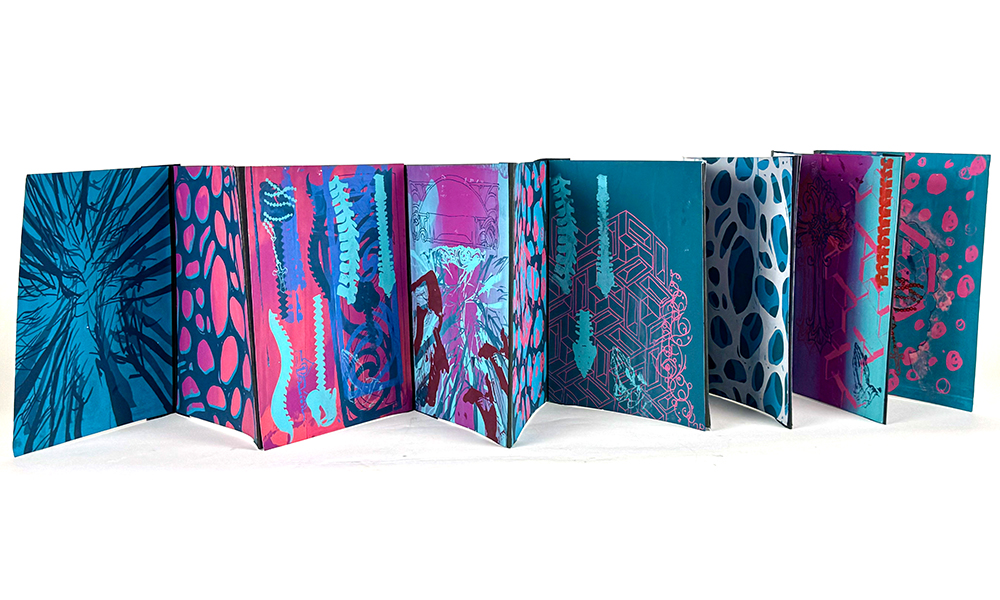
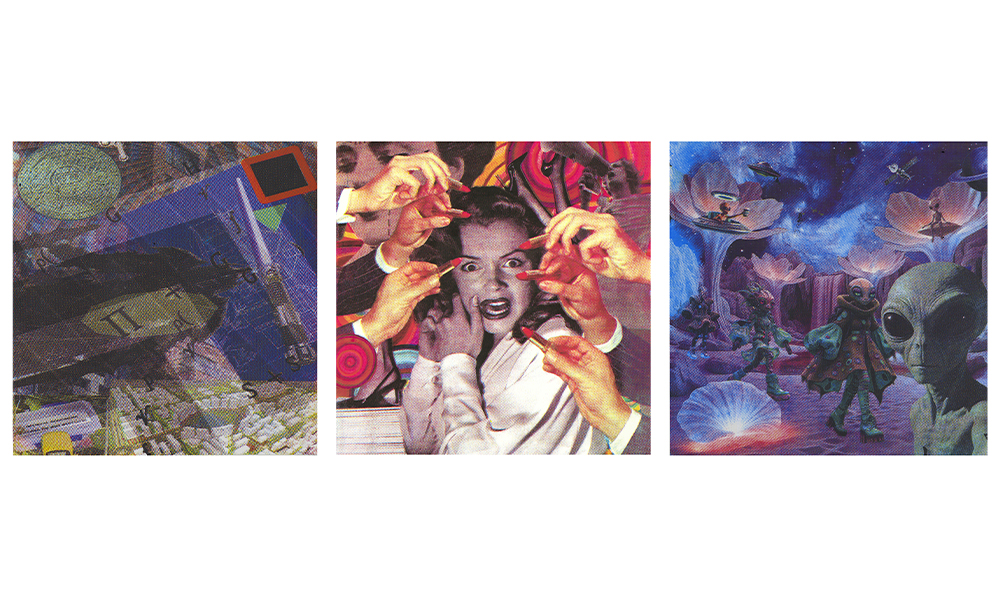
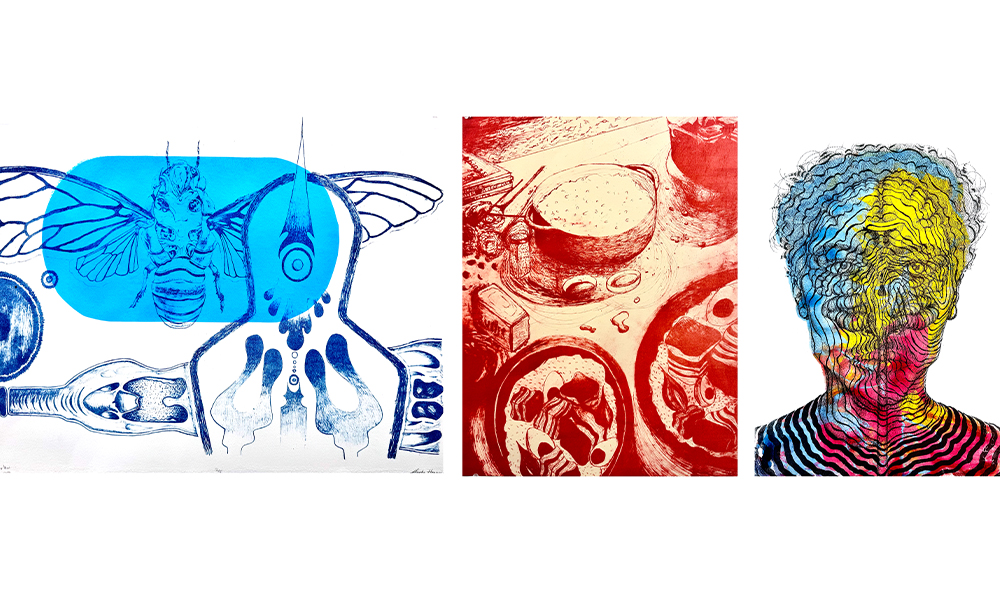
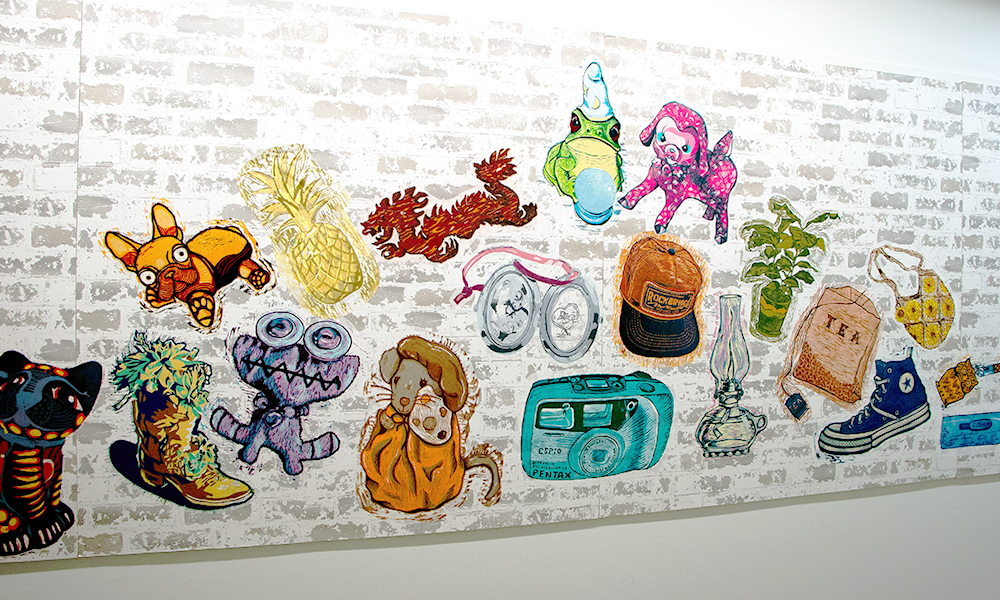
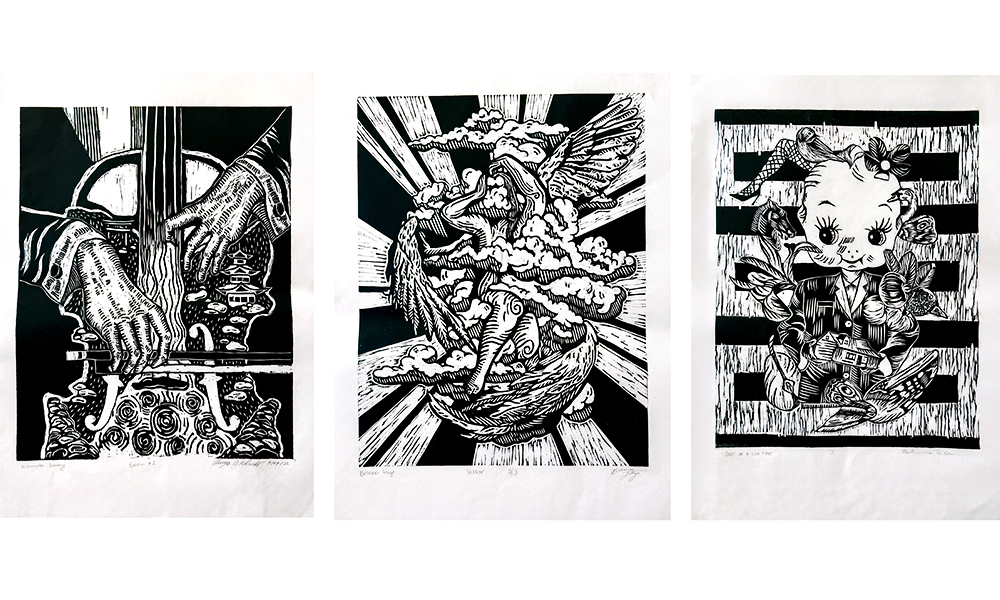
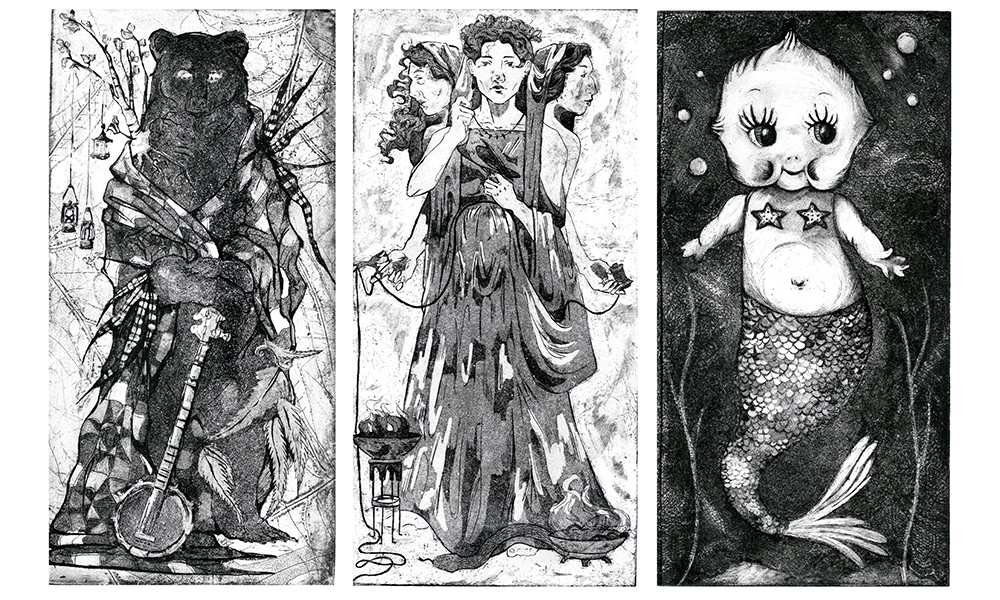
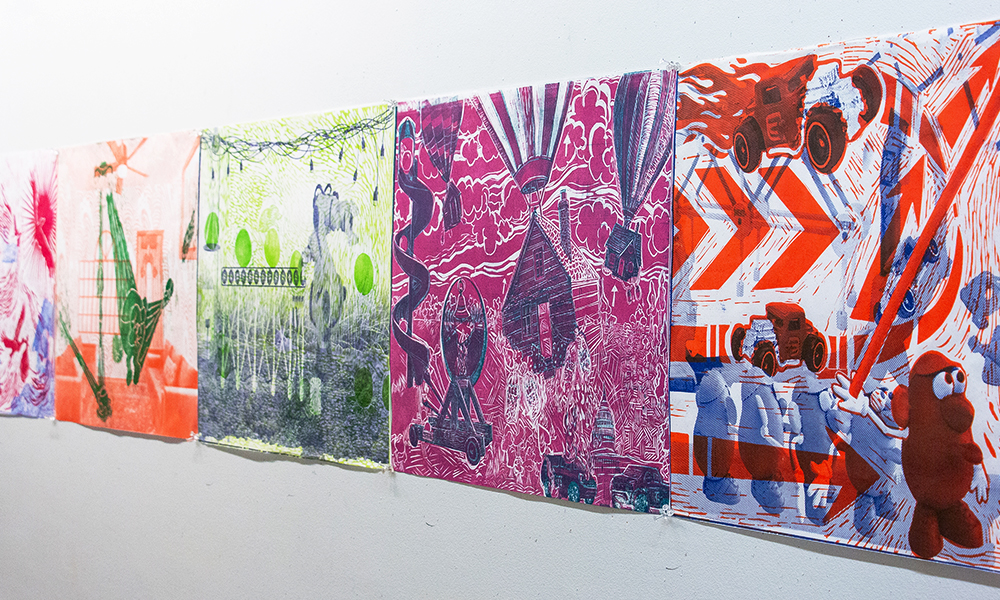
The B.F.A. in Art with a major in Printmaking and Expanded Media explores print as both a historic artistic discipline and a contemporary medium for visual communication, creative production, and technological innovation. Our curriculum begins with traditional printmaking methods including relief, intaglio, lithography, and screenprinting and expands into digital workflows, innovative print technology, and interdisciplinary print practices.
Students develop technical skill, creative confidence, and an understanding of how images are translated, reproduced, and shared across fine art, design, and industry printing. We encourage experimentation while fostering an individual artistic voice informed by historical knowledge, contemporary practice, and professional preparation.

Area Objectives
-
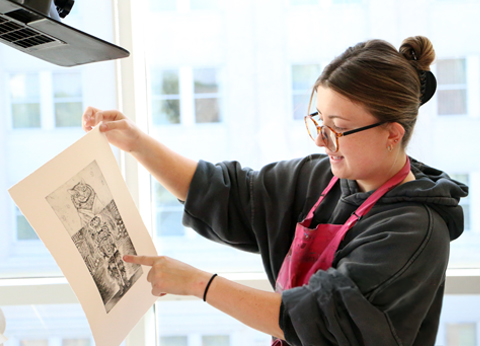
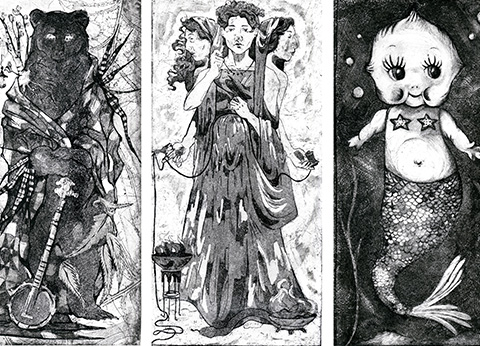
Create Original Artwork by developing technically proficient and conceptually engaging works through printmaking, expanded media, and interdisciplinary practices.
-
Master Printmaking Processes by building proficiency in traditional and contemporary analog, digital, and fabrication-based printing methods.
-
Explore Visual Communication by investigating how images are created, reproduced, and shared across fine art, design, publishing, and industry printmaking.
-
Engage in Creative Research by combining historical knowledge, critical thinking, experimentation, and interdisciplinary collaboration to expand artistic practice.
-
Develop Professional Practice through portfolio development, exhibitions, critiques, visiting artist lectures and demonstrations, professional conference participation, and safe, industry-standard studio practices.
Student Experience
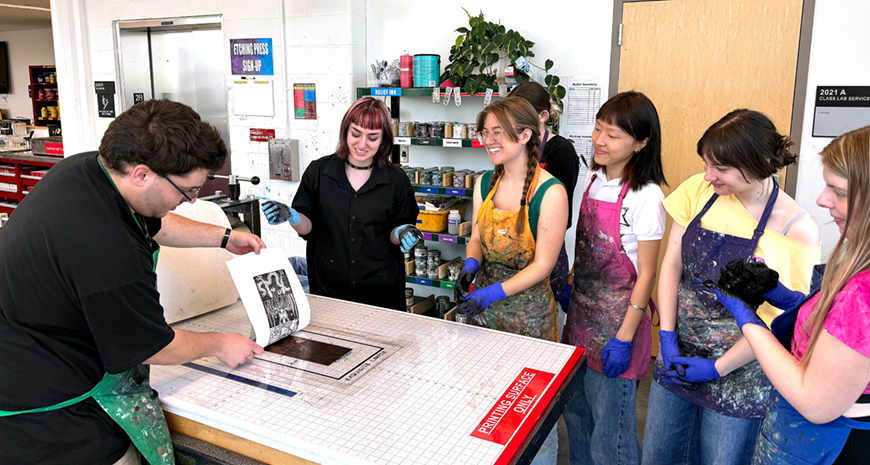
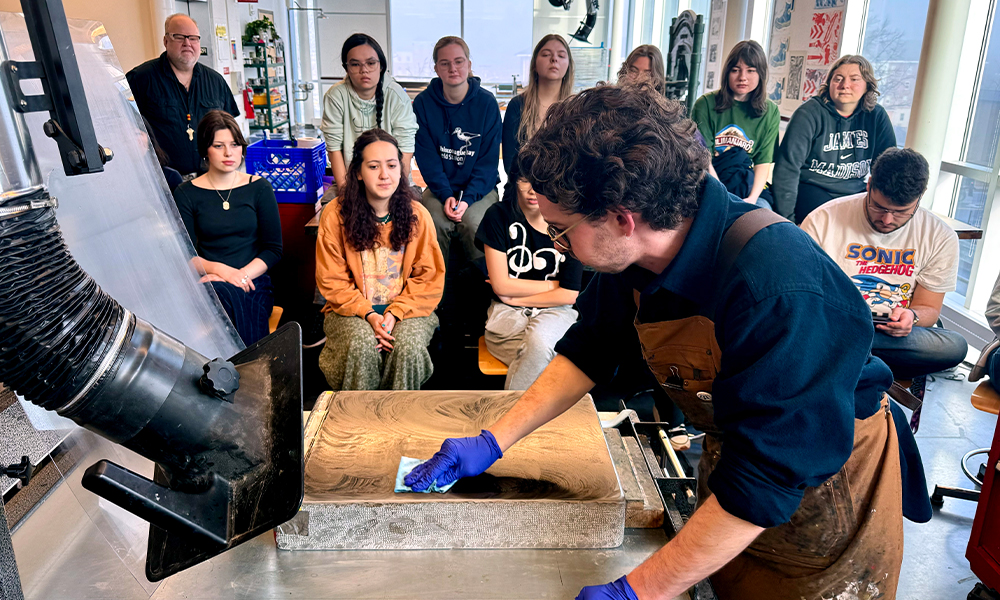
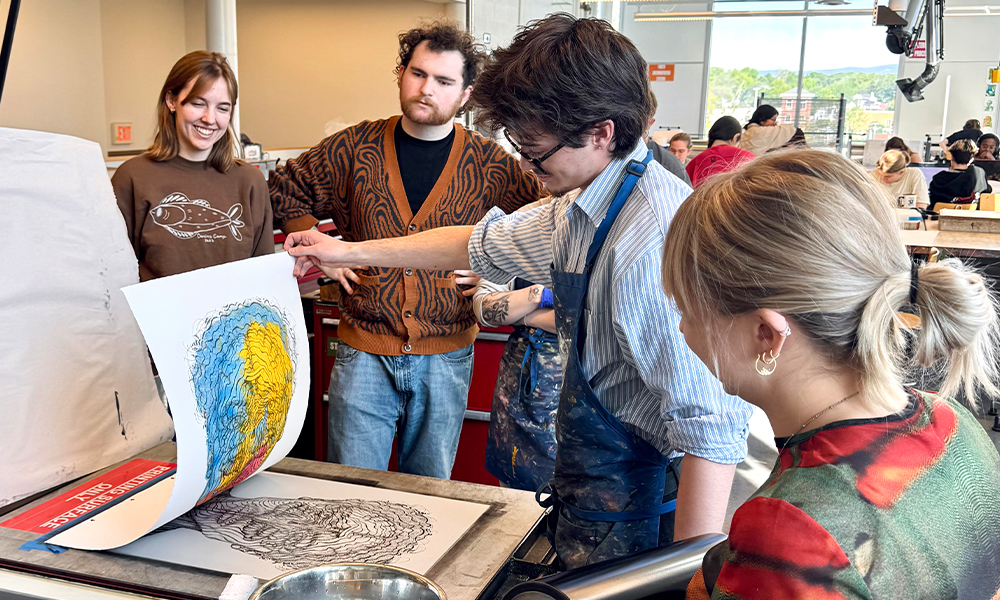
Beginning with foundational instruction in relief, intaglio, lithography, and silkscreen, students develop technical proficiency in editioning, image construction, material processes, and professional studio practices. As they advance, coursework expands to incorporate digital workflows, photographic processes, fabrication technologies,and emerging methods of image production, encouraging students to navigate fluidly between analog and digital approaches.
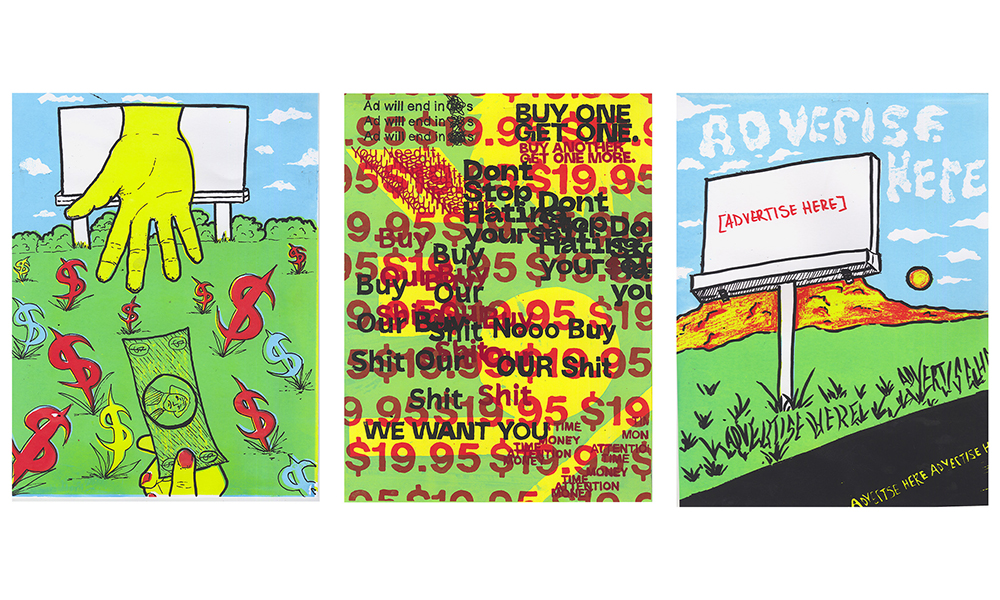
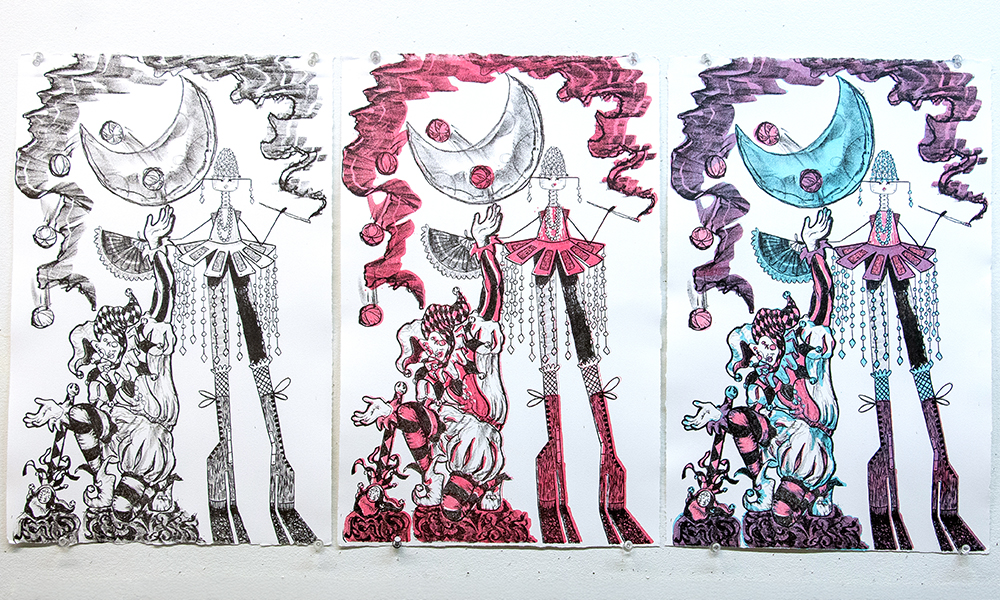
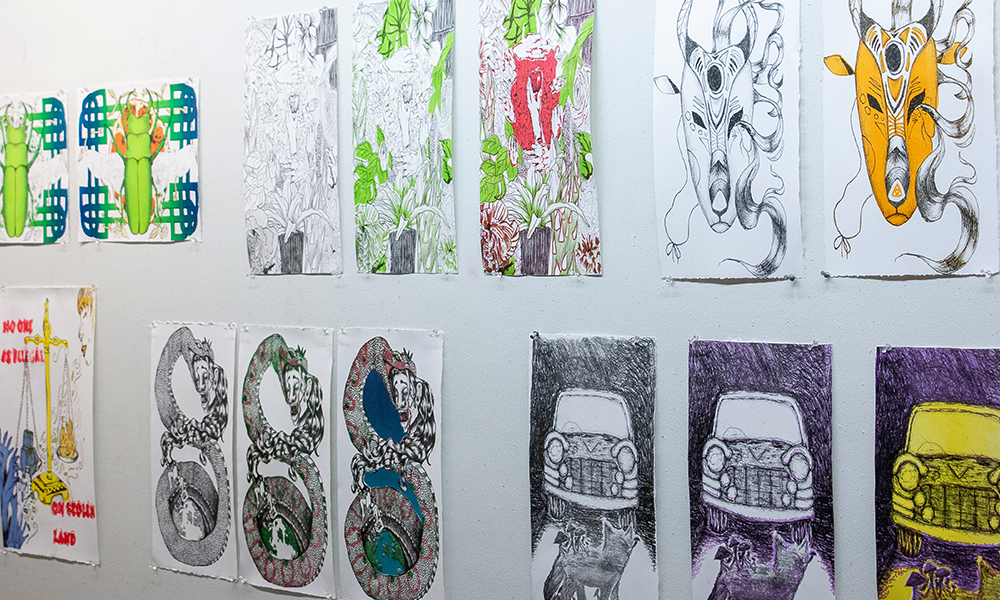
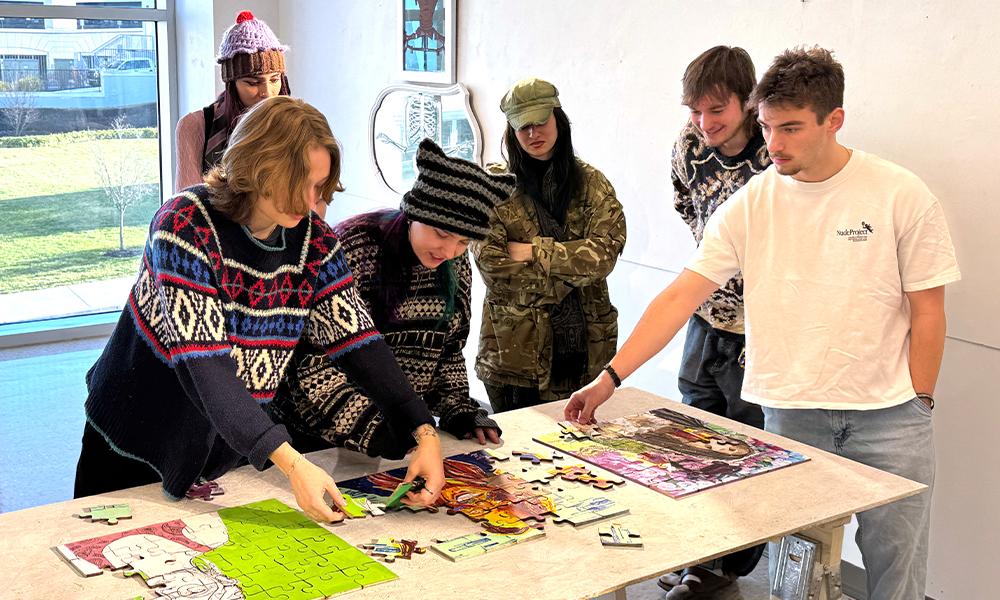
The curriculum emphasizes the production of original artwork while examining how printed images function across fine art, publishing, design, installation, commercial production, and contemporary visual culture. Students explore both one-of-a-kind and editioned works, learning how printmaking operates as a vehicle for artistic expression, collaboration, dissemination, and public engagement. These investigations are supported by visiting artist lectures, demonstrations, workshops, and participation in professional conferences, providing opportunities to engage with leading contemporary practitioners, expand professional networks, and experience current developments in the field.Through traditional craftsmanship, experimental inquiry, and technological innovation, students investigate the evolving role of print within contemporary society.
Graduates leave the program with a strong foundation in historical and contemporary printmaking practices, experience with professional studio equipment and industry-standard technologies, and a portfolio demonstrating technical mastery, conceptual development, and creative versatility. Whether pursuing careers as exhibiting artists, educators, designers, publishers, printers, or interdisciplinary creative professionals, students are prepared to contribute meaningfully to the continually expanding field of printmaking and expanded media.
Printmaking & Expanded Media Courses
- ART 271 | Introductory Printmaking: A Survey of Analog Printmaking Methods
- ART 372 | Mechanical Reproduction(s): Relief, Intaglio, & Technology
- ART 373 | Graphic Edition(s): Lithography, Silkscreen, & Digital Processes
- ART 474 | Expanded Print Media: Contemporary Printmaking and Interdisciplinary Practices
- ART 479 | Portfolio Development: Printmaking & Expanded Media
Facilities
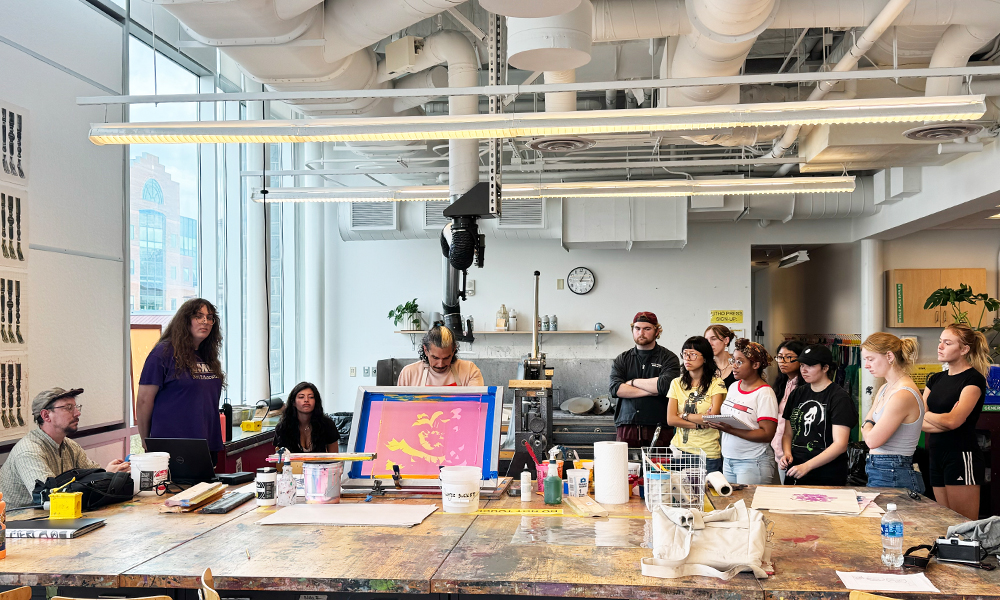
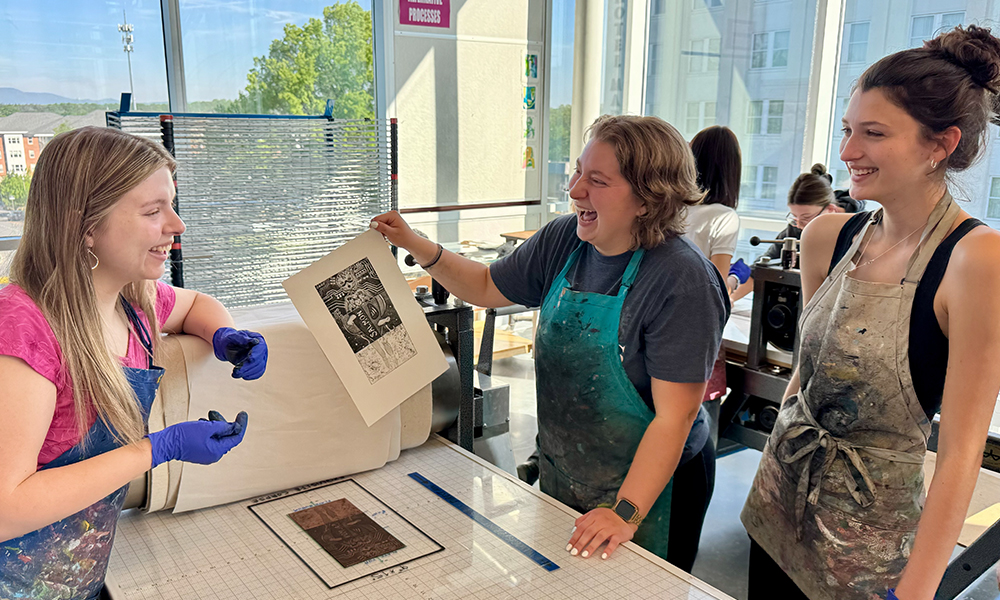
The Printmaking studios at JMU are located in four rooms on the second floor of Duke Hall.
Studio Equipment includes:
(2) Takach Lithography Presses, 26”x48”
(2) Takach Etching Presses, 34”x60”
(2) Nuarc Single Point Vacuum Exposure Units, 31”x40"
(1) NuArc Flip Top Platemaker, 34”x46”
(2) 27” iMac Computers
(1) HP Laserjet M725dn Color Printer
(2) HP LaserJet Monochromatic Printers
(2) Epson Expression Graphic Arts Scanners
(90) Lithography Stones, maximum 24”x36”
(2) Hydraulic Studio Scissor Lifts
(2) Millington Machine Company Light Tables, 40"x60”
(2) Gran Adell Drying Racks, 32”x48"
(1) Hydrobooth Washout Booth with pressure washer
(2) Professional Grade Hot Plate, 24"x36”
(1) Metal Shears, 36”
(1) Dahle 30" Large Format Guillotine Cutter
(1) Custom Graining Sink
(160) Flat File Drawers

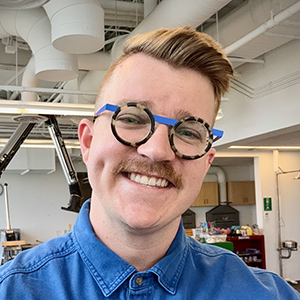
Brett Taylor
Printmaking and Expanded Media Area Head, Assistant Professor of Art
Hardware and Software Requirements
SADAH's programs require all students to have a laptop computer equipped with and capable of running any necessary software. SADAH considers a laptop an essential tool for total participation in classes and content. Read more about SADAH's hardware and software requirements.


