Interprofessional Services for Learning Assessment (ISLA)
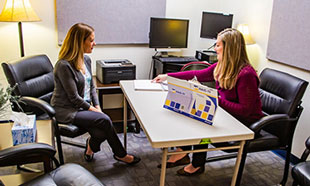 ISLA offers a variety of services to help meet client’s educational goals. Our interprofessional team will work closely with client’s to build on strengths, identify areas of need, and design positive ways to promote academic success. Visit the ISLA Website
CAPS-UHC Collaboration
This advanced practicum, a collaborative initiative between Counseling and Psychological Services (CAPS) and the University Health Center (UHC), provides doctoral students in Clinical and School Psychology with immersive experience in integrated behavioral health and primary care. Students in Doctoral Program in Clinical and School Psychology work alongside primary care providers and other healthcare professionals to deliver coordinated, patient-centered care while developing key interprofessional competencies in communication, teamwork, consultation, and care coordination. The experience prepares students for collaborative practice as health service psychologists within integrated healthcare settings.
ATEP 664. Clinical IV: Transition to Practice
Master of Athletic Training students engage in a clinical-intensive interprofessional experience, collaborating with members of a medical team that may include physicians, physician assistants, nutritionists, behavioral health specialists, and other professionals. Students may complete their clinical experiences in traditional sports medicine programs, orthopedic clinics, performing arts programs, with military populations, and industrial settings. Through hands-on practice, patient case presentations, and clinical observations, students strengthen their teamwork, communication, and professional competencies for collaborative healthcare practice.
Interprofessional Care Plan Meeting Reflection
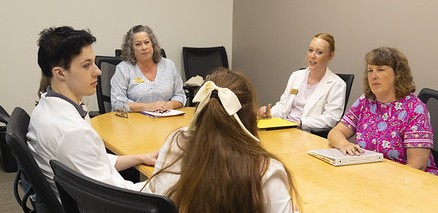 Graduate students in Speech-Language Pathology complete community-based externships in medical and/or educational settings, where they provide speech-language services and collaborate with a variety of healthcare and education professionals. Through participation in interdisciplinary care planning and individualized education plan (IEP) meetings, students develop essential interprofessional competencies in communication, teamwork, and collaborative case management. Guided by licensed speech-language pathologists and supported through faculty-led reflection and discussion, students learn to provide culturally responsive, patient- and family-centered care while effectively articulating the role and scope of speech-language pathology within interprofessional teams.
OT Level II Field Experience
OT 665 and OT 675 are graduate-level Level II fieldwork experiences that provide occupational therapy students with intensive, supervised clinical practice in healthcare, educational, and community settings. Students work collaboratively with interprofessional teams to apply occupational therapy knowledge, develop professional communication and teamwork skills, engage in structured reflection, and address client needs through culturally responsive and inclusive practice. The experiences are aligned with ACOTE standards and the IPEC Core Competencies to prepare students for competent entry-level occupational therapy practice.
PA Clinical Rotations
The Physician Assistant clinical rotation sequence (PA 670-680) consists of eleven four-week graduate-level clinical experiences completed over approximately one year across a variety of medical specialties, including family medicine, internal medicine, pediatrics, obstetrics and gynecology, surgery, emergency medicine, behavioral medicine, primary care, and electives. During these rotations, students collaborate with physicians, nurses, pharmacists, social workers, therapists, and other professionals to provide coordinated, patient-centered care. Students apply and develop competencies in communication, teamwork, professional responsibility, ethical practice, and understanding team roles while participating in real-world clinical decision-making. Structured reflection and faculty-facilitated discussions occurring throughout the year reinforce the four IPEC core competency domains, preparing students for collaborative practice in diverse healthcare settings.
MSC 4101
235 Martin Luther King Jr. Way
Harrisonburg, Virginia 22807