The Integrative Arts Fellowship program supports faculty and students whose work crosses disciplines, perspectives, and creative practices through the arts. Designed to encourage experimentation, collaboration, and inquiry, the fellowship provides dedicated support for projects that connect people, ideas, and methods in innovative ways.
Support may include funding, workspace, mentorship, visibility, and opportunities to share work with campus and community audiences. Fellows join a growing network of artists, scholars, designers, educators, and researchers committed to exploring integrative approaches to creative practice and knowledge-making. Through this program, OCP helps cultivate new collaborations, advance impactful projects, and strengthen a culture of interdisciplinary arts engagement at JMU.
Fellowship opportunities vary from year to year and may be available to faculty, students, or both, depending on program priorities and available resources.
2026-27 Integrative Arts Faculty Fellows
Professor, Saxphone
Assistant Professor, Art
As part of the fellowship experience, faculty fellows participate in public programming that allows them to share their work and creative process with members of the JMU and broader community. During the Spring 2026 semester, fellows will present their projects through an Open Studio event hosted by OCP.
Past fellows
|
|
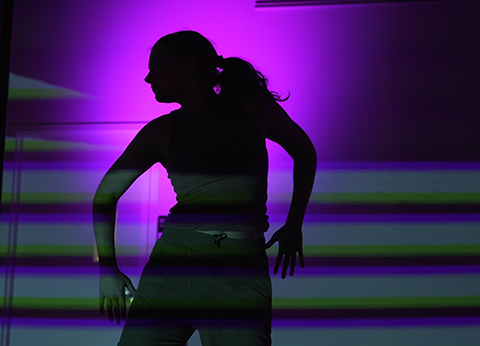
Tara Burns Burns launched Impact Space, a new mobile hub for performance, technology, and collaborative research, and continued development of A World Gone Fabulous VR — a virtual reality environment combining motion capture, movement instigation, and immersive environments. Together, these initiatives investigated technology through the lens of dance, using the body as the primary site of inquiry, and expanding access to both movement and digital spaces across platforms including live performance, projection and VR. |
|
|
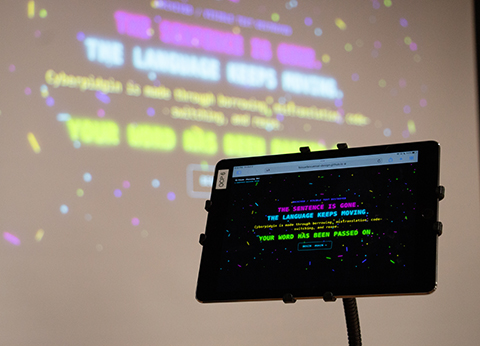
Feixue Mei Mei developed 传 / Chuán (Passing On), an ever-evolving publishing engine that bridges digital and physical worlds. Using hand-coded Three.js, Mei built interactive, spatial web environments that function as navigable 3D interfaces. Within these digital landscapes, Mei captures the fleeting traces participants leave behind and "fossilize" them into tactile, permanent physical records. |
 |
Javier Padilla Padilla created how to tell the future, an immersive dance theater work that drew on movement, storytelling, and digital media to engage with the complexities of cultural ownership and reclamation. |
 |
Traci Wile Wile developed Place Re-imagining and Brick Building, practices which lie at the intersection of socially engaged design, art, and community organizing, while addressing broader questions about community-building, sustainability, and how we connect with our environment. |
 |
Myer Kim Kim’s research investigated the similarities between practices and processes in the disciplines of music, dance, and design. Discoveries were made regarding open and closed spaces in dance and how architectural form can mimic high and low tones in music. |