A Primer on Attention
Understanding how our attention works is the first step to managing it and being more mindful of who/what is trying to monopolize it so we can take back control of this precious resource. With that in mind, this primer is written for educators, students, and anyone looking for a quick overview of important themes in the psychological study of attention.
From a cognitive psychology perspective, the study of attention requires us to understand both the role that our environment plays, and the role, and responsibility, that each of us as individuals have in what we pay attention to and what we do not pay attention to.
What we do or do not pay attention to can be driven by external environmental cues, our own internal goals and priorities, as well as prior knowledge or information we have in memory to help us understand the things we are seeing or listening to.
Bottom-Up and Top-Down Processing
Incoming sensory information flows from the environment up to your brain for processing, and sometimes, you may also have prior knowledge in memory that can help that processing. We distinguish between these two pathways for processing as bottom-up and top-down processing.
Bottom-up processing, also called data-driven processing, is driven by incoming stimulus data from the environment. This data, in turn, determines the higher-order cognitive processes involved in recognizing, interpreting, and categorizing those stimuli. For example, individual angles and orientations of light are combined into objects, and then these objects are combined into scenes, and then cross-referenced with your memory in the case that there is prior learning that can help you process and react to the stimuli in the scene. We typically rely on bottom-up processing when the stimulus information is something unfamiliar, new, or complex, and we don’t have much prior knowledge or situational context to help us interpret the information. Signals from the environment travel to your sensory system first, and humans primarily rely on their eyes and ears to help them make sense of information around them.
Top-down processing, also called conceptually-driven processing, uses prior information in memory, or your prior experience with the context of a situation to help you interpret new data coming in from the environment. In this way, the semantic concepts that help us create meaning also influence the analysis of incoming stimulus information. For example, once we’ve learned the alphabet and how to recognize words, we read mainly at the word-level. If we come across a word we don’t know while reading, then we may not always need to pause to look up a definition, and can instead rely on the surrounding sentence context to help us interpret the word with top-down information.
Top-down processing can be a great help to us in situations where the stimuli are highly familiar and simple to process for us. It’s usually an advantage to use what we have in memory, provided that the information our mind is trying to supply is both related and relevant to the situation. If not, then this mental shortcut can lead us to make some errors.
One example of this is the proofreader’s illusion. Think about the last time you were reading over a paper for class before you submitted it. You likely spent so much time writing, revising, and rereading that it’s now difficult to catch typos or spelling errors simply because you’ve looked at it too often. Your top-down knowledge for language also contributes to the likelihood that even if a word is misspelled, you won’t see it and will overlook it because your mind and prior experience and skill with language will supply the information to automatically correct the error and see the word as it should appear.
You can test this yourself with this simple task. How many letter F’s are there in the following sentence: FINISHED FILES ARE THE RESULT OF YEARS OF SCIENTIFIC STUDY COMBINED WITH THE EXPERIENCE OF MANY YEARS (A Perfectly Imperfect Mind: Using Cognitive Psychology to Explain Human Experience).
Most students are surprised to learn that the correct answer is six. If you have a lot of experience with using the English language then you’re likely to miss counting some of the instances of the letter F in the example above, especially those that occur in the word OF. “Of” is one the non-content, function words along with “it,” “the,” and others like these, that skilled readers tend to skip over when reading, at least 65% of the time (Rayner, 1998).
The high rate of error on this simple task demonstrates that we do not pay attention to everything that we think we do, and that our automatic reading process and attention perceive and recognize whole words more readily than individual letters the more experience that we have with language.
It’s also important to note bottom-up and top-down processing are not simply two sides of a binary, we don’t only ever use one or the other. Rather the impact of bottom-up and top-down influences on our cognitive processing are driven by stimulus information and what we already have in memory at different times and for different reasons. For example, you may check your phone notification because the sound of the alert startled you from your studying, or because you’re bored working and seeking some instant gratification.
On the surface, the observable behavior looks the same: checking your phone. But the mechanism driving the behavior is different and merits self-reflection. When are you reacting to the environment around you because of the stimuli themselves, and when are you being driven to react to the environment in a certain way and attending to specific stimuli because of top-down influences like prior habits, knowledge, or the context of the situation?
Say for example, that you’re trying to get some work or studying done in a coffee shop. There are a lot of sensory stimuli that are vying for your attention: the enticing aroma of coffee, the sounds of conversation and the barista calling names out for drink orders, music playing for ambience, and the sights of people-watching.
Some of these stimuli are things you want to pay attention to, and others are things you may want to filter out. The distinction between what’s important and not important will be determined by your cognition. Perhaps because you know what to focus on in such an environment already via your prior knowledge, or top-down processing. Or because of the context of the situation.
The demands of the environment, and the stimuli themselves can also direct, or distract, our focus. Bottom-up properties of the stimuli, for example, the loud sounds of laughter, or a bright light from someone’s cell phone, could capture your attention even if you are trying to ignore things that are distracting or not relevant to you. If it’s getting too loud and crowded in the coffee shop, or you’ve been studying for a while and are getting tired, that may impact the quality and amount of attention available to use towards focusing on what’s important and filtering out what is not important.
Sometimes if our attention is pulled away from our task of focus, this might be adaptive. Our attention system is wired to monitor anything that signals threat or a novel change in the environment that we might need to respond to. If someone spills their coffee near you, you want to have your attention drawn to that so you can make sure your laptop is out of the danger zone—and then help them clean up your shared table space.
For more on bottom-up and top-down processing:
Bottom-up vs. top-down processing | Processing the Environment | MCAT | Khan Academy
Selective Attention

What you pay attention to may even change dynamically from one moment to the next. Our selective attention allows us to selectively focus on specific stimuli, and filter out, or ignore, distracting information. How we decide what is important and what is a distraction changes based on different criteria.
For example, you may be monitoring the names or order numbers the barista is calling out, but only until you hear yours. Once you collect your order, then you’re no longer monitoring that stimulus channel. Why? Well, before your name is called, selectively focusing on the barista calling out customers’ names is important. After you get your order, you want to filter out this stimulus, so that you can focus on your work, and your task goals are now guiding your attentional focus.
The challenges for your selective attention don’t stop there though. Say for example that you put on headphones because you need to watch a recorded lecture for your class. Then you find that you’re starting to doze off because the content isn’t that interesting to you. Okay, no big deal, you’ll listen to the lecture and find something else that holds your attention, just so that you can stay awake enough to get to the end of the video. You decide to scroll through social media while listening to your professor’s recorded lecture. Surely you can successfully manage such an easy multitasking situation, right? After all, you do it all the time and have practice with each of these two tasks. It should be no problem to listen to the lecture and catch up on your notifications and messages at the same time.
Before long, wouldn’t you know it, you’re definitely in no danger of dozing off now. The videos and memes in the group chat with your friends are more interesting to you–maybe even a little too interesting. Now your selective attention is honed in on reel after reel, and you’ve missed a large chunk of the lecture. You catch yourself a few times, enough to pause the video and rewind to where you last remember listening.
But after a little more time, your attention is completely captured by the more interesting social media content, and you’ve abandoned the task of listening to your lecture–which was supposed to be the primary goal.
For more on theories of selective attention:
Theories of selective attention | Processing the Environment | MCAT | Khan Academy
The Cocktail Party Effect

Our name is something that we’re very attuned to, for more on how we selectively attend to this information, let’s think about The Cocktail Party effect, which can be seen at work in coffee shops too. If you’re deep into a conversation with your friend about your upcoming exam, and then the barista calls your name, your attention is automatically going to be drawn to this very meaningful and important information to you.
We can think about the same kind of effect applying to other pieces of information too, whereby the things that are most meaningful or interesting to you will guide and capture your selective attention, at the expense of other things that you should have been focusing on. This could occur in a number of ways. Maybe while you’re on your computer trying to work on a paper, a notification pops up for your email. You had emailed a question about your assignment to your professor so you click on over to your email to see if they replied to you so that you can continue working on your assignment. They haven’t yet. But while you’re in your inbox you see that you did get a product alert email about that new laptop that you’ve been saving for, and have kept in your online shopping cart for weeks. And it’s finally on sale. This thing never goes on sale, and you really need a new computer to help your work and studying. You don’t want to be so slow to snap one up that they’re all sold out. This laptop is meaningful and valuable to you, so, forget about that paper, you need to buy this first.
For more on the cocktail party effect:
The cocktail party effect - Intro to Psychology
Attention is a Limited Resource

At some level you know your attention is a limited mental resource already. Maybe you face challenges with ADHD, or you’re aware of how often we use words that equate it to a currency or a valued or scarce commodity. For example, paying attention, I need to recharge, these are everyday phrases that show that we’re aware of our attention having limits and the fact that once it's exhausted we have to rest and reset.
One of the main challenges for us with our attention is that we can do many things with our attention, but we cannot do them all at once—or even two things at once, depending on how difficult those tasks are to multitask together.
Under certain, very specific conditions, multitasking is sometimes possible, but there’s still a cost. Sometimes that cost is more time, or the likelihood of making more errors. If tasks have been practiced together, have a shared goal, purpose, or utility, or don’t occupy the same subsystem of our working memory—then it’s possible they can be paired together.
For example, two tasks that are likely not difficult for you to do are walking around campus and having a conversation on the phone. When walking around campus, you’re using your visual subsystem of working memory, and you may even be doing this automatically if you have the route in memory already and are using top-down processing with your prior experience. When talking on the phone, you’re relying on the auditory subsystem of your working memory. Since each of these two tasks takes up a different part of your working memory, you can do them together—but not forever. Our working memory system is still a limited capacity system.
This is better seen when we consider two tasks that occupy the same subsystem of working memory, for example, texting and having a conversation with a friend. Most language tasks rely on the auditory part of our working memory. Even when we’re typing out a text, we’re still using the part of our memory that is activating speech, and texting, compared to most forms of language, is processed in a very speech-like way, (this is one of my areas of research, see Upadhyay, Gunraj, & Phillips, 2023).
This is a dual task situation (see the link on the dichotic listening and shadowing task below). It’s difficult to do for most people, you might miss parts of what your friend is saying, or be super slow to type out your text, parts of the conversation may even end up in the text message. Trying to keep these separate language stimuli from interfering is a challenge and you’ll eventually become overwhelmed and will need to set aside one task: either typing your text out later or asking your friend to pause their story while you send that text.
Dichotic Listening and Shadowing Tasks

Dichotic listening and shadowing tasks are one of the ways that experimental cognitive psychologists have demonstrated the challenges and costs to our attention and working memory limits when trying to manage doing two things simultaneously. Spoiler alert, we are not successful at managing this increased cognitive load, and the bottleneck that limits our attention also creates a similar bandwidth constraint for our working memory. In a world that increasingly pushes us toward multitasking, the challenges and costs of this behavior are something equally important for educators and students to be mindful of.
More on Dichotic Listening and Shadowing Tasks: what is dichotic listening and selective attention? - ok science
Working Memory

For more on how our working memory system operates:
Working Memory | Baddeley & Hitch 1974 | Memory | Cognitive Psychology
Our working memory is still a limited capacity system, just as our attentional system is, and our attention feeds into working memory. This means that the attentional bottleneck we face also creates a bottleneck for our working memory, and there’s a limited capacity of information that we can hold active.
For more on the attentional bottleneck, refer to the video above about theories of selective attention.
For more on the working memory bottleneck, refer to the link above and here again:
Working memory is limited | Center for Educational Innovation
Multitasking and Divided Attention

By trying to divide our attention over multiple stimuli or tasks we run the risk of getting distracted, and in some cases, making costly errors.
Think about the last time you were running low on attentional bandwidth or felt like you had too many tabs open in your brain. Odds are that you were trying to multitask. Maybe you realized you don’t work well in coffee shops after all because you find that your attention is split between trying to people-watch and trying to write a paper, and now you’ve written the same sentence twice in your paper and left off in the middle of another thought you can’t seem to remember how to finish.
That’s a relatively low-cost mistake. You can simply delete the sentence and then keep on typing to get back on track. But this can easily snowball into a larger issue if you are consistently interrupted by technology and other distractions while you’re trying to work, and your focus, motivation, and energy fade in addition to that. If you refer to the section above about the proofreader’s illusion, consider how a similar influence of top-down processing might result in you misunderstanding assignment requirements, or even missing a section of the assignment that you were supposed to complete, simply because your attention was not on the assignment to begin with, and so you didn’t encode all the stimuli that were there properly and relied on what you already had in memory to fill in the gaps.
There are other more dangerous costs to dividing our attention. We may be so focused on the wrong thing that we also miss other important changes in our environment that can happen quickly, especially when we think about situations where visual and auditory cues are changing minute-to-minute—like when we’re on the road driving.
Think about if you’re keeping an eye out for the exit sign you need to take on the highway, you’re keeping track of the numbers, waiting until you see your sign, and you’re so focused on your task that you completely miss the car that swerves in front of you. In this case, your attention was so focused on your first target for your attention (finding your exit sign) that you didn’t get a chance to process the second target (swerving car) because it came into focus so close to the first goal and you hadn’t closed that task yet.
Another error that might happen is an action slip. If you’re mind-wandering as you listen to music on your drive home, you might forget that your usual route has a detour this week for construction, and you’re supposed to take a different route.
For more on Change Blindness and Inattentional Blindness:
Divided attention, selective attention, inattentional blindness, & change blindness | Khan Academy
For more on Attentional Blink (although keep in mind the stimuli are presented more slowly here to make it easier to explain):
Brain Games - Attentional Blink
The Effect of “Smart” Phones
Hopefully this primer has helped you understand how, even when multiple things compete for our attention in every moment, we can select and focus on one of those. Yet, we often continue to hinder our attention even when we recognize there are limitations. What is the biggest siphon of our attention?
Our smartphones.

Everyone keeps these devices with them everywhere. They’re the first thing we often look at, especially if it’s also our alarm clock, and the last thing we look at before we go to sleep. We check them, over, and over again.
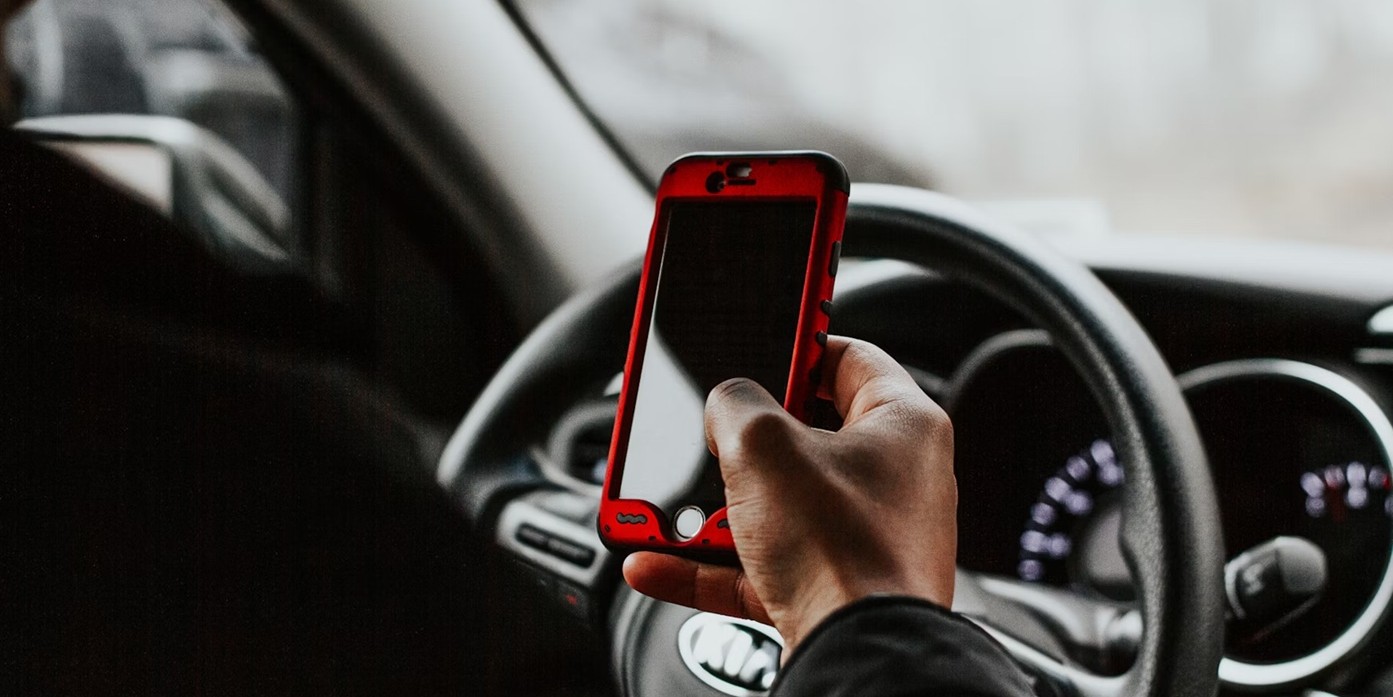
People use them for work and email, for calling our loved ones, for sending texts, health and fitness tracking, and watching and listening to entertainment. There are visual distractions from notifications and alerts, and the lure of variable reinforcement that makes us open apps aimlessly, hoping for something entertaining to reward us during that next doom scroll about the news. There are auditory signals from reels that automatically start playing and startle you, vibrations of a group text chat that is popping off while you’re trying to study, and all of this is even more dangerous when one considers that people check their phones constantly even while driving—especially if you’re using your phone for navigation and those alerts keep coming.

As helpful and as integrated into our daily lives as these devices have become, they also create major challenges. Our phones consistently tax our attention and working memory limits, create the temptation for multitasking to keep up with the overload of information that we receive, and contribute a variety of top-down and bottom-up cues that pull our attention and working memory away from our intentions and goals.
For more on how smart phones and task switching cost you attention:
How Smartphones Sabotage Your Brain's Ability to Focus | WSJ
For more on the dangers of distracted driving
A Word of Encouragement
Technology is inevitably going to be a part of our external environment. You likely must use it for work or school in some capacity, too. But all hope is not lost, we do have some control over how much it becomes a part of our internal environment, and our goals for the tasks we are trying to focus on doing. If we’re in situations like that crowded coffee shop and it becomes harder to focus, you might mediate the effect of distracting noise by using noise-cancelling headphones. Or, telling your friend you’re going to work in sprints, and when it’s time for a break, then you can chat. Or, deciding you’d prefer the quiet of the library to work instead.
So much of understanding our attentional limits, how to work in harmony with technology, and how to truly use it smartly, depends on first understanding our own individual differences with what helps us focus and what creates distraction.
So, take the resources in this primer, and on this website, as a starting point to understanding how to best create balanced attention habits that align with your best intentions and personal goals.
Because you can do a lot with your attention.
And we’re here to help.