Let’s give some attention to attention!
Consider this for a moment: Attention determines your experience of life. What you pay attention to and the quality of attention you give can affect your ability to carry out your most valued life goals, to build relationships, and to regulate your emotions or moods. In short, scattered attention makes it difficult to be the person you intend to be.
The focus of your attention can be voluntary (you decide to focus on something) or involuntary (something pulls your attention away from your intended focus), though complex situations can make this distinction difficult to determine. The quality of your attention can be deep and sustained (you focus on one important task until it is complete, working in a low-distraction environment) or fragmented (you simultaneously work at multiple tasks in a high-distraction environment).
Throughout a given day, the focus and quality of attention can vary significantly. At the end of the day, you might have the familiar feeling of wondering where all the time went and why you didn’t accomplish your goals.
Let’s look at a scenario about a JMU student named Alex, a sophomore business major who has been invited to attend a concert of one of their favorite bands with three close friends.
Before learning about the night of the concert, let’s take note of Alex’s personal goals, the intentions that guide their life. Alex’s goals for college include succeeding academically, building lifelong friendships, and having memorable experiences. Their goals for the night of the concert include connecting with friends and being fully present for the performance, so it can be remembered later in life.
Let’s focus on the night of the concert. Throughout dinner and while walking around the concert arena, Alex is monitoring their friend Jo for signs of meanness or inauthenticity, replaying some of the past arguments. Alex and Jo have had some disagreements and issues over the past year, though they’ve been getting along better in the recent weeks. Alex’s monitoring of Jo is intensified by the text conversation Alex is having with another friend, Kai, who remains suspicious of Jo.
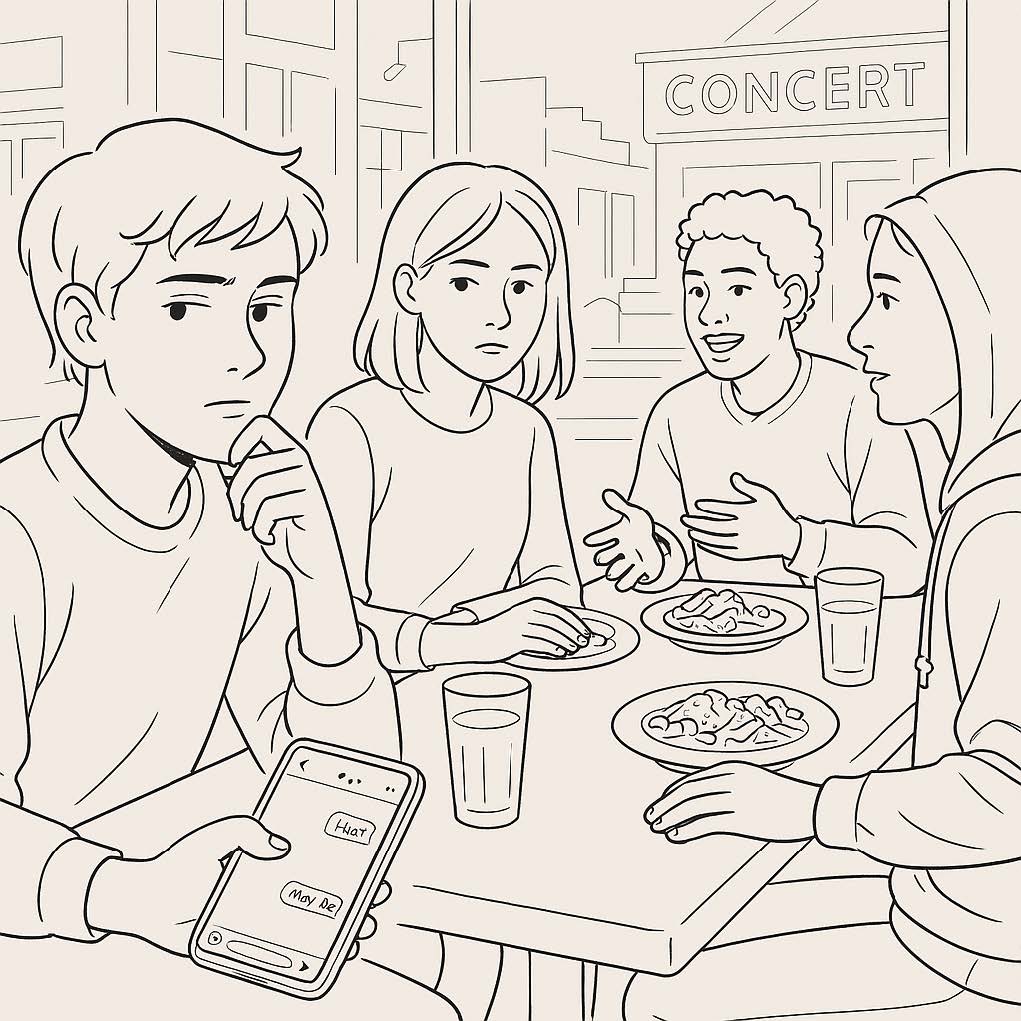
Kai is at a JMU football game Alex passed on for the concert, figuring there will be more football games this semester but only one chance to see this band. Alex is reading and responding to texts from Kai as the night goes on, causing their mind to be elsewhere and making them wonder whether they should have gone to the game instead. Some of the texts include photos and videos of Kai and other friends celebrating a JMU touchdown, jumping up and down, streamers in the air, making Alex feel that they are missing out.
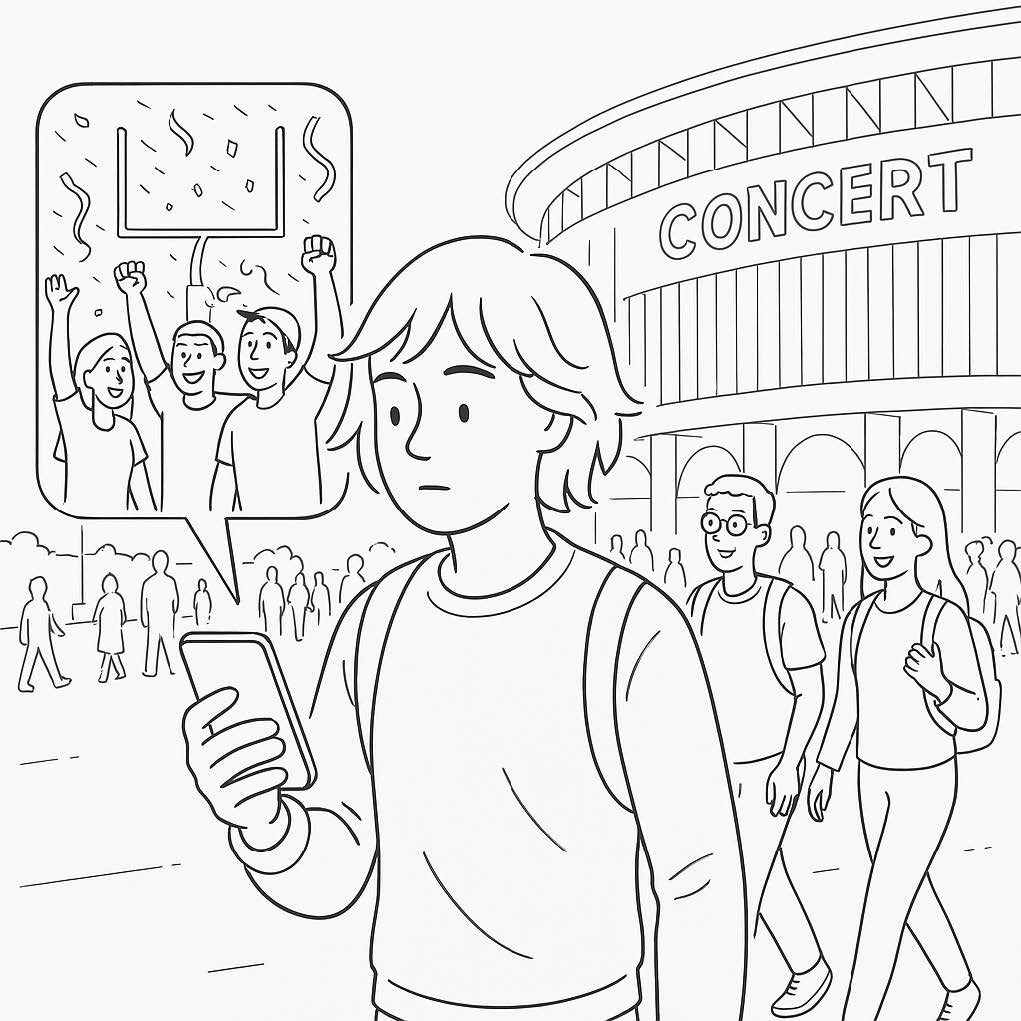
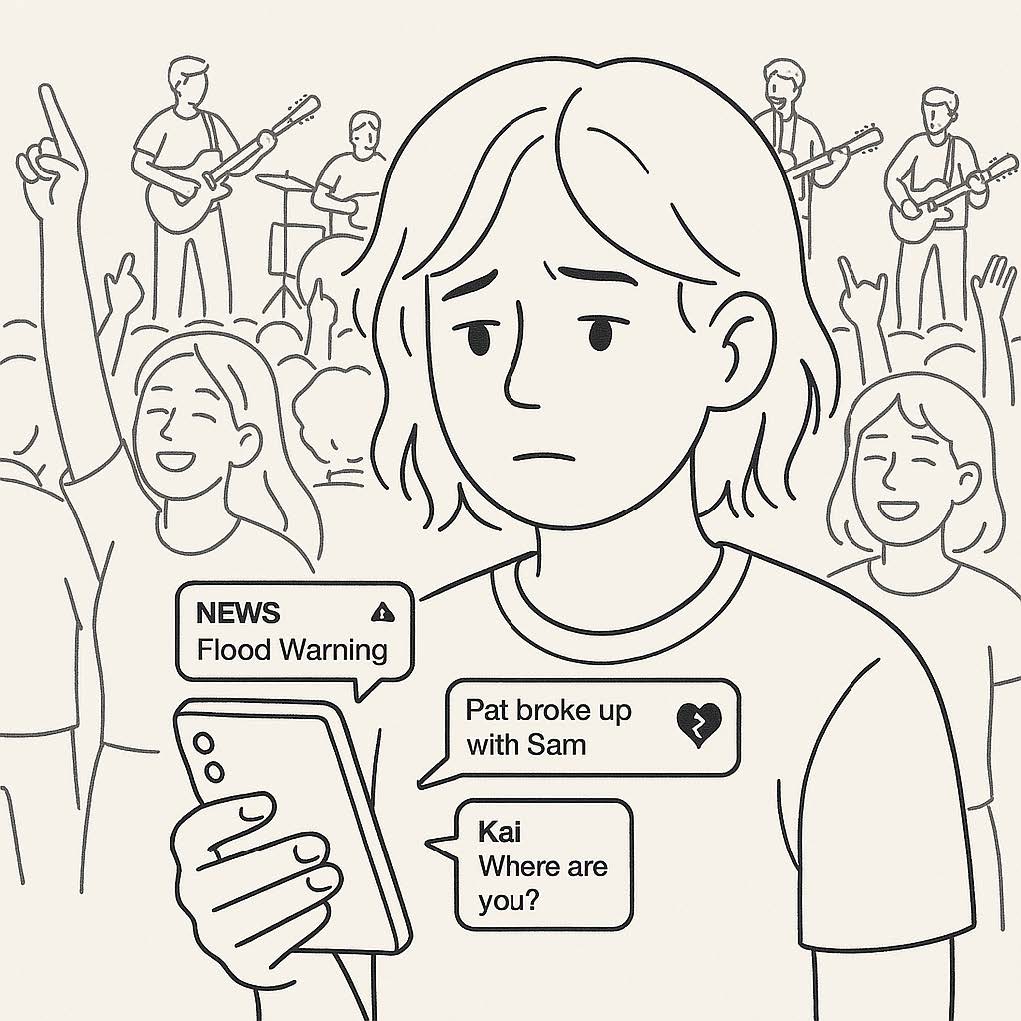
When picking up the phone in response to the vibration of Kai’s incoming message, Alex also sees notifications from social media and news apps. They try to ignore these notifications but sometimes find themselves unable to help clicking on a scary headline or social media notification about a friend, family member, or love interest. Alex ends up seeing images and captioned text about a disastrous flood on the other side of the world and opening a notification about a friend’s breakup post. Each of these finds Alex feeling overwhelmed, making it harder to refocus on the concert and the friends they are with.
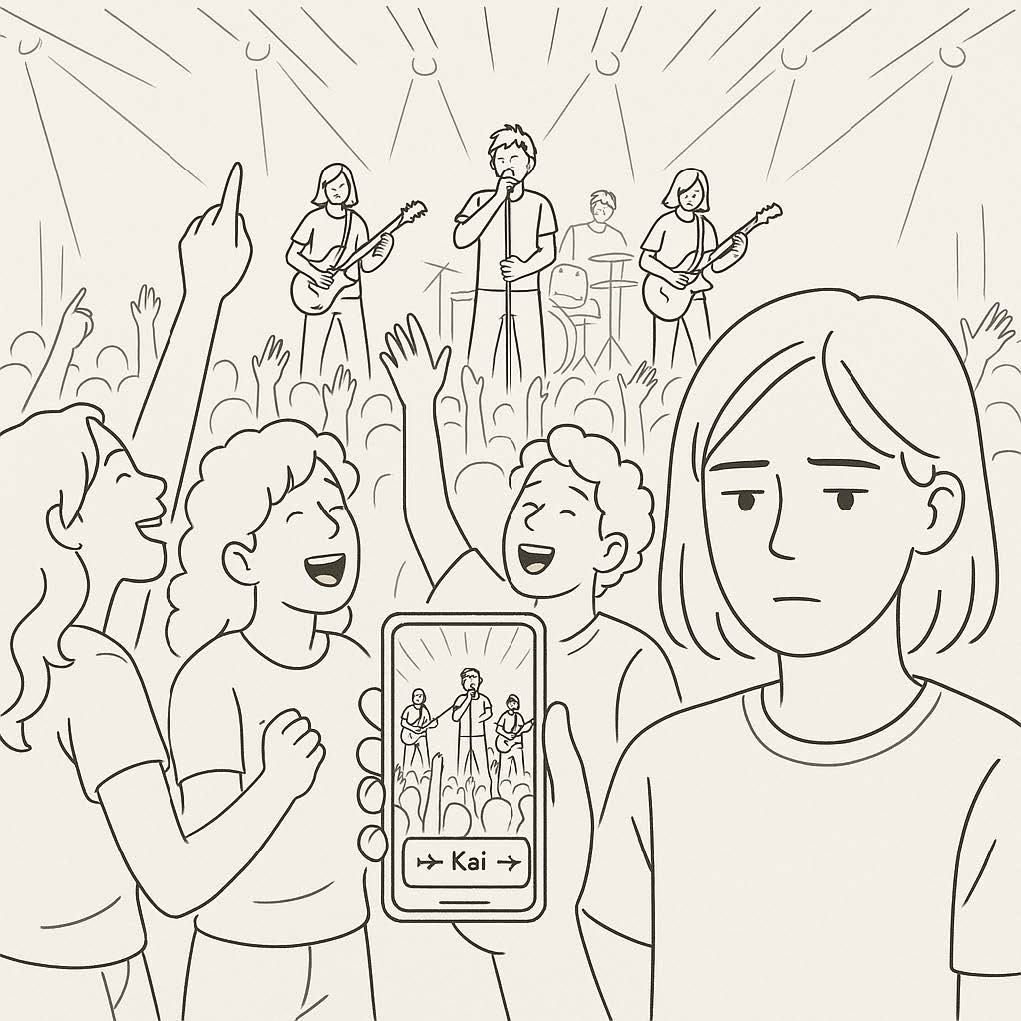
When the band is playing their most popular song, also Alex’s favorite, they record it as a video instead of watching it directly and then immediately send the video to Kai at the football game to show they are also doing something just as fun as the JMU game. As a result, Alex ends up missing some of the conversations at the concert, left out of their friends’ singalong, not able to get into the performance emotionally, feeling distant from their friends, and generally dissatisfied with the evening.
Have you had experiences like this? What’s going on here?
Let’s reflect upon this scenario using our two aspects of attention, what you are paying attention to and the quality of attention.
- In the case of the first friend, Alex is focusing on the past wrongs and looking for potential problematic behavior rather than maintaining the connection with Jo that exists now, which contradicts the college goal of building lifelong friendships. Their attention could just as easily be given to strengthening the relationship and enjoying the fact that the relationship is better than it was. The ongoing text conversation with Kai reinforced this critical attitude against Jo, keeping Alex from connecting.
- Alex’s focus is affected because, instead of giving attention to the immediate friends and concert experience, attention is given to the friend who is not there, Kai, and the alternative activity not chosen, the football game. Shifting between the text conversations and the immediate concert experience is dividing limited attention resources, compromising the ability to make memories, compromising a long-term college goal of making lasting memories. With a divided mind, Alex is unable to emotionally connect with the friends she is with or the musical performance, compromising both short- and long-term goals.
- By recording their favorite song, Alex has again divided their attention, this time between the sensory experience of an event and the documenting of the event. While filming, messages from other friends and other notifications continue to pop up on the screen, causing Alex’s attention to shift, thinking about the people and conversations.
This scenario description is not meant to condemn Alex, but it allows us to take a reflective look at attention. Most of us have experienced some aspect of this story ourselves, ways in which our focus and quality of attention did not match up with our higher goals. Now that we’ve examined someone else’s attention scenario, let’s do some self reflection. If it helps you focus more, you can grab a journal or piece of paper to write your responses.
- Consider your most important long-term and short-term life goals. Make a list.
- Now consider a recent experience of yours, such as a concert, football game, study session, or gathering of friends. Recall or write down a few important details about the experience.
- Now write down (or just think about) where your focus was during the experience. Was your focus internal (feelings, judgements, projections into the past or future) or external (the sights, sounds, and emotions related to your immediate surroundings)?
- Was your attention divided, giving partial attention to several things or was it focused on one thing? Describe focus and quality of your attention during this experience. Were you aware of how your attention was working during the experience or were you just along for the ride?
- How does the focus and quality of your attention during the experience align with your life goals?