


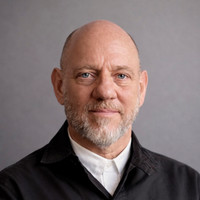
Sculpture and Objects Conservator
Website
Roger Griffith is a sculpture and objects conservator based in New York, specializing in the conservation of modern and contemporary art, design objects, and complex multi-material works. He is the founder and director of Two Sticks Inc., a conservation practice established in 2005 that provides conservation treatment, technical consultation, and long-term preservation strategies for museums, foundations, galleries, and private collections internationally. His work focuses particularly on twentieth- and twenty-first-century materials, including plastics, industrial finishes, composite structures, and artist-fabricated systems, and addresses the practical and ethical challenges inherent in preserving works whose material and conceptual identities evolve over time.
Griffith served for twenty-four years as Sculpture and Objects Conservator at The Museum of Modern Art, New York, where he worked across curatorial departments including Painting and Sculpture, Architecture and Design, and Media and Performance. His responsibilities encompassed conservation treatment, technical research, exhibition preparation, documentation, and preventive conservation for a wide range of works, from design prototypes and architectural fragments to large-scale sculpture and contemporary installations. At MoMA he contributed to major institutional initiatives, including conservation planning for complex acquisitions such as the Frank Lloyd Wright Archive and the Le Corbusier Unité d’Habitation Kitchen, and participated in the development of conservation laboratories, collection workflows, and documentation strategies supporting the long-term stewardship of modern and contemporary collections.
A defining aspect of Griffith’s practice has been his sustained engagement with the conservation of modern materials and the collaborative nature of decision-making in contemporary art conservation. His research examines the intersection of artistic intent, material degradation, institutional responsibility, and exhibition practice, with particular attention to works that challenge traditional conservation paradigms through inherent vice, ephemerality, or variability. His scholarship has addressed subjects including the conservation of plastics, modern furniture and design objects, artist-directed replacement, and the role of interdisciplinary collaboration in the preservation of contemporary artworks. Through both writing and practice, Griffith has contributed to ongoing debates concerning authenticity, change, and the acceptable limits of intervention in modern and contemporary art.
His publications include contributions to the Journal of the American Institute for Conservation, Objects Specialty Group Postprints, and major exhibition catalogues, as well as essays addressing conservation methodologies for artists such as Bruce Conner, Joan Miró, and David Hammons. His work frequently situates technical conservation issues within broader cultural and institutional frameworks, emphasizing conservation as a form of negotiated practice among artists, conservators, curators, and fabricators. He has also contributed to research on the conservation of design and architecture collections, including technical studies on works by Charles and Ray Eames and conservation research related to Charlotte Perriand and Atelier Le Corbusier.
Griffith has lectured extensively at international conferences and academic institutions, including the Pinakothek der Moderne (Munich), the Japanese Council of Art Museums, Mori Art Museum (Tokyo), Bard Graduate Center, New York University, and universities throughout Japan and South Korea. His invited lectures and keynote presentations frequently address the conservation of modern materials, institutional decision-making, and the philosophical implications of preservation in contemporary practice. A six-month research sabbatical in Japan and Korea further informed his interest in cross-cultural approaches to conservation and knowledge exchange, particularly in relation to installation practices and museum collaboration.
Education and mentorship have remained central to Griffith’s professional activities. He has served as a visiting lecturer and instructor at numerous universities and conservation programs, contributing to graduate-level teaching in conservation, technical art history, and museum studies. At MoMA he initiated internships and fellowships within the Sculpture and Objects Conservation Department and participated in public-facing educational initiatives designed to introduce conservation practice to broader audiences, emphasizing the interdisciplinary nature of conservation as both scientific and cultural work.
Griffith received his Master of Arts in Conservation (Objects and Furniture) from the Royal College of Art/Victoria and Albert Museum joint program in London. His graduate research addressed storage methodologies for modern furniture collections, reflecting an early interest in preventive conservation and the long-term preservation of modern materials. He holds a Bachelor of Fine Arts in Comprehensive Design from James Madison University, with a minor in Biology, an interdisciplinary foundation that continues to inform his approach to material analysis and conservation decision-making. His early training as a cabinetmaker under James Krenov further shaped his sensitivity to fabrication processes and the relationship between making, aging, and preservation.
Through his ongoing work at Two Sticks Inc., Griffith continues to advise institutions, artists’ estates, and collectors on the conservation of significant works of modern and contemporary art. His practice is characterized by a commitment to balancing material stability with the evolving life of artworks in exhibition and public space, positioning conservation as an interpretive and collaborative discipline situated between technical practice, historical understanding, and cultural stewardship.


