Middle School Workshop
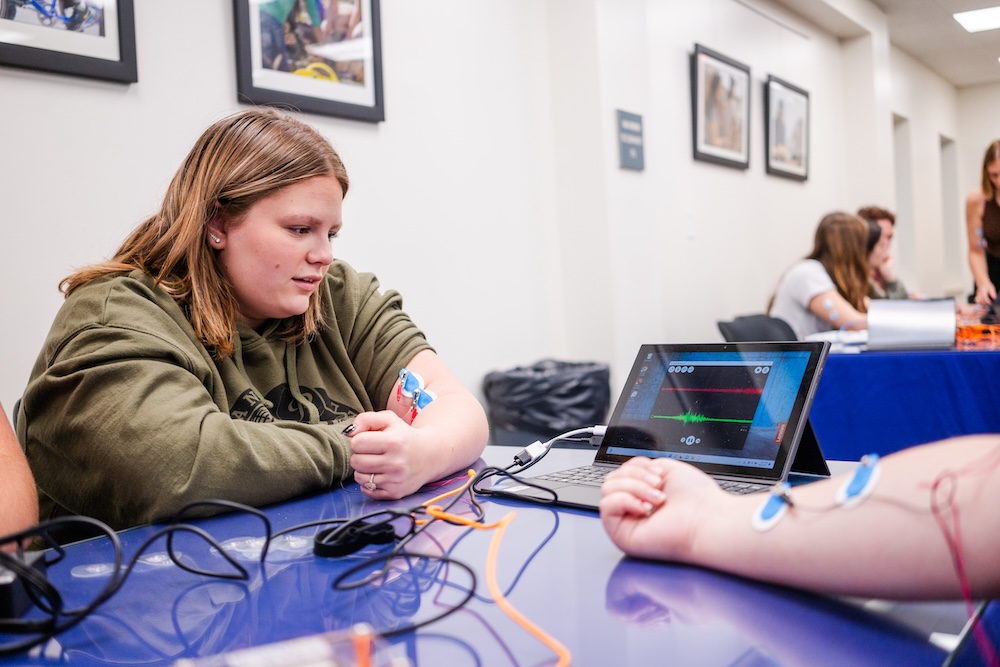
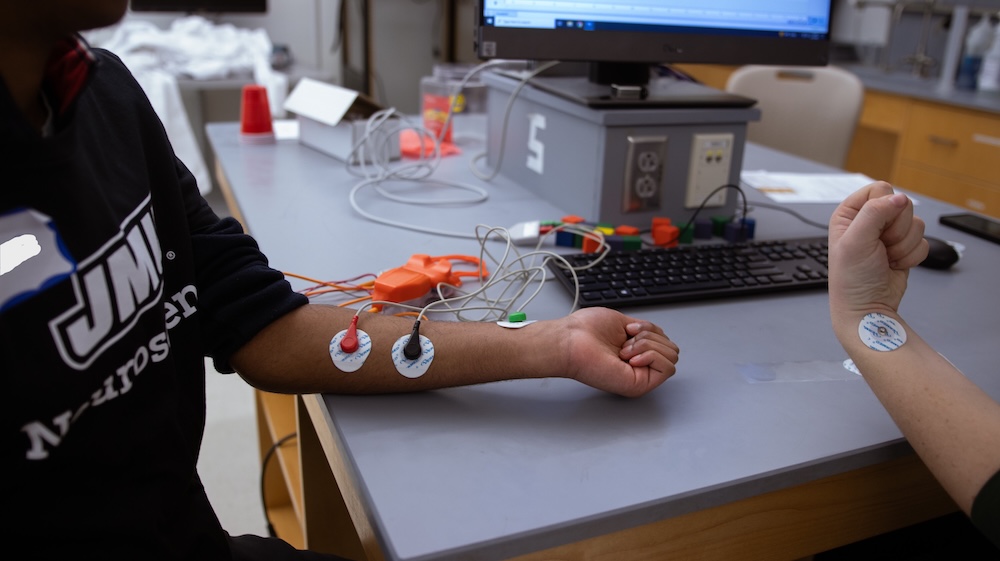
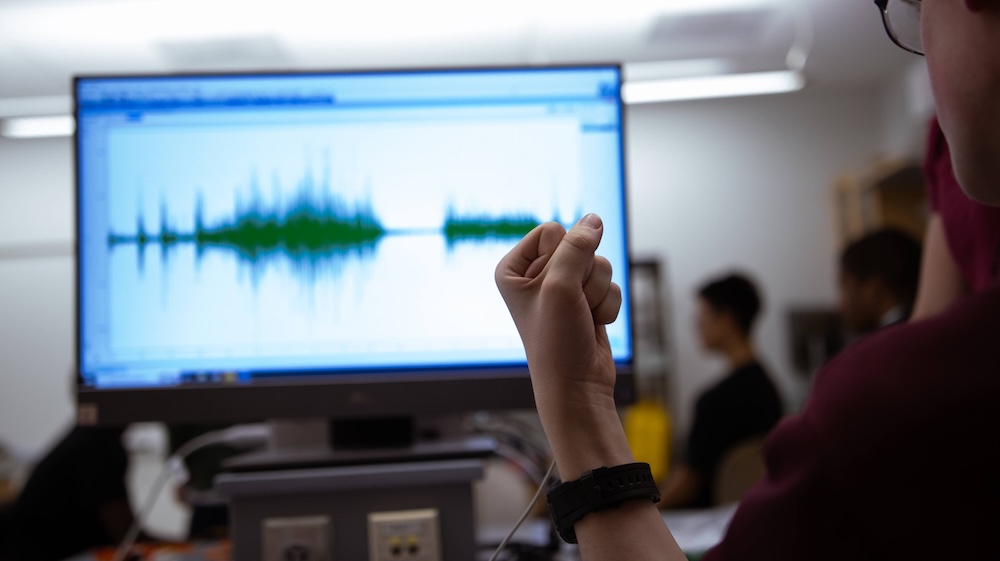
What if you could see your heartbeat—not just feel it? In this engaging, hands-on workshop, students explore the science behind how the heart works and learn that every beat is driven by electrical signals. Participants will measure their own pulse, investigate heart anatomy using models, and discover how blood flows through the body. The experience culminates in an introduction to electrocardiograms (EKGs), where students observe how doctors track the heart’s electrical activity in real time. This interactive session connects biology, physics, and health in a way that makes the invisible processes of the body both visible and exciting.



Faculty Developers: Dr. Bisi Velayudhan and Jess Marquardt, Biology
What students do:
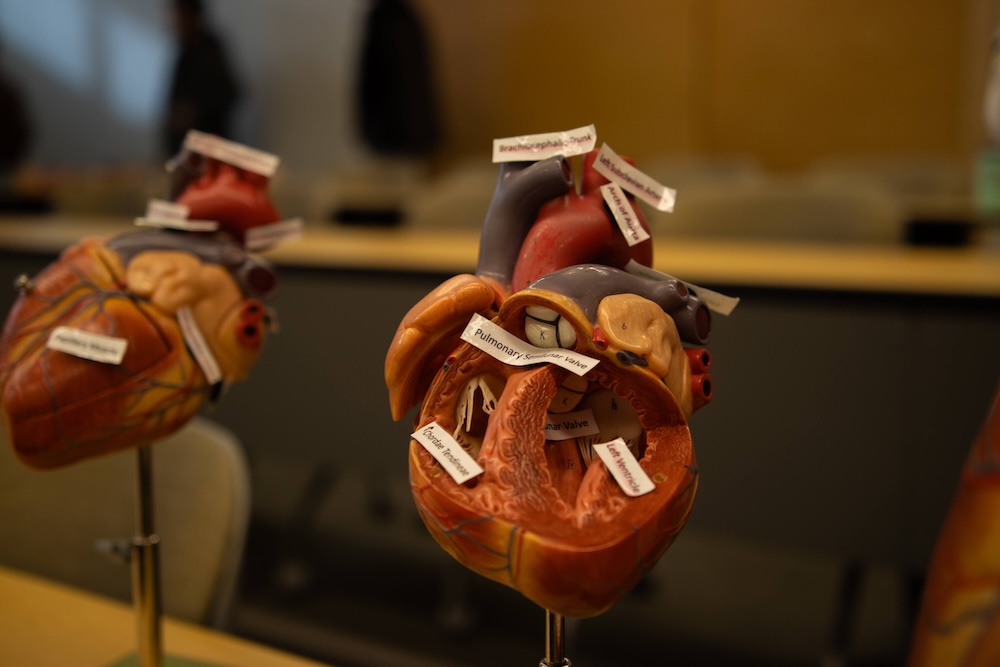
Students learn about the anatomy of the heart, how and where blood flows and how electricity starts it all. They measure their own pulse to calculate heart rate, examine heart models to explore anatomy, and observe how blood flows through the heart. They learn how electricity controls the heart and have the opportunity to have an EKG to view their own real-time electricity!
What students learn:
- How to measure and calculate heart rate (beats per minute)
- Basic heart anatomy, including chambers, valves, and major structures
- The role of the heart in the circulatory system and how it pumps blood
- How electrical signals control the heartbeat (cardiac conduction system)
- What an electrocardiogram (EKG) is and how it shows heart activity
- The relationship between heart structure, function, and overall health