Middle School Workshop
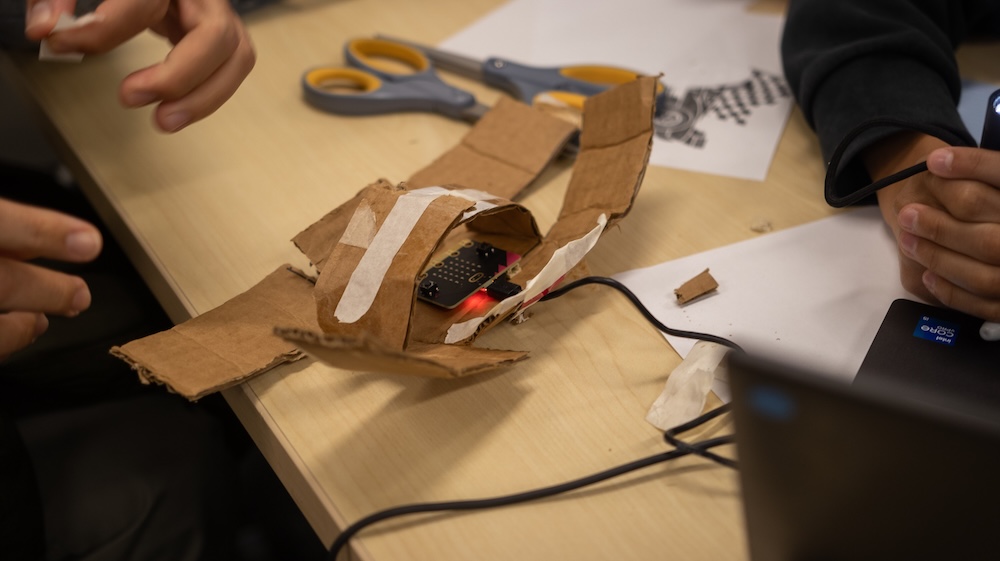
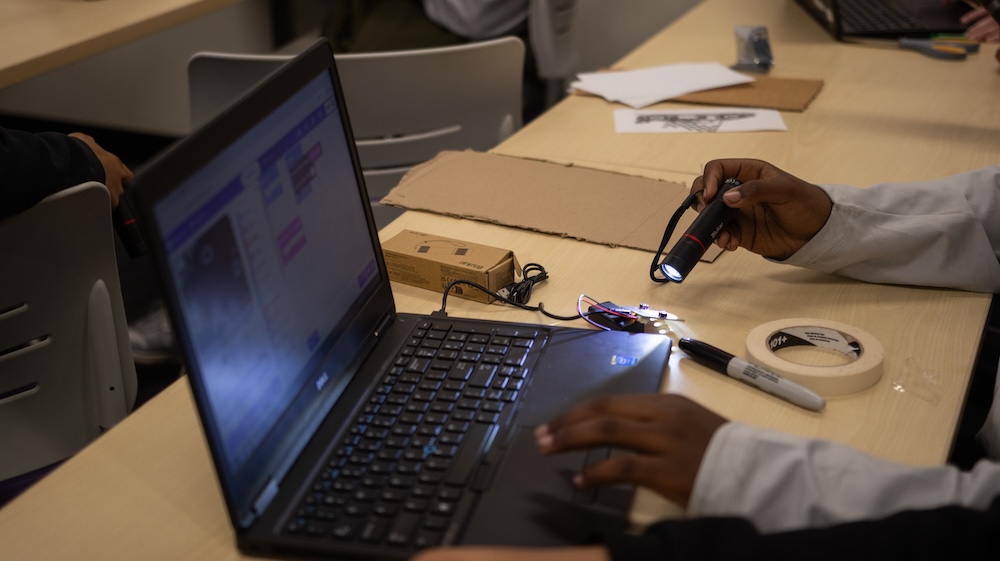
Do you enjoy visiting art museums? Do you love wandering through galleries, taking in painting after painting? Regardless of how you feel, have you ever wondered what it’s like for someone who is blind to walk through an art museum? Let’s explore a possible solution. Using a micro:bit, we create a light-sensitive musical synthesizer that transforms light levels into musical notes. Students are introduced to concepts in signal processing as they build a tool that translates visual signals into audio signals, allowing users to experience images in a new and unique way.


Adapted from tryengineering.org by: Stacie Mayfield, STEM Center
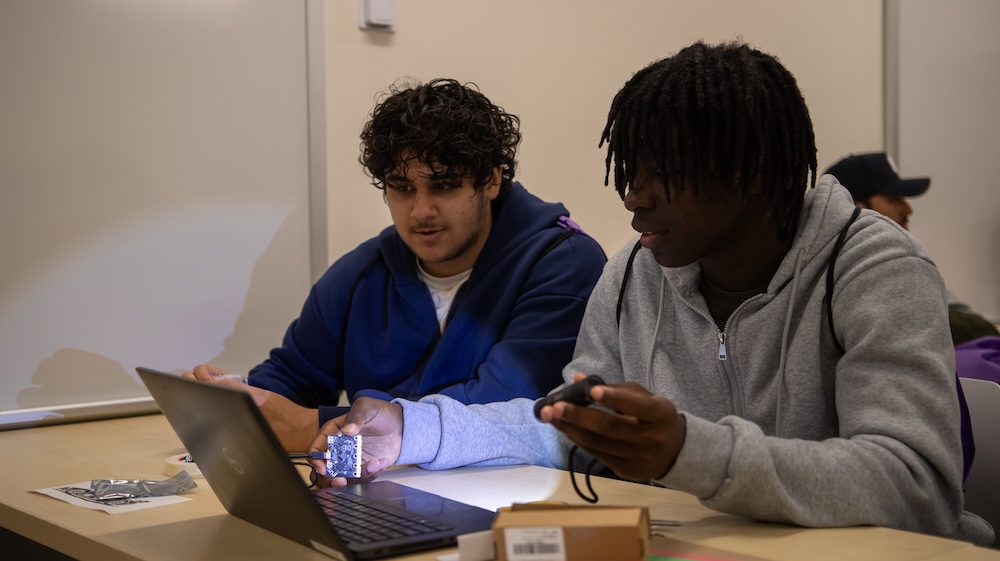
What students do:
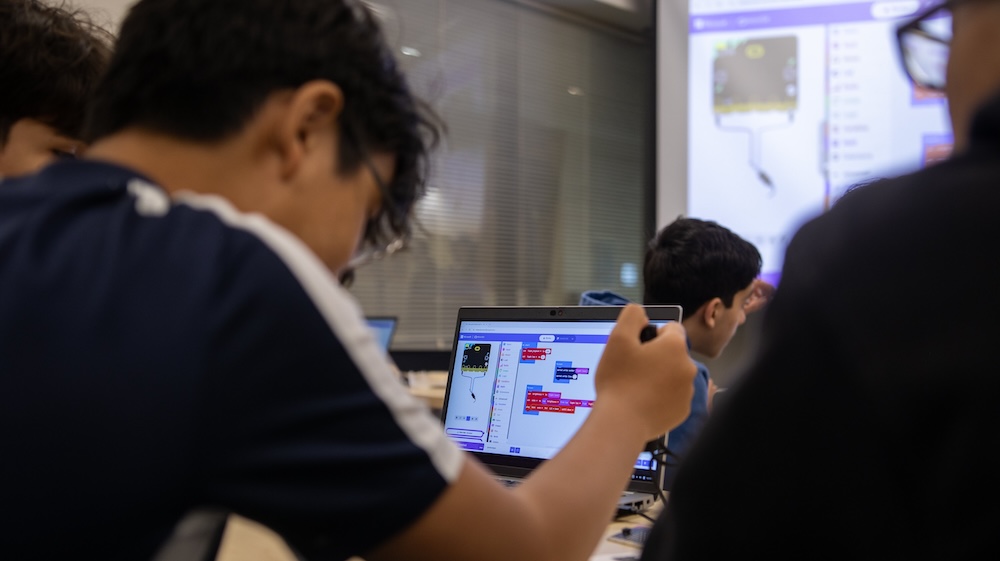
Students learn how to use a micro:bit to “read” a black-and-white image and replay it as sound. Following the engineering design proccess they plan, build, program, and iterate their prototype.
What students learn:
- Introduction to Digital Signal Processing.
- The concept of sampling and why it's important.
- How light intensity can be used to control outputs.
- How to map light intensity data to musical frequencies.
- Skills in iterative design and testing.
- How a microprocessor works and methods of coding.
- Encoded one signal (visual) and decoded as another (sound).