High School Workshop
The loss of limbs and spinal cord injury is becoming one of the greatest medical challenges of the 21st century for doctors and health care providers to treat; which raises the question, “how can these injuries be treated”? In this workshop we will explore how doctors and engineers use prosthetics to replace the function of lost limbs by conducting authetnic laboratory experiments. By the end of the workshop, students will better understand the medical challenges and solutions of modern prosthetics, as well as gain insight into the normal functioning of our neuromuscular system.


Faculty Developer: Dr. Corey Cleland, Biology
What students do:
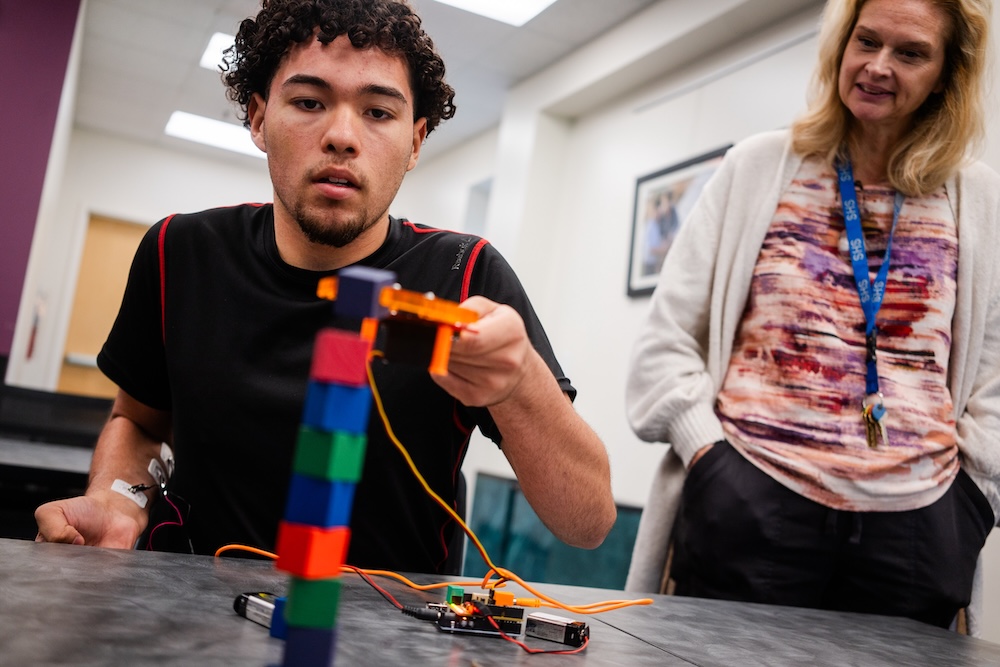
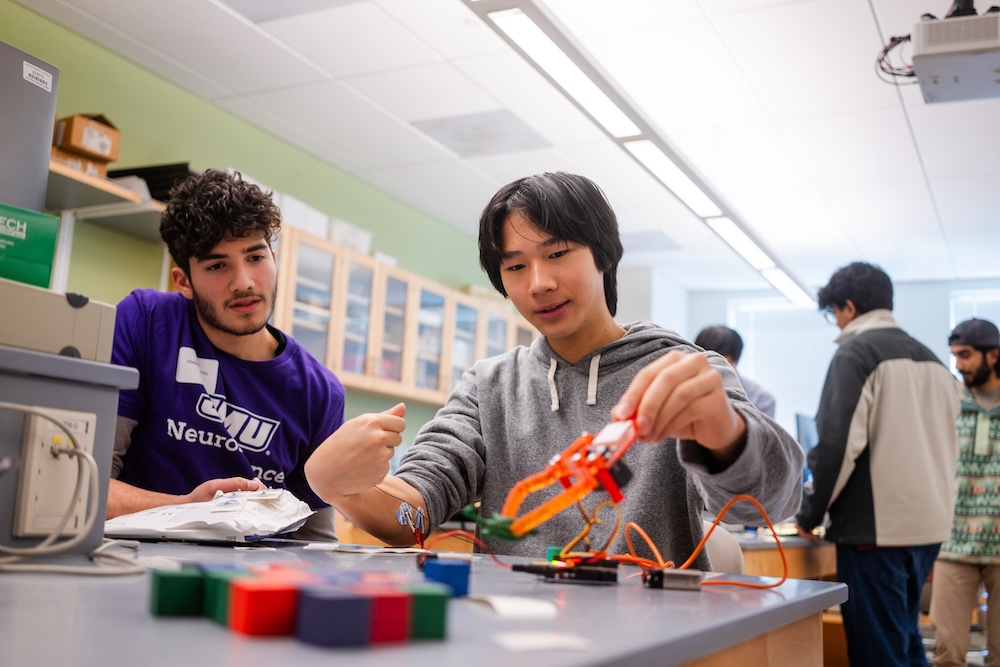
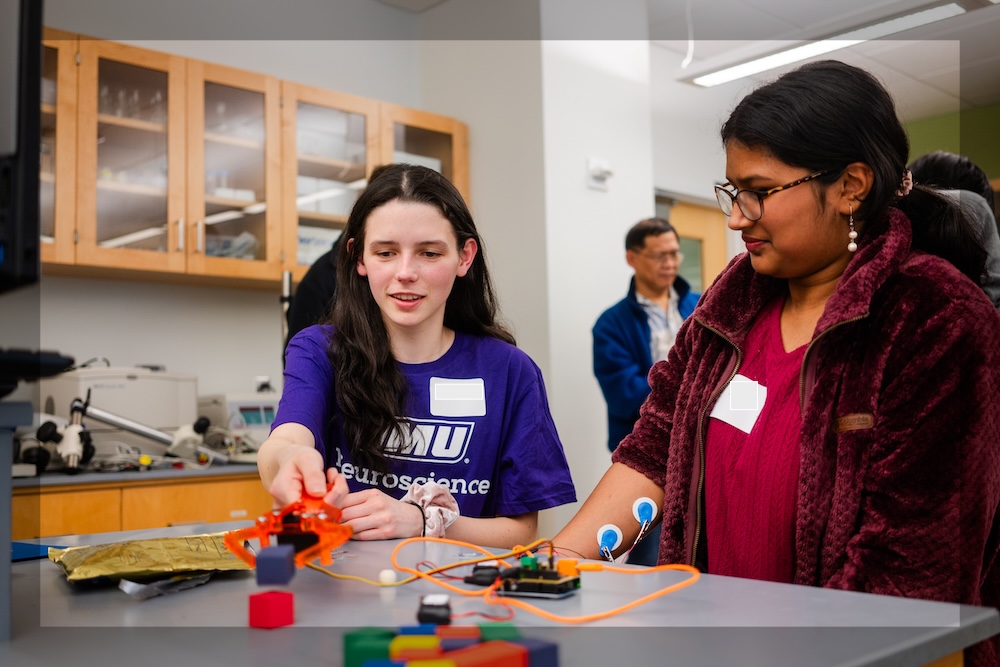
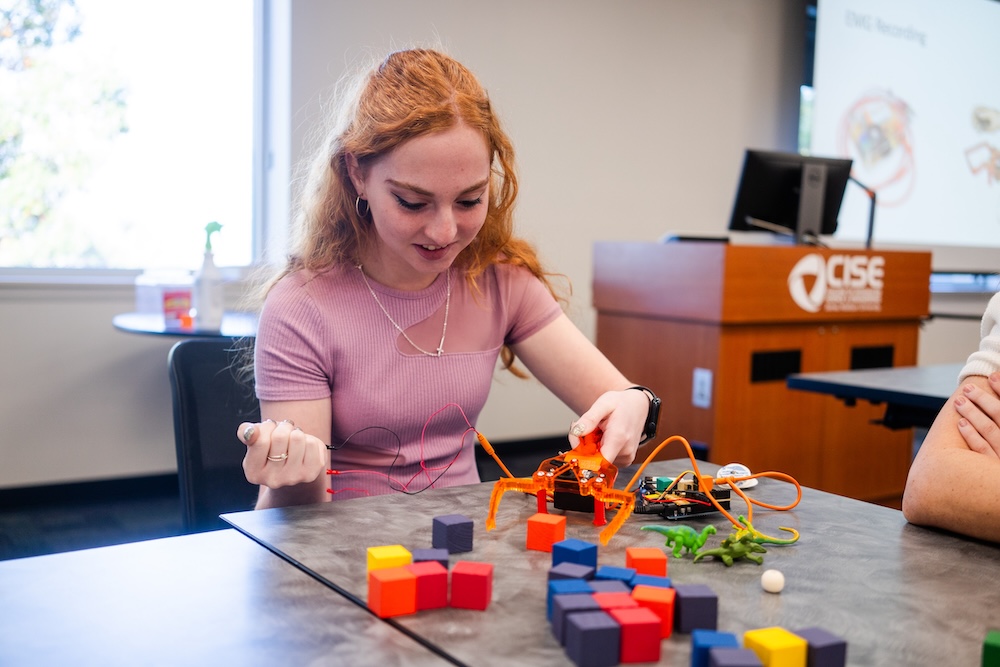
Students start with a discussion of the impact of limb loss and brainstorming medical solutions. They then participate in a two part labaratory. The first is recoding electrical activity of muscle to explore how electrical signals from functioning muscles can be used as control signals for prosthetics. The second uses electrical activity of muscles to control a prosthetic claw to better under the process and challenge of prosthetic replacements after limb loss.
What students learn:
- The process of science and engineering design thinking
- Data interpretation/analysis and visualization
- Organization of the brain, neural signaling, muscle function
- The role of electrical activity in muscle movement
- How amplifiers are used in medical research
- Neurology of movement control
- What is a good electrical connections
- How to interpret signals.
- Prosthetics central role in bioengineering.
Background Knowledge
- Williness to explore the laboratory activities
- Williness try to out their own ideas
- Ability to pay close attention and follow directions
Information for Teachers:
Connection to research:
As a neurobiologist interested in the neural control of movement, the design and control prosthesis form one of the more important implications of the basic research that Dr. Cleland conducts. Further, the recording techniques used in this session are the same used in Dr. Cleland's research lab.