High School Workshop
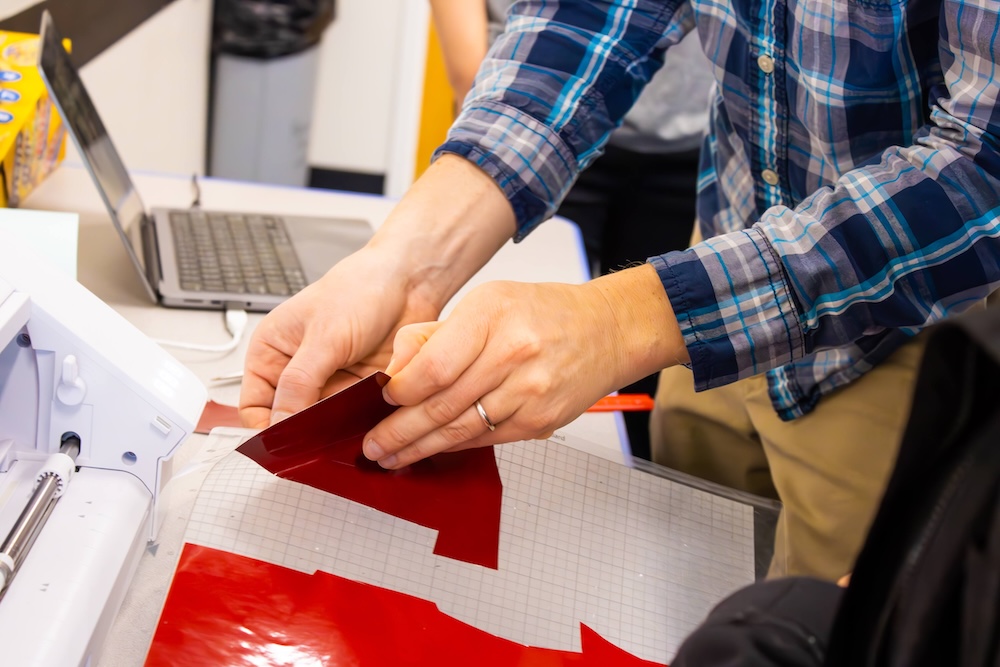
We make things out of wood, stone, plastic, fabric, and … numbers. Professional designers first describe things as a set of points, distances, and angles on a computer. Then machines read these numbers as they turn virtual plans into physical objects. In this workshop, students will see the digital design and fabrication process first-hand as you create a vinyl sticker of your very own. Students will dream up a mathematical design, code it up in a programming language, and send the output to a programmable cutting tool.


Faculty Developer: Dr. Chris Johnson, Computer Science
What students do:
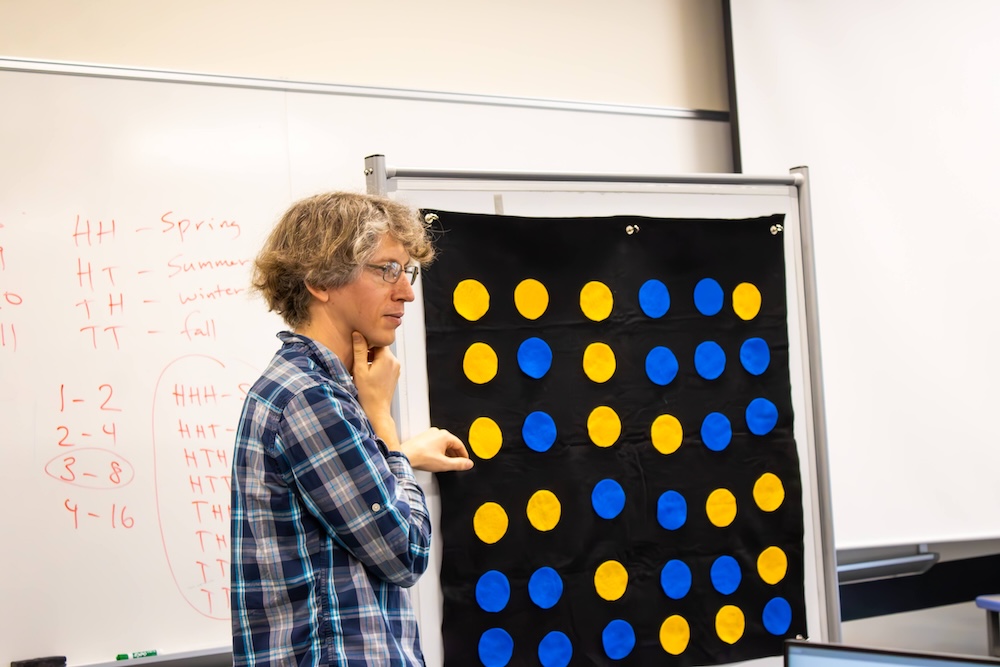
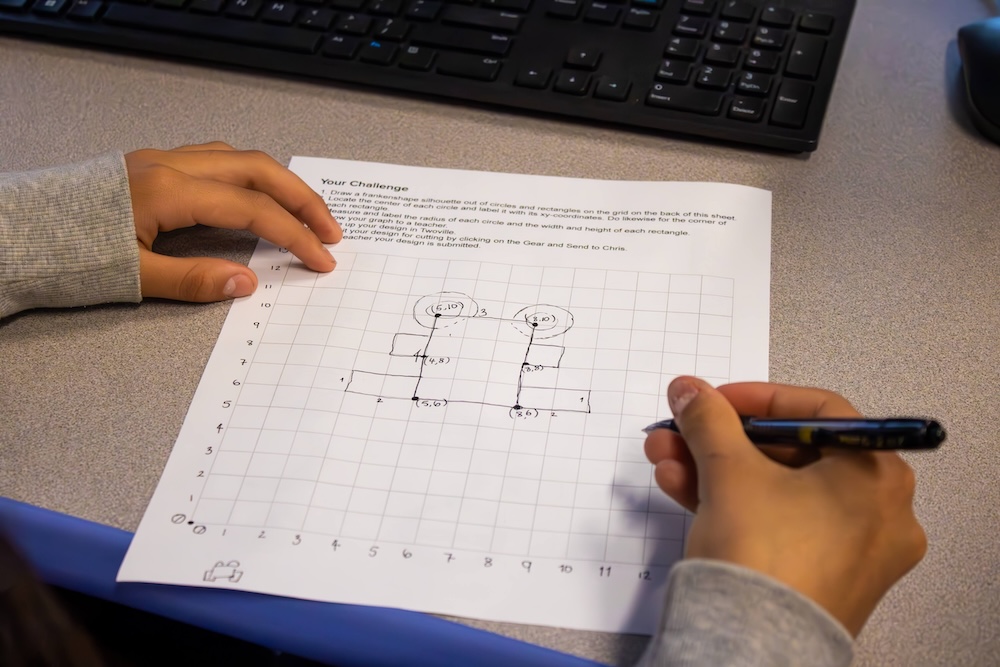
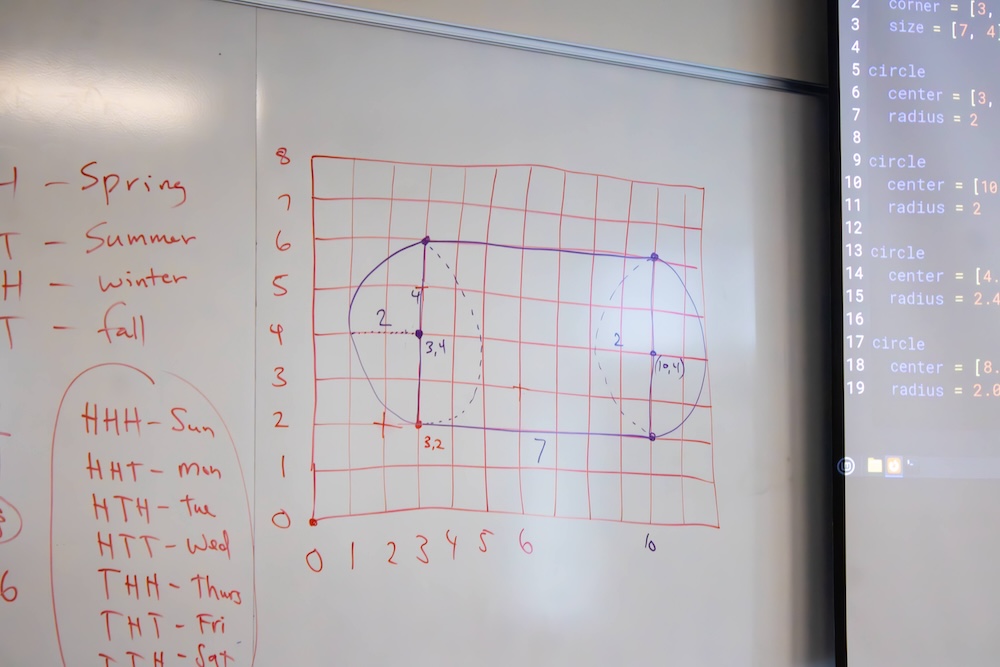
After a welcome and brief introduction to computer science, students will engage in two design activities. First, they will draw a composite shape out of rectangles and circles on graph paper, identify its mathematical properties, and code it up in a special geometric programming language developed by the instructor. Second, as time allows, they will draw a polygonal design and learn how to round off its corners using Bézier curves. The workshop will conclude with a reflection and a discussion of ways to continue learning at the intersection of mathematics and computer science. Students will leave the workshop with a vinyl sticker of their own design in hand.
What students learn:
- Spatial thinking, especially on the Cartesian coordinate system
- Linear and angular measurements, and the properties of circles and polygons.
- Mathematical thinking on graph paper
- Coding as a translation of ideas about the physical world into a digital form.
- Computational thinking including the algorithmic process (“What’s a good first step?”, “In what order should I complete these tasks?”, and “How do I derive what I need from what I already have?”)
- Quantitative reasoning including describing shapes in numeric parameters.
- Engineering design and fabrication including the fitness of their design.
Background knowledge:
- Cartesian coordinate system
- Geometry including angles, circles, and polygons
- No coding background need
Information for teachers:
A great ted talk about using geometry and math Pixar animations and the maths that make them work
This workshop is adapted from a fabrication summer camp that we hold. View an available manuscript of that lesson.
Connection to research:
The ideas students encounter in this workshop are the same ones that Dr. Johnson encounters on a daily basis in computer graphics, web design, and game development. In a program, there is no nature arranging objects in space and giving them color and shape. That’s his job!