

Getting to Know the Office of Research Development
News



SUMMARY: A Q&A with Dr. Lauren Pearce, Director of Research Development, explaining the services offered by the Office of Research Development
As James Madison University grows, the Division of Research, Economic Development and Innovation (REDI) plays a strategic role in supporting and facilitating external funding support. REDI's Office of Research Development (ORD) leads these fundamental efforts.
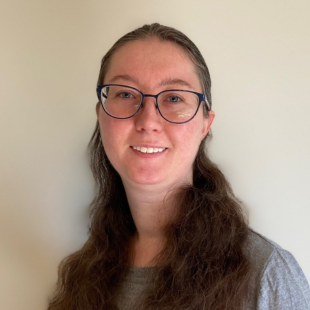
REDI recently connected with Dr. Lauren Pearce, Director of Research Development, to learn more about ORD and its services, highlighting the variety of ways it supports faculty throughout the proposal development process.
These responses have been edited for length and clarity.
REDI: Introduce us to the Office of Research Development (ORD).
Pearce: The Office of Research Development assists JMU faculty and staff with finding and applying for external funding for their work, whether it’s research, scholarship, creative work, teaching or public service. Our focus is on increasing the competitiveness of proposals. In addition to working one-on-one with PIs, we also hold a number of events throughout the year. These range from very focused events like our NIH grant writing intensive to more exploratory events like our Broader Impacts and Community Engagement Resource Fair. Additionally, we run some seed grant programs to support PIs preparing proposals, including our expert reviewer and revise-and-resubmit programs. Since we also help PIs find collaborators, we’ve also started organizing interdisciplinary clusters in areas where JMU has a strong research portfolio and where there’s external funding.
REDI: What services does ORD offer to the JMU community to help with applying for grants and other forms of external funding? When should PIs seek your assistance?
Pearce: We are excited to have a diverse array of services! This includes:
- One-on-one consultations (e.g., to find appropriate funding opportunities, explore how to align a project with a funder’s priorities, etc.)
- Workshops and intensives, such as our NIH intensive, college-based grant writing academies, NSF working group and more. Several of these have been recorded and can be found on our website.
- Grant preparation toolkits: we have specialized toolkits including templates for the NSF, NIH and William T. Grant Foundation, as well as toolkits designed for the humanities, arts and social sciences more broadly.
- We offer three seed grant programs:
- Revise and Resubmit, which helps PIs respond to reviewers’ comments for previously rejected proposals;
- Expert Peer Review, in which ORD will fund an expert to review a proposal before submission,
- Seed Grants to Support Interdisciplinary External Proposals, which has three tracks for different types of external funding proposals.
- A new service we are rolling out this semester is grant editing: a fresh perspective can help identify confusing and unclear areas of the proposal and improve its overall readability.
- We work closely with the Office of Sponsored Programs-Administrative Services (OSP-AS) to provide just-in-time services to PIs who are completing grant proposals — for example, working closely on them to use SciENcv to complete biosketches.
- As time and staffing allow, we can perform funding landscape reports and/or intelligence analysis reports on specific funders or programs.
PIs should reach out to us whenever they are thinking about pursuing external funding for their projects. We can offer assistance at any stage, from identifying funding opportunities to providing a final set of eyes to reviewing the final proposal.
REDI: How does ORD work with the Office of Sponsored Programs throughout the proposal process?
Pearce: We work closely with OSP-AS because both offices work with PIs to prepare their proposals. Our focus is on proposal competitiveness, helping PIs put together stronger proposals, whereas OSP-AS focuses more on compliance, making sure that proposals comply with all JMU and sponsor regulations.
A typical PI will first work with the ORD to identify funding, then work with both ORD and OSP-AS while building proposals, and then finally OSP-AS will assist with internal approval and routing. Here’s an example of that middle part: OSP-AS assigns a grants specialist to work with a PI on building a budget, because that’s where a lot of the compliance concerns come in. Let’s say that as they build the budget, they realize the grant won’t be able to fund everything the faculty member initially wanted to do. The faculty member might then meet with their research development associate to brainstorm how to cut while still keeping the project competitive, and then they have their research administrator review the narrative to make sure that there’s no dangling references to parts of the project that were cut.
REDI: How has ORD’s programming grown over the past year?
Pearce: We’ve started several exciting new initiatives in the past year. This fall, we rolled out grant editing support through a partnership with the English MA program that we are very excited about. Last spring, we also started our internal seed grants to support proposal development. We have three programs:
- Revise and Resubmit: This funds work that helps to address reviewer comments on rejected proposals to help them be more competitive in the next rounds.
- Expert Peer Review: This provides limited funds for a peer expert — someone in the field — to review your proposals and provide expert feedback.
- Interdisciplinary Proposal Development Seed Grants: The three-track program supports cross-college or cross-division teams of PIs putting together proposals for funding interdisciplinary projects.
We also started our interdisciplinary research clusters this past year, and we invite faculty working in those areas to join them.
REDI: Does ORD have any upcoming events to put on our calendars?
Pearce: Centers and Institutes External Funding Intensive
Date: October 8, Time TBD (half-day or full-day)
Location: Lakeview 1104
Whether you are currently leading a center/institute or interested in starting one, this workshop will provide practical strategies for using external funding to build a sustainable foundation for your work. A key component of the intensive will be center-specific challenges such as using direct and indirect funding strategically to support operations, balancing mission and purpose with the flexibility needed to pursue emerging opportunities, and the differences between programmatic and research grants. Different staffing models and how this connects to funding will also be discussed. Additionally, participants will learn how to identify promising funding opportunities, develop competitive proposals, and build relationships with funders.
Prior to the intensive, participants will receive an individualized landscape report of the funding available for their area, and during the course of the intensive, we will develop a "one-pager" describing their work to circulate with funders.
This intensive is also open to directors of offices and other units that would like to pursue programmatic external funding.
Please let us know of your interest.
Madison Research Club: International Development and Diplomacy
Date/Time: October 14, Wednesday - 8:30-9:55 AM
Location: Taylor Hall 304, Zoom
Madison Research Club’s October Session catalyzes interdisciplinary collaboration by bringing researchers together in the Interdisciplinary International Development and Diplomacy Research Cluster designed to surface shared interests and spark new connections. This approach has already supported the launch of emerging clusters, including our Interdisciplinary Health & Wellbeing Research Cluster, Interdisciplinary AI Research Cluster, and Interdisciplinary Sustainability Research Cluster.
Objectives
- Build collaborative convergence networks with researchers who share an interest in international development and diplomacy research, broadly defined.
- Identify opportunities for interdisciplinary collaboration by learning about others’ expertise, tools and ongoing projects.
- Expand perspectives on international development and diplomacy research by engaging with diverse approaches and methodologies beyond one’s own discipline.
- Formulate potential collaborative ideas by integrating diverse methodologies, tools and datasets.
- Propose research questions or projects that apply interdisciplinary insights to international development and diplomacy challenges.
Structure
- 8:30-8:35 Welcoming and introduction
- 8:35-8:45 ORD Updates
- 8:45-9:15 3-min talks
- 9:15-9:50 Structured Networking
- 9:50-9:55 Current international development and diplomacy research-related opportunities (also available as a handout)
Broader Impacts and Community Engagement Resource Fair
November 6, 12:00-1:00, The Forum at Hartman Hall
What could happen when your work connects with the right people?
Your research, scholarship and creative work has the power to do more than advance knowledge — it can create opportunities for students, strengthen communities, influence practice and policy, and make a meaningful difference across the Commonwealth and beyond. Join us for the Broader Impacts & Community Engagement Resource Fair, where JMU faculty and staff can connect with campus resources and community organizations to discover new partners, engage students, reach new audiences and turn ideas into real-world impact.
Registration requested (lunch provided).


