

Health Innovators funding JMU’s first summer research internships
Featured Stories


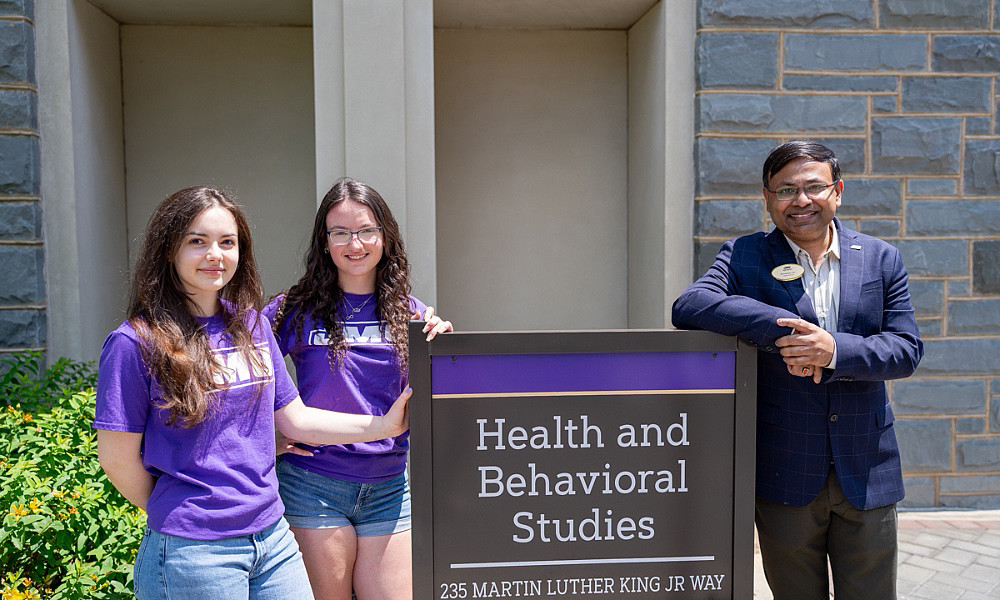
SUMMARY: The Health Innovators Program is JMU’s first paid summer research program for undergraduate students. The internship for third- and fourth-year Health Sciences majors launched in May and is funded through the summer of 2028 by Dr. Ian Roy (’19) and his wife, Paige (Crotty) Roy (’19), board members of the Crotty Family Foundation. The program supports JMU’s Work-Based Learning Experiences to increase students’ career readiness and offer the sort of research-based opportunities usually only available to graduate or doctoral students.
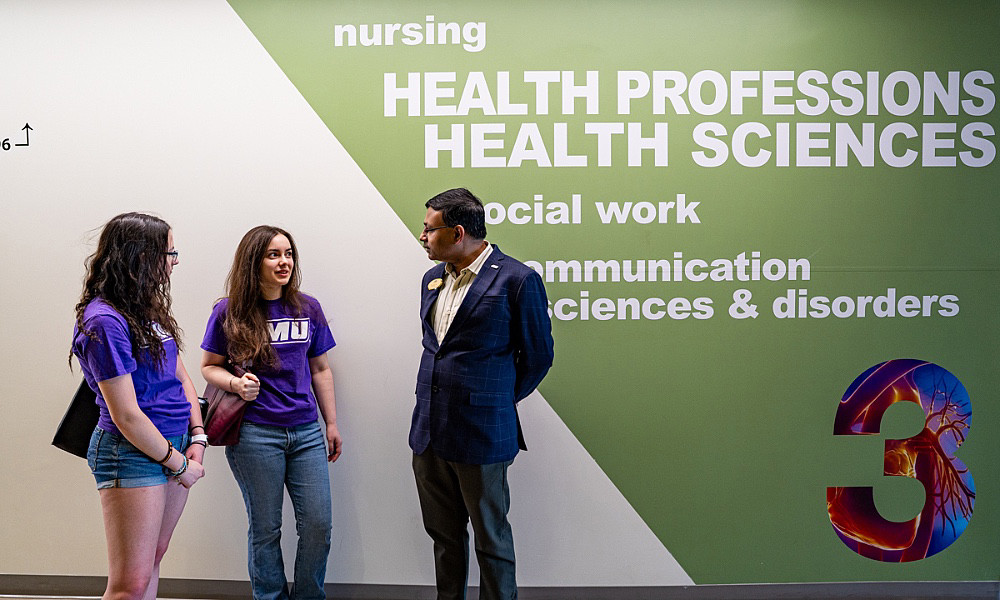
Third-year Health Sciences major Sofia Nystrom almost didn’t apply for JMU’s inaugural Health Innovators summer internship. The program was offering four students the chance to work with two faculty experts, and Nystrom figured it was a long shot that she would be chosen from among the dozens of applicants.
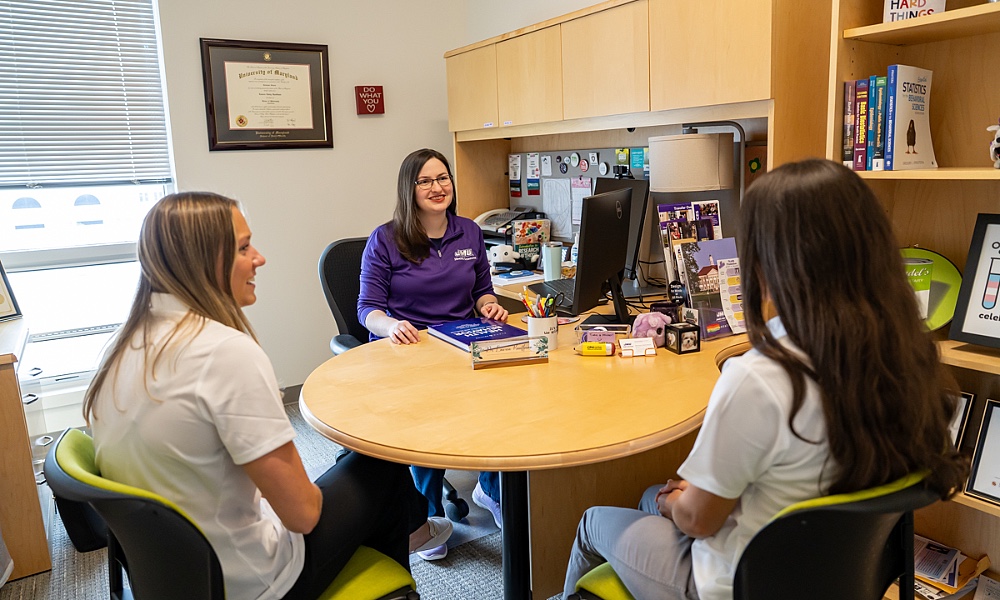
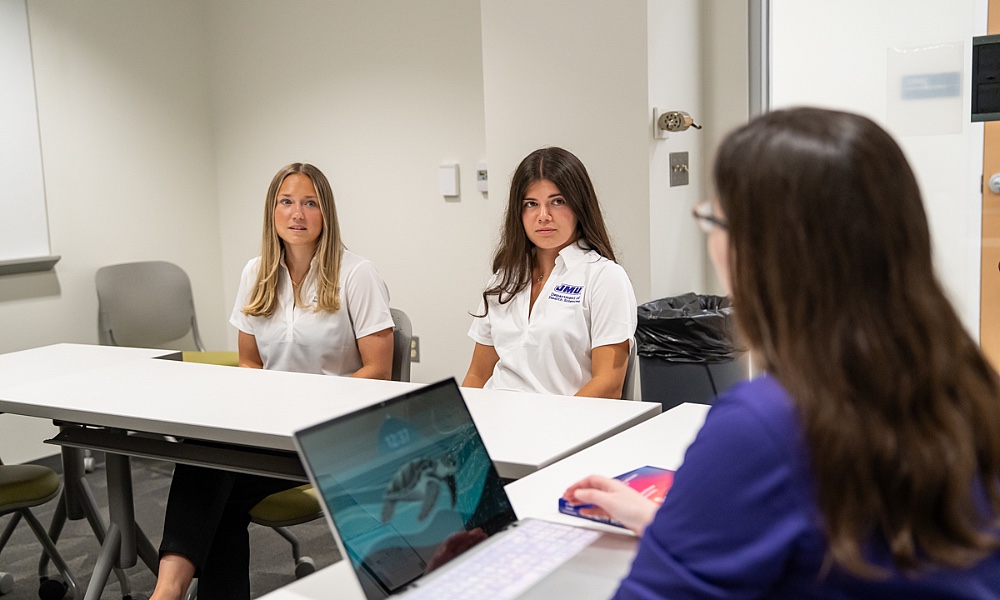
She tried anyway and landed one of two placements working one-on-one with Dr. Lauren Kauffman on a long-term research project that puts a unique spin on vaccine-hesitancy research among college students.
“It’s been a great opportunity,” said Nystrom, of Fairfax, Virginia. Being part of the internship has further influenced her desire to pursue a Master of Public Health degree. “It’s given me more experience. I’ve gotten to dip my toes in the water and see what it’s going to be like in the future.”
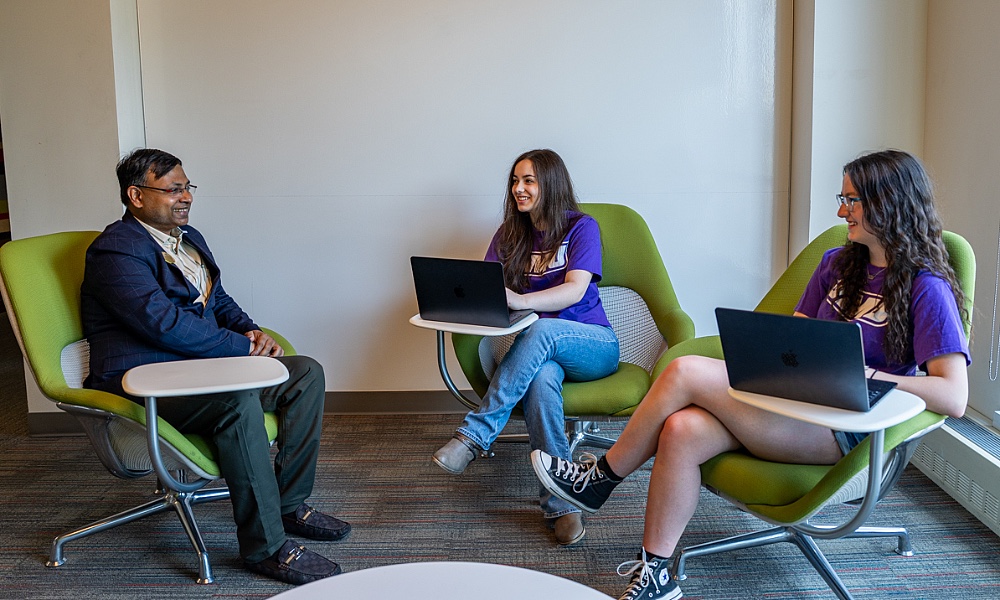
Another summer intern, Sydney Proctor, secured one of two placements with faculty expert Dr. Biswadeep Dhar. A third-year Health Sciences major with minors in Pre-Medicine, Communication Studies and Biology, Proctor says she’s leaning toward pursuing a master’s in Radiology.
“As an undergrad, if you don’t know where to look, it’s very hard to find those research opportunities,” she said. “You just kind of feel behind, that you’re not getting the right things you need to continue your career the way that you want. … Undertaking a task like this can seem very daunting at first, considering how competitive it is. It’s a time commitment for sure. But I would say to students, if they are very interested in this, and this is what they want to do, they should be bold and be proud and confident in themselves that they have the ability to receive opportunities like this.”
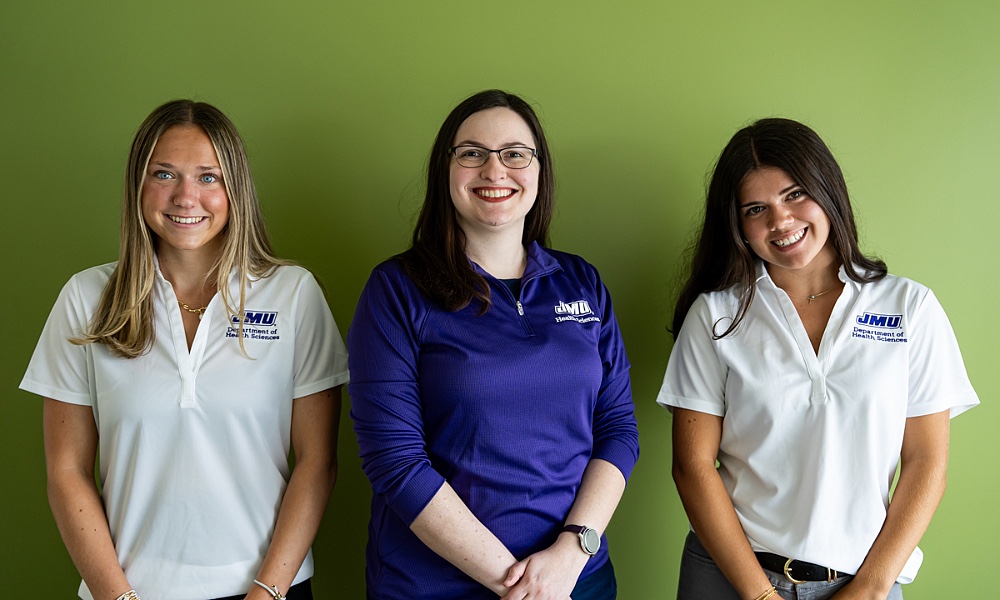
Proctor and Nystrom are part of the Health Innovators Program, a paid summer internship program for third- and fourth-year undergraduate Health Sciences majors that launched in May. The program, which supports JMU’s Work-Based Learning Experiences to increase students’ career readiness, is funded through the summer of 2028 by Dr. Ian Roy (’19) and his wife, Paige (Crotty) Roy (’19), board members of the Crotty Family Foundation.
More than 80 Dukes applied for the four intern placements with Dhar and Kauffman, both assistant professors in the Department of Health Sciences. This is the sort of research opportunity usually only offered to graduate or doctoral students, they said.
“I really wish I had something like this when I was an undergrad,” said Kauffman, who double majored in Biology and Studio Art at Gettysburg College before earning her master’s and doctorate from the University of Maryland School of Public Health. “Having these kinds of opportunities in public health and health sciences right out of the gate for undergrads — they know that these jobs are out there; they know that these roles exist and are waiting for people like them. People don’t always see how valuable opportunities like this could be, and the fact that the donor did meant a lot.”
Dhar agreed: “I think this will be a steppingstone toward more opportunities in research,” he said. “I know there are plenty of students who are interested in research, but they’re not getting the one-on-one mentoring opportunities. So I would say this is a really generous vision from the donors for us to start providing these kinds of opportunities.”
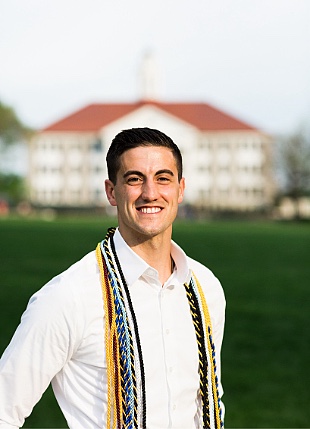
Roy, who currently practices in Worcester, Massachusetts, was inspired to fund the new internship program as a way of meeting an important need for undergraduate students. A Health Sciences major with a minor in Pre-Medicine, he wanted to offer Dukes in the College of Health and Behavioral Studies the kind of undergrad research experience he had a tough time finding while at JMU. His wife, a current Hart School Advisory Boardmember who majored in Sport & Recreation Management, shares that vision.
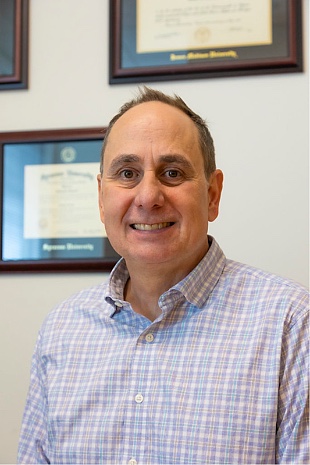
Dr. Jeffrey Herrick, professor and academic unit head of health sciences, hopes the program expands to a greater number of students in its second and third summers.
“I would say, so far, first and foremost, it’s a hit,” Herrick said. In addition to the large number of student applicants, he says the program had numerous strong faculty applicants. “It was competitive, and I’ve heard nothing but positive results from both the faculty and the students involved.”
Besides giving students research experience, the program is allowing them to work on unique and innovative scientific studies.
In their vaccine-hesitancy study, Kauffman’s students were allowed to choose their focus on COVID-19 and which health theories they would pursue.
There is a lot of vaccine-hesitancy research out there, Kauffman says. “The thing about this research that is innovative is that it’s based in two different health-behavior theories that have different focuses to get a more comprehensive understanding of vaccination behaviors.”
Nystrom chose a focus on the Social Ecological Model for her aspect of the project, Kauffman says. “This theory considers how influences at different social levels — individual, interpersonal, community and policy — impact a person’s intentions and behaviors.”
Fourth-year student Paige Hoffman, of Ruckersville, Virginia, chose to focus on the Theory of Planned Behavior. “This provides a framework that has a detailed individual-level focus and considers attitudes, subjective norms, and perceived control as predictors for behavior,” Kauffman said.
Kauffman explained that while the faculty provided the framework for the project, it’s a student-guided research experience. “Any decisions and options were left open to them and decided on as a group,” she said.
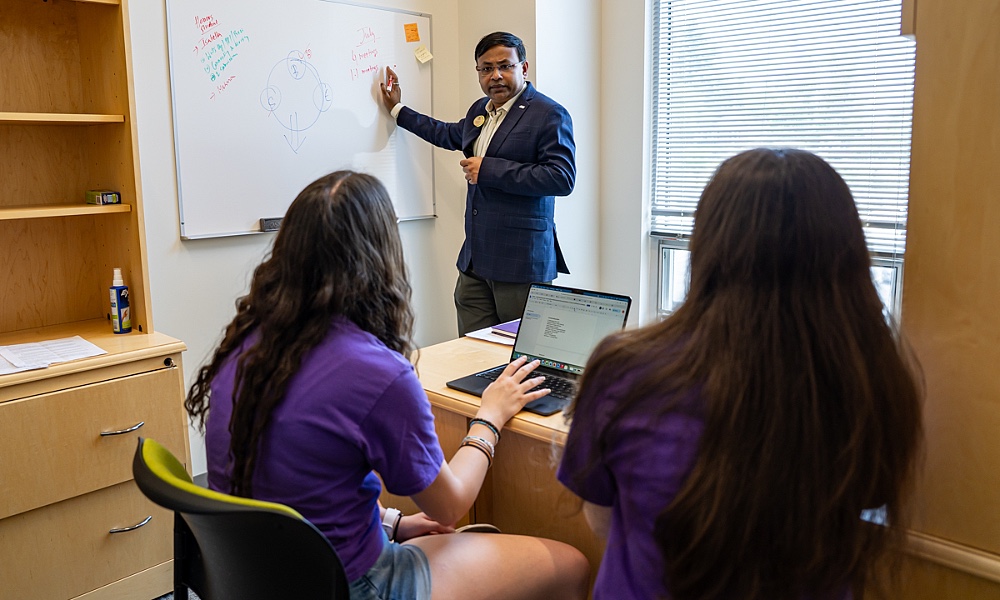
Dhar has been guiding Proctor and third-year student Elena Fischinger, of Vienna, Virginia, in conducting a behavioral study that aims to understand participants’ knowledge, attitudes and practices toward salt intake. The study focuses on prevention of chronic disease, particularly cardiovascular health, and the different ways individual variability in dietary sodium adherence can modulate cardiovascular risk profiles and long-term blood pressure self-regulation.
“It’s a very unique study,” Dhar said. “This is a behavioral study, unlike any educational interventions or policy interventions. … There are diverse populations, and salt intake is a modifiable risk factor for chronic disease, such as hypertension. This phenomenon remains widely underrecognized among the general population.”
While Fischinger has been researching the effects of salt substitutes, Proctor has been focused on how salt intake affects autoimmune disease. “We are just trying to inform people of how much they should be consuming, since the American diet perpetuates an influx of salt, and try to find healthier alternatives,” Proctor said. “We are not trying to eradicate it. We’re just trying to decrease it and inform people.”
In addition to supporting what could be an impactful study about hypertension, the internship funding also opens the door to JMU pursuing external funding for future studies, Dhar says.
“My goal is to write larger grant proposals, where we could also earn federal funding,” he said. “But the thing is, we couldn’t do that unless we show that we have some promising findings. For those results, we need this kind of funding at the internal level. … We are using this data to show that we have some evidence to move forward with broader research.”
The gift includes funding for Kauffman, Dhar and their students to finish their research following the summer session, write up their studies for journal publications, and present their findings at the National Conference on Undergraduate Research in Grand Rapids, Michigan, in April. The students will also have their names included as authors of their studies in the professional journals that publish their research.
Without the internship funding, Kauffman and Dhar would be teaching a summer class or working with scholars at other universities instead of working one-on-one with JMU research students.
“I work with research students or scholars all throughout the year but not through JMU,” Dhar explained. “This is the first time I’m working with the JMU students on research since I joined the university. … When I saw this position [announced] last fall, I was very much interested, because this is a great opportunity to do some research — like primary research, collect data on my own and then publish it in good journals.”
Until now, he says, JMU never offered the kind of opportunities for student instruction he’s getting through the Health Innovators Program. Likewise, Kauffman normally teaches JMU classes during the summer.
The four interns are gaining hands-on experience in research that Dhar said is “even stronger than a 4.0 GPA.”
“These folks are genuinely interested in research,” he said of his students. “Looking ahead, the Graduate Admissions Committee or the Medical Admissions Committee will look for whether they have real research experience and/or any publications. That doesn’t mean everyone has to do that, but for those students, this gift is really, really helpful.”
It’s also been a great experience for him. “It’s two-directional,” Dhar said. “I’m also learning from them, as I’m getting different ideas from young minds.”
With plans to graduate in December, Hoffman says the critical thinking, communication and research skills she’s gained from the internship will help her pursue a career in occupational therapy. “My goal is to help patients live life more independently by encouraging preventative health and leading them in activities that are meaningful to them,” she said.
Fischinger, a Biology major who plans to go into epidemiology or immunology, says she was unsure of the best method of proceeding with her studies before starting this internship.
“I think the opportunity of the internship itself and the mentorship has increased my positivity toward my future,” she said. “Now that I have a mentor and research experience, I have a better understanding of what this career is and how I can really do well in the future.”
Building the internship he never had
JMU’s Health Innovators Program, funded by Dr. Ian Roy (’19) and Paige (Crotty) Roy (’19) as board members of the Crotty Family Foundation, is the first summer internship program in the College of Health and Behavioral Studies that pairs JMU students with faculty mentors for research. The gift is inspired by Roy’s time at JMU and his personal struggle finding strong internship experiences while majoring in Health Sciences with a minor in Pre-Med.
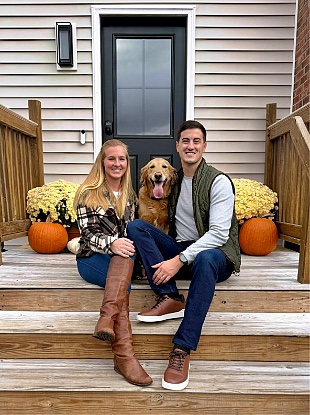
“Each winter and spring I agonized over what I was going to be doing during the upcoming summer to advance myself professionally and to prepare for professional school applications,” Ian Roy said about seeking internship opportunities as a student. “It always felt like I came up short.”
Roy put in significant effort looking for a mentor. It wasn’t until his junior year, when he developed a mentorship with chemistry and biochemistry professor Dr. Christopher Berndsen, that he earned what he called his “first real-world, skill-building internship.”
Looking back now, he saw an opportunity to fill the gap by giving back. “We can change this,” he said of his struggle as a student to find a genuine research-based internship. “I believe in the impact this program can have on current students and faculty.”
The Health Innovators Program is set up as an expendable gift, which started supporting students in May and will continue through Summer 2028.
To Roy, the fund is about giving JMU students the kind of real-world exposure that he had to seek out largely on his own: “grantsmanship-like experiences, budgeting, designing and implementing, stakeholder engagement and sharing results through posters, presentations, or publications.”
For JMU’s students who will gain confidence, experience and mentorship through the program, this gift is only the first chapter. They, like Roy, will have more opportunities as they pursue their career paths.
Since leaving JMU, Roy has earned a Master of Public Health, with a concentration in Epidemiology and Biostatistics, and a Doctor of Medicine. Now completing his residency in family medicine at UMass Chan Medical School’s Worcester Family Medicine Residency program in Worcester, Massachusetts, he plans to pursue a fellowship in primary care sports and exercise medicine.
Paige Roy, a current Hart School Advisory Board member, majored in Sport and Recreation Management with a minor in General Business.
While the Health Innovators Program can greatly impact students, Ian Roy hopes the program does the same for faculty.
“We hope that this can be an opportunity for those who truly enjoy mentoring students and for them to bolster these important skills,” he said. “Some of my and Paige’s most meaningful mentors remain at JMU, and we truly could not be where we are today without them.”


