

Redefining the role
First lady Kim Schmidt, a mental health nurse practitioner, aims to support student wellness
Featured Stories


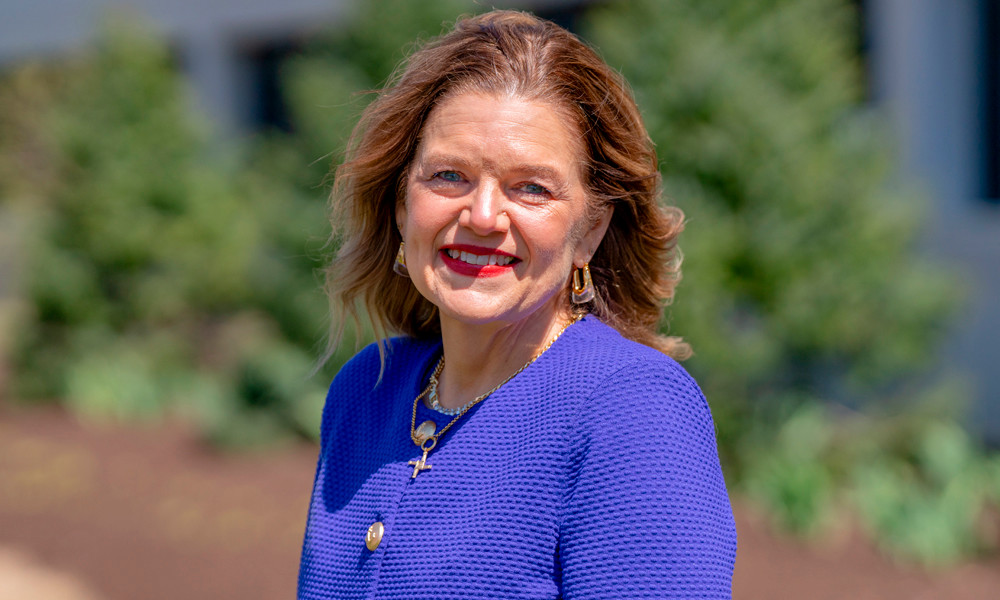
SUMMARY: Kim Schmidt, spouse of President Jim, hopes to foster a campus culture centered on well-being by expanding access to services, encouraging open dialogue and promoting community connection among students.
First impressions count. When President Jim set foot on campus last year, he intentionally held back his gut feeling about JMU from his wife, Kim Schmidt. “He wanted to see what my impression was first before we shared it together,” she said.
“This is such a special place,” Schmidt gushed. “I cannot tell you how excited I am to be here. I regularly stop and kind of pinch myself and feel gratitude, because there is a magic and energy here that is different than any place Jim and I have ever been.”
As she stands ready to make her mark on Madison, JMU is quickly making its mark on the first lady. “It makes me feel like we’ve been given a gift. Maybe it’s hyperbolic for me to say this, but I feel like we’re at probably the most dynamic college campus in the country. There are so many positive things going on, and yet there’s also this room for growth.”
A mother, grandmother and a licensed mental health nurse practitioner and consultant, Schmidt is busy settling into a routine. She jets back and forth between the Shenandoah Valley and the Upper Midwest, finalizing personal matters, like selling the couple’s Wisconsin home. Schmidt has also dialed back her face-to-face clinical practice to 20 hours per week, seeing half the patients she did prior to her new role in the Office of the President.
Furthering her education has been a balancing act. Schmidt is finishing her last year of the psychoanalysis and psychotherapy program at the Washington Baltimore Center for Psychoanalysis. “I have to decide whether I’m going to go to the next stage, which is actually to be a candidate as an analyst.”
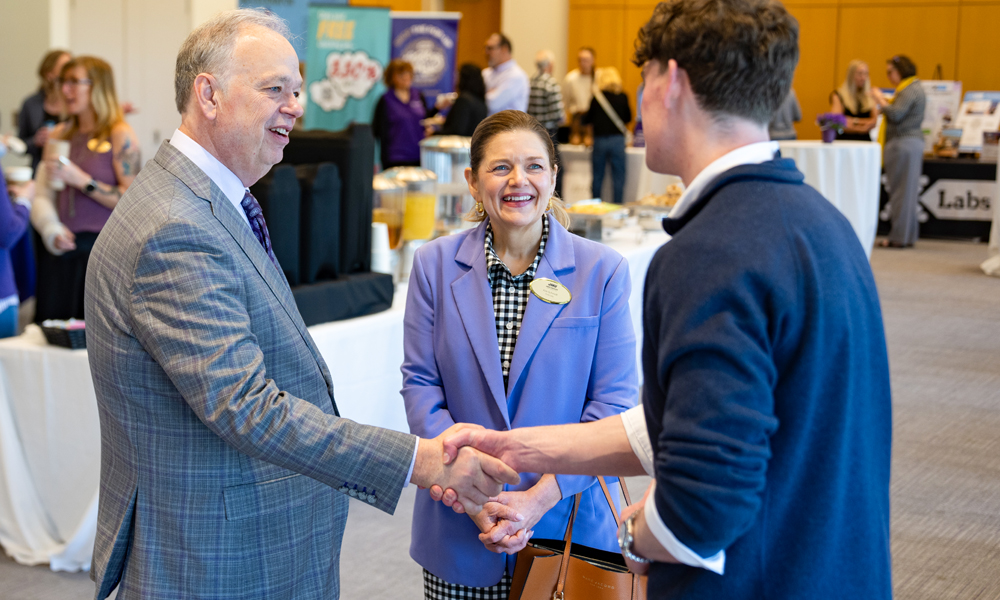
While her first-lady responsibilities at JMU take shape, Schmidt says she’s embraced her “season of learning.” She asks, “How can I stay curious? How can I bring compassion into these spaces? How can I make it safe for people to really be who they are?”
Previously, at the University of Wisconsin-Eau Claire, Schmidt provided student counseling, including diagnosis, assessment and medication management. “Anxiety and depression are just at the top of what’s bothering students,” she says, along with a compulsion to always want to achieve more. “How can we teach them that being who they are and being humble is enough?”
In her college-aged patients, she’s observed a fear of social and academic failure, as well as a hopelessness and uncertainty about the future. When social media is added to the mix, many students feel overstimulated and experience the toxicity of “comparison culture.”
“It feels more wounding to make a mistake in public or to change course in your degree,” Schmidt said. “And then there’s this loneliness, a sense of disconnection.” In a campus full of classmates, students often struggle to find community and express vulnerability.
“A wish for me is that a year from now, I will be doing some real group work with students,” Schmidt said, adding, “I think there’s not enough of that happening.” In her experience as a clinician, group work is more impactful in a student’s mental health journey than individual therapy.
In October 2024, JMU joined the international movement of Health Promoting Campuses by becoming the first university in Virginia to adopt the Okanagan Charter, and last year, the President’s Council on Health and Well-Being positioned JMU as a leader in this advocacy.
The timing couldn’t be better for Schmidt to help deepen Madison’s commitment to wellness and to explore her interest in health policy. “If we’re going to say we care, how can we really prioritize it, right?”
The first step, she says, is reducing the barriers to health services on campus. “There’s a whole waiting list of people who want counseling who maybe can’t get in yet, because there aren’t enough counselors,” she said. “Let’s begin to advocate for that; let’s bring in funding for that.”
She is also eager to secure additional support for JMU’s Serenity Center, a sanctuary space where students can practice meditation and mindfulness. “It needs an endowed staff person to be able to manage the schedule there, and recruit people to do the teaching and work with the students.”
As the 250th anniversary of America’s founding approaches, Schmidt can’t help but think about how she can facilitate civil discourse on campus. “If I could be a part of that, I will know I’ve done my life purpose,” she said.
She wants people to understand why the brain gets dysregulated in conversations that are difficult or conflictual. “It’s more than just a cognitive thing. It is totally neural regulation, a somatic thing, because our brain turns off when we feel unsafe.”
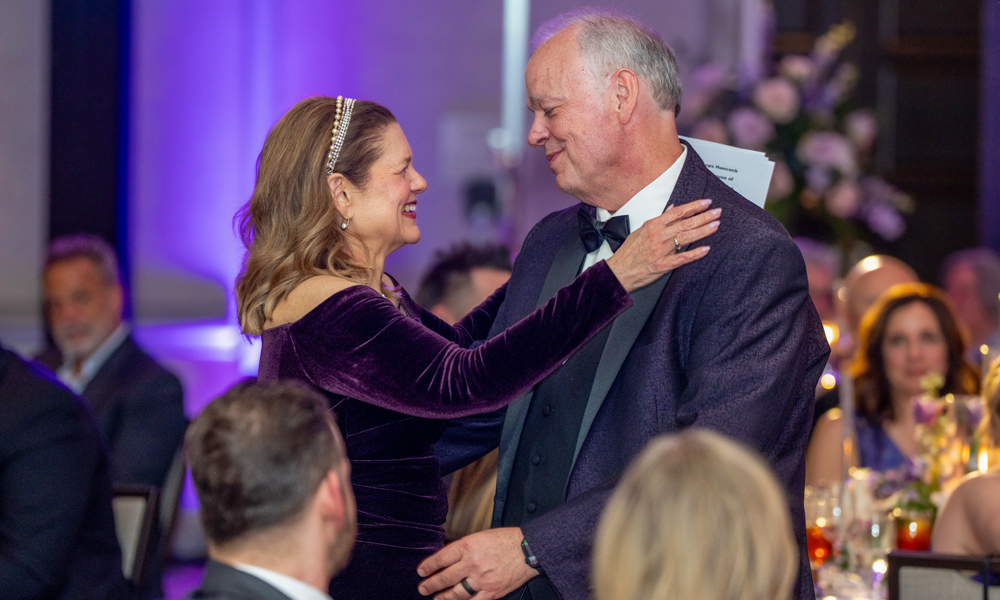
For Schmidt, her time at Madison is less about the title she’s been given than about being present and open to listening. “I would love to be remembered as somebody who shifted the culture around mental health and well-being, and made it easier for students, faculty and staff to really feel like they have a safe space to talk honestly about struggle without feeling shameful about it.”
One day, when her tenure ends, Schmidt hopes to look back at JMU and see an institution centered on the very foundation of wellness. “I don’t want well-being to be an add-on,” she explained. She believes academic success and centered leadership flow from a state of wellness. A healthy university connects to a greater emotional literacy that has the power to strengthen the Madison community and change the world.
In February, Schmidt hosted a Women for Madison event at Oakview. As she was getting ready, she began to think about ways to describe what JMU means to her. “A lot of these words I’m using seem to be from a feminine point of view,” she shared. “They’re relationally driven words.”
“I wondered if the fact that JMU was originally a women’s college has carried over in a really beautiful way,” she concluded. “It got valued; it got respected. And it’s luckily stayed here.”


