

Building purpose-driven businesses
Two alumnae share their entrepreneurial paths
News


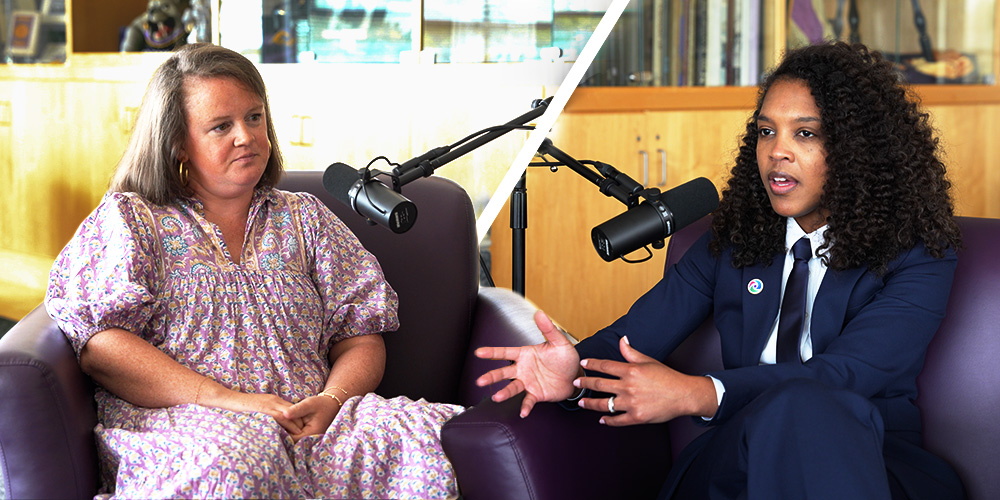
SUMMARY: Libby Hale Azzarello (’11), founder of At Home With Libby and owner of two Bumble Brews Play Cafes, joins Morgan Dye (’05), co-founder and managing partner of Meraki Communications Group, in a conversation at the 2025 Women Who Amaze Summit about finding their business interests and balancing entrepreneurship with home life.
For Libby Hale Azzarello (’11) and Morgan Dye (’05), entrepreneurship is deeper than profits and productivity. The alumnae, now business owners in different fields, point to their Madison Experience as the foundation for how they lead, innovate and serve their communities today.
Azzarello, a Communications Studies major, based in Raleigh, North Carolina, has built a varied career. She runs a real-estate business, recently opened an indoor Montessori-style play cafe for children and families, and is developing an ADHD-coaching course for young women. Her work is grounded in a desire to help others navigate challenges she once faced herself, particularly understanding how different minds work and how that shapes career paths.
Dye co-founded Meraki Communications Group, a full-service marketing and communications firm. Her company focuses on inclusive storytelling, helping clients close gaps in access, awareness, and opportunity across industries like healthcare, education, and economic development. At the center of her work is a clear goal: ensuring people feel seen, heard and valued.
Although their businesses differ, Dye and Azzarello’s perspectives align closely. Both credit JMU not just for academic preparation but for real-life experience that proved critical once they entered the workforce. Through leadership roles, student organizations and hands-on collaboration, they developed practical skills that are critical in entrepreneurship.
For Dye, an English major, those years were also transformative on a personal level. As a Black, queer woman, she began to explore her identity more deeply in college, which ultimately shaped her passion for creating inclusive environments. That commitment now drives her approach to business, where fostering belonging is just as important as delivering results.
Azzarello’s experience, too, was shaped by reflection. She describes navigating college with undiagnosed ADHD, making academic work more difficult but strengthening her social and leadership abilities. Today, she channels that insight into her coaching work, hoping to equip the youth with tools she wishes she had earlier.
What Azzarello and Dye aimed to achieve with this conversation is to redefine what it means to be an entrepreneur. Both emphasized that success does not come from doing everything alone. Early in their careers, they felt pressure to manage every detail. Over time, they learned that real leadership lies in delegation: building strong teams, trusting others’ expertise and focusing on the work that aligns with their strengths.
This shift not only improved their businesses but also their well-being. Azzarello recalled experiencing burnout when trying to take on too much, later finding that stepping back allowed her business and mental health to flourish. Looking forward, they see a changing landscape for women in entrepreneurship. Social media and digital platforms have expanded access to knowledge, offering real-time insights into how others build and sustain successful ventures. This transparency has helped foster a more collaborative mindset rooted in growth rather than competition.
Still, entrepreneurship comes with challenges. Both acknowledge the importance of resilience and the ability to handle rejection. As Dye noted, successful entrepreneurs develop a “thicker skin for hearing no,” while Azzarello emphasized the importance of persistence and flexibility.
Ultimately, Azzarello and Dye’s journeys highlight an inherent truth about entrepreneurship: It, too, is a journey.


