

JMU’s Hart School welcomes Valley Scholars
News


SUMMARY: During two on-campus visits, Valley Scholars students explored majors and career paths through the Hart School of Hospitality, Sport and Recreation Management.
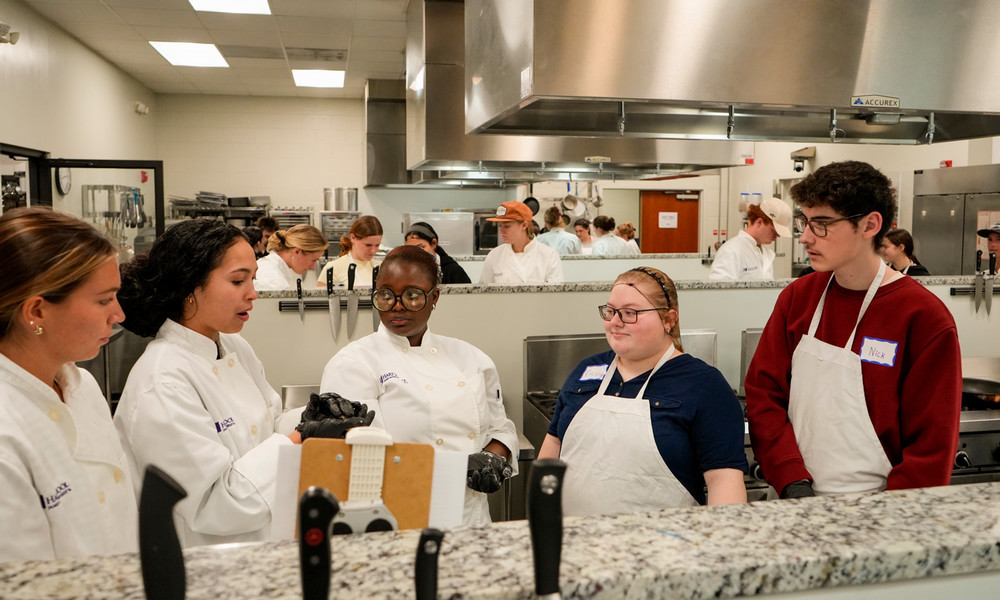
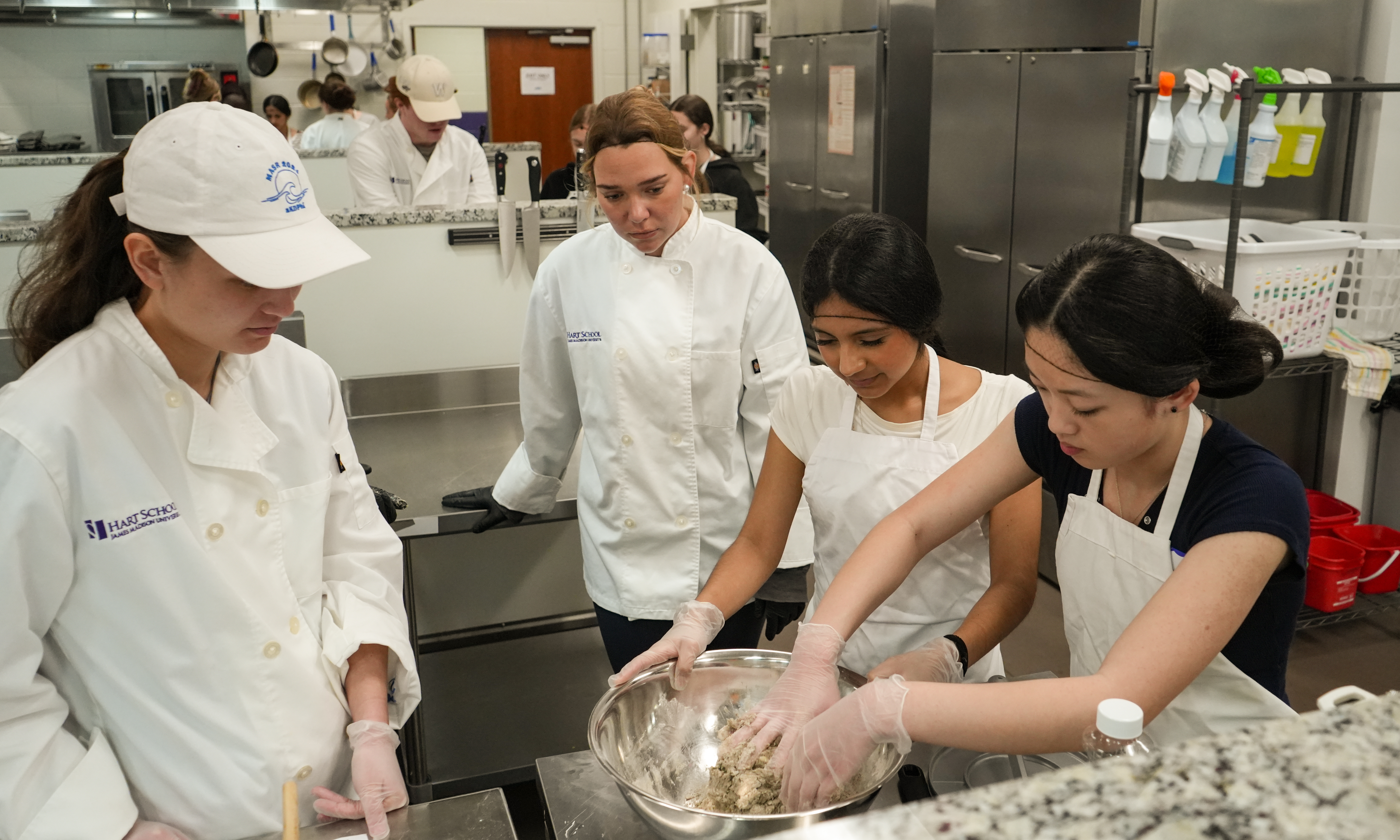
From preparing tortillas in an instructional kitchen to touring the Atlantic Union Bank Center, local Valley Scholars recently got a hands-on opportunity to experience college-level learning and explore career pathways through JMU’s Hart School of Hospitality, Sport and Recreation Management.
Valley Scholars is a long-term college access program designed to support promising students from the Shenandoah Valley who have significant financial need and will be the first in their families to pursue a four-year degree. Starting in eighth grade and continuing through high school, students attend college readiness workshops, visit area colleges and universities and, upon completion of the Valley Scholar program, receive a full tuition scholarship.
“The program started as a way to create access for local students and reduce the financial barrier to college attendance,” said Joshua Montanez, director of Valley Scholars. “It was really designed to figure out how we help those students with the greatest need in our community.”
The two on-campus visits marked the first collaboration between Valley Scholars and the Hart School in several years. By meeting with faculty and current students and gaining exposure to campus facilities, scholars got a firsthand look at what college is like beyond traditional classroom learning.
“We’re trying to give them as much information as we can about what their options are so that when it comes to senior year [of high school], they’re able to make an informed decision,” Montanez said.
The campus visits highlighted the Hart School’s two undergraduate programs. One day focused on Hospitality Management, where scholars rotated through hands-on activities in the instructional kitchen and got a behind-the-scenes tour of Hotel Madison, including the front-of-house and kitchen areas. Alongside current Hart School students, the scholars learned about food preparation and kitchen operations, and explored the broader event management and customer experience aspects of the hospitality industry.
Montanez explained that while many scholars are familiar with cooking in their homes, this experience offered a new perspective. “In a situation like this, it's more about giving them an understanding of the experience and getting them in a space where they can actually interact with a current college student, hear about their experience and see what it looks like to be in this major.”
The second visit centered on Sport and Recreation Management (SRM), providing scholars with behind-the-scenes access to University Recreation facilities and the Atlantic Union Bank Center. Working alongside current SRM students, scholars learned about event operations, facility management and the range of careers that support athletic and recreational experiences.
“Students might attend a game or a concert, but they don’t see everything that goes into making the event happen,” Montanez said. “This experience helps them understand how those behind-the-scenes pieces connect to real careers, not just the finished product a spectator sees.”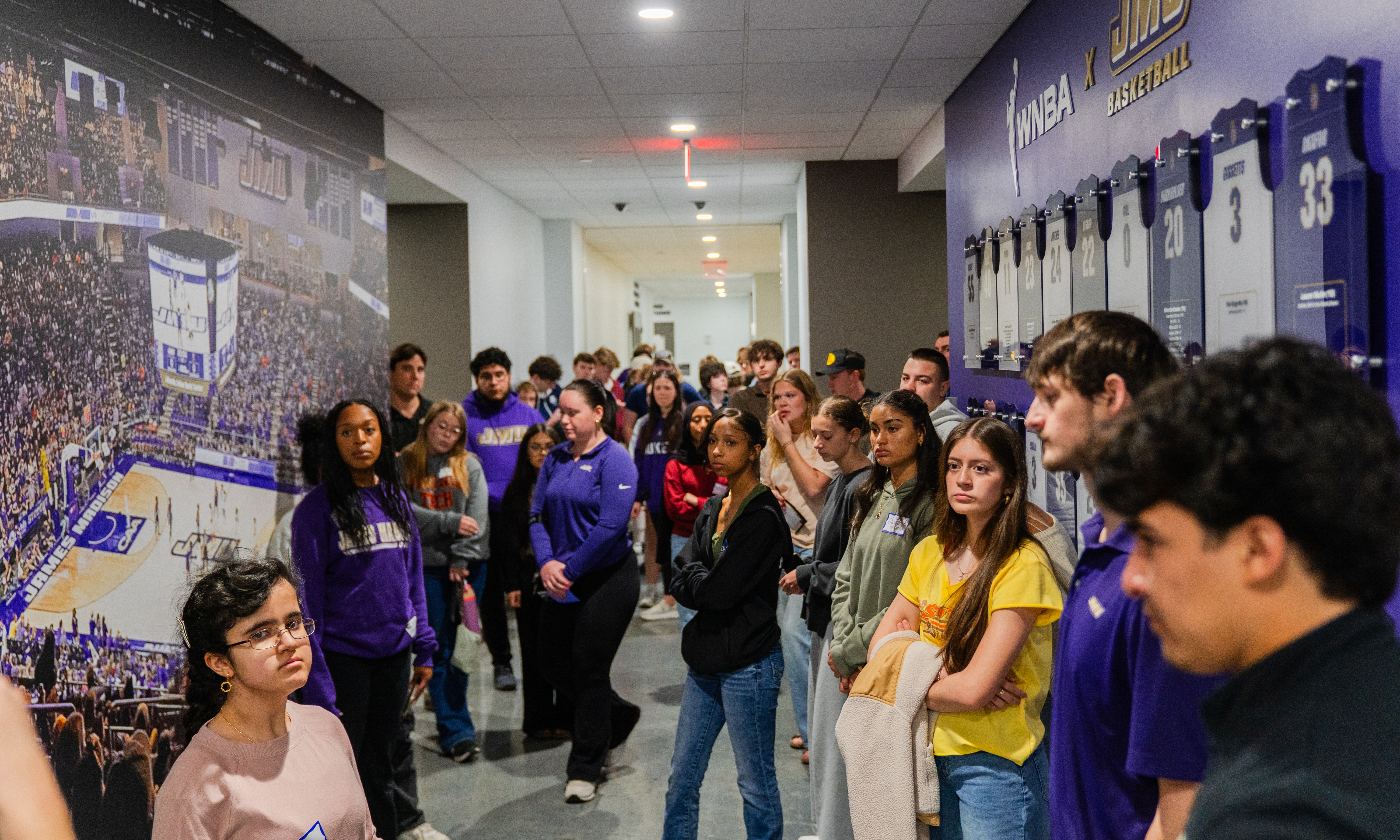
Exposure to these fields is particularly impactful for middle and high school students who may have a limited view of career possibilities. Montanez noted that many younger students initially express interest in professions they often see on TV, like professional athletics or medicine, without realizing the different paths they can take in related fields.
“Our hope is that they walk away with new possibilities that they hadn’t considered,” Montanez said.
Beyond academics, the visits also played an important role in community building. Valley Scholars operates on a cohort-based model, bringing students together regularly over several years and helping them develop relationships that can carry into college.
If scholars ultimately attend JMU, Montanez noted, those early experiences can ease the transition by providing familiarity with campus and a built-in support network during the first months of college.
“By bringing students into these spaces and giving them meaningful interactions, we’re helping them see what’s possible,” Montanez said. “That understanding can be transformative.”


