

SPCE develops Headstrong summer camp for local youth
A JMU collaboration with Valley partners teaches positive mental health practices
JMU News


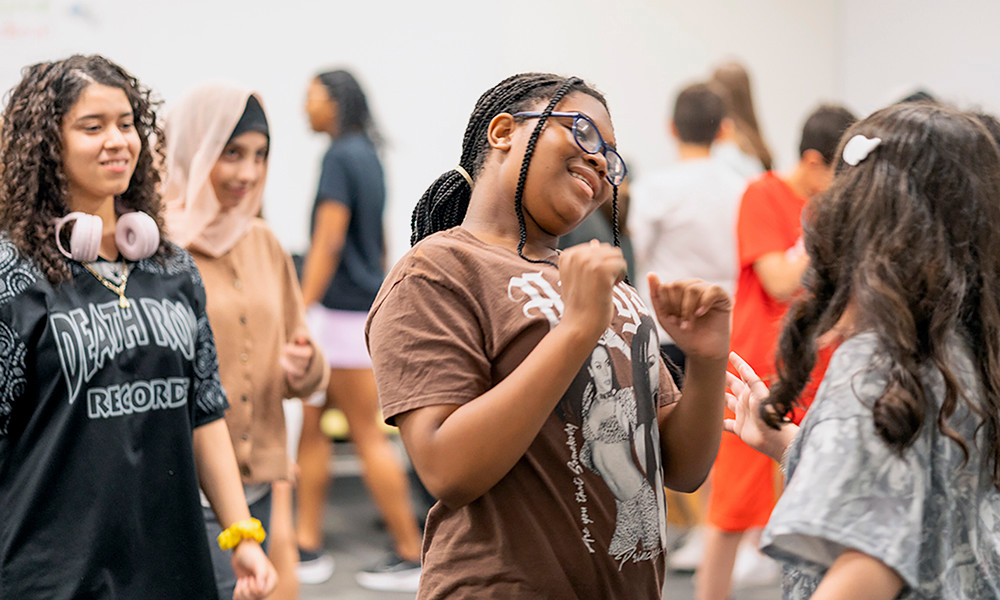
SUMMARY: The School of Professional and Continuing Education collaborated with the College of Health and Behavioral Studies and other partners to create the Headstrong program, a free mental health camp offered to middle schoolers to address community-identified needs.
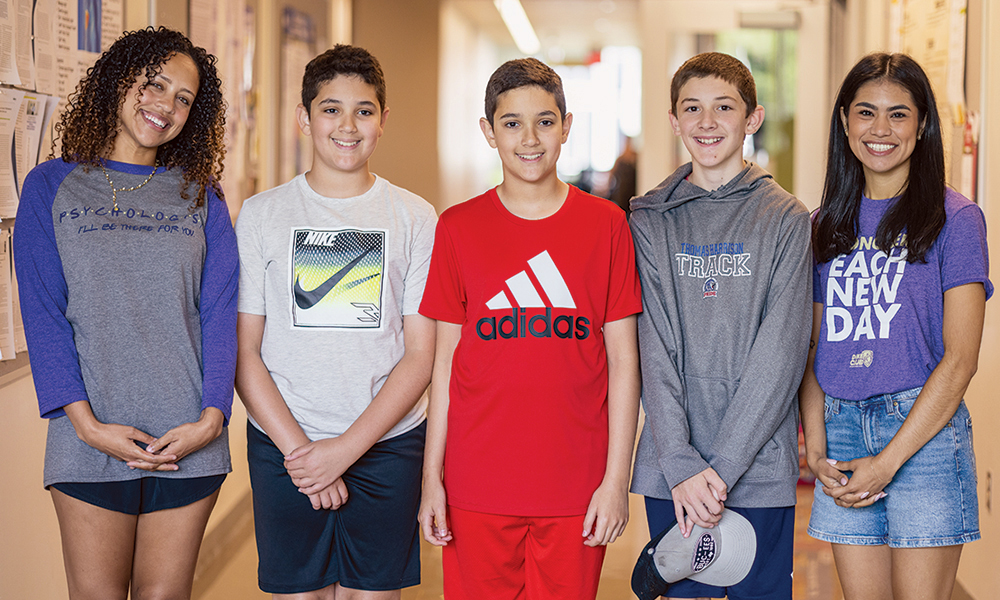
Headstrong campers participate in activities led by JMU Psychology and Occupational Therapy studentsIn July, the School of Professional and Continuing Education collaborated with the College of Health and Behavioral Studies, Thomas Harrison Middle School and other community partners to host the Headstrong program. Headstrong is a free mental health camp for youth that addresses community-identified needs, including social media use, self-image development, whole-body wellness, emotional regulation, and anxiety management.
Rae Vaughn, director of Youth Programs in SPCE, says the idea for the program originated a few years ago, and with the success of the first camp this past summer, she hopes to make it an annual event “At the end of this year, the students were asking for a two-week-long camp next year,” Vaughn said, adding that her plans for the program are to “expand on it.”
One of SPCE’s priorities is creating intergenerational programming, which Vaughn defines as “anything that involves different generations learning from and with each other.”
“What made Headstrong specifically unique and special was the fact that the faculty were able to incorporate this into the courses that the JMU students were taking, and it gave them the experience they needed, as well as benefiting the kids,” she said.
“You could consider most of what the Youth Programs team does as intergenerational,” Vaughn said. “We hire a lot of JMU students to work at our programs, and they are learning and gaining experience during the process.”
Dr. Nicholas Swartz, dean of SPCE, said Headstrong “represents exactly what I envision when I think about intergenerational learning at JMU — bringing together middle-school students and staff, JMU students and faculty, and community partners around a shared challenge.”
Vaughn believes Headstrong is something she “could have really benefited from as a kid.” Once she became the director of Youth Programs, she viewed it as an opportunity to finally implement the program.
Headstrong does not charge campers for programming, transportation or meals. It is essential for the program to “always be free,” Vaughn said. “[Mental health] is such an important topic, and we want the kids to attend and not have there be barriers or anything.”
Vaughn says this year’s campers created videos and materials that they could bring back to school and give to their peers. “I hope that it’s stuff that’s stuck with them … tools they can use when they get stressed or have any sort of issue, and that it’s something that they can share with their friends at school and hopefully help them as well.”
Dr. Kirk Armstrong, interim associate dean of CHBS, helped with the development of Headstrong by connecting Vaughn with faculty from the Department of Psychology and the occupational therapy program to offer it as a summer class for JMU students. In the Headstrong program, the Psychology and Occupational Therapy students served as counselors, leading the camp under faculty supervision. Vaughn also worked with the counseling staff at Thomas Harrison Middle School to determine which specific topics to cover in the program. Specifically, Vaughn worked closely with counselor Nicole Yoder (’16M) who also served as the camp director for the program.
Twenty of the campers in the program attend Thomas Harrison and received counseling at the middle school throughout the year. “[Nicole] was able to identify the students who would really benefit, and so that was instrumental,” Vaughn said.
Headstrong also benefitted from the 2025 Community Health Needs Assessment conducted by Sentara Health. “There was a lot of information in there that talked about how many youth were seen in the emergency department during that year for mental health issues,” Vaughn said. “It kind of confirmed for us that this is something the community needs.”
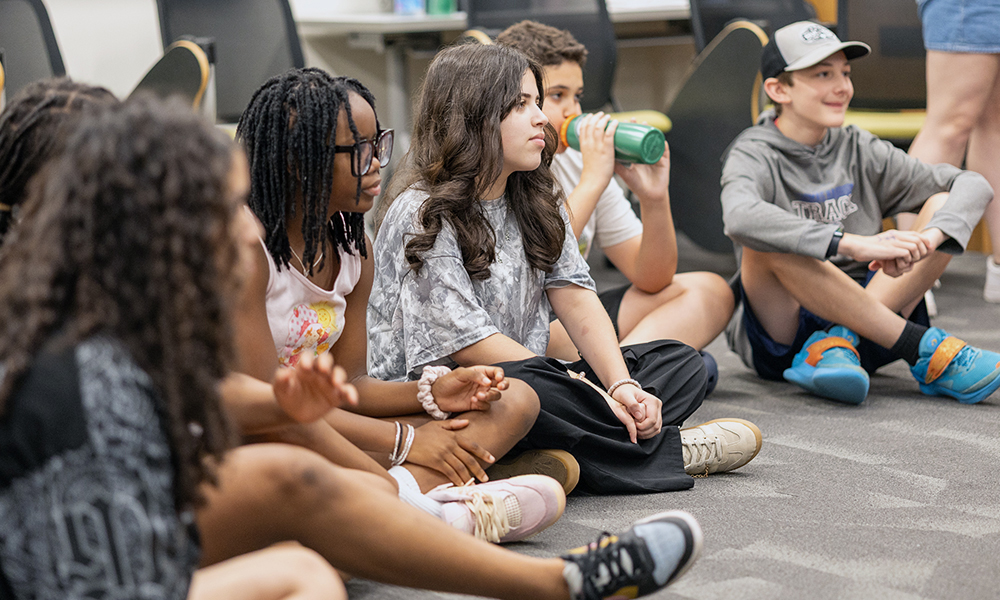
Activities for the Headstrong program were planned collaboratively with students and faculty from CHBS and Thomas Harrison and Sentara’s health assessment. “They planned activities about healthy use of social media and screen time, how to be yourself and have self-confidence, how to deal with your emotions when you’re stressed — all that kind of stuff,” Vaughn said. “Everything kind of came together, and it was definitely a community collaborative effort.”
One activity that the campers completed involved designing their “dream school.”
“It helped them learn about relationship building, and the idea of the school was everyone is welcome regardless of your background,” Vaughn said. “It kind of helped them to learn to respect others’ opinions while also having your own voice heard — that we’re all different and unique and special.”
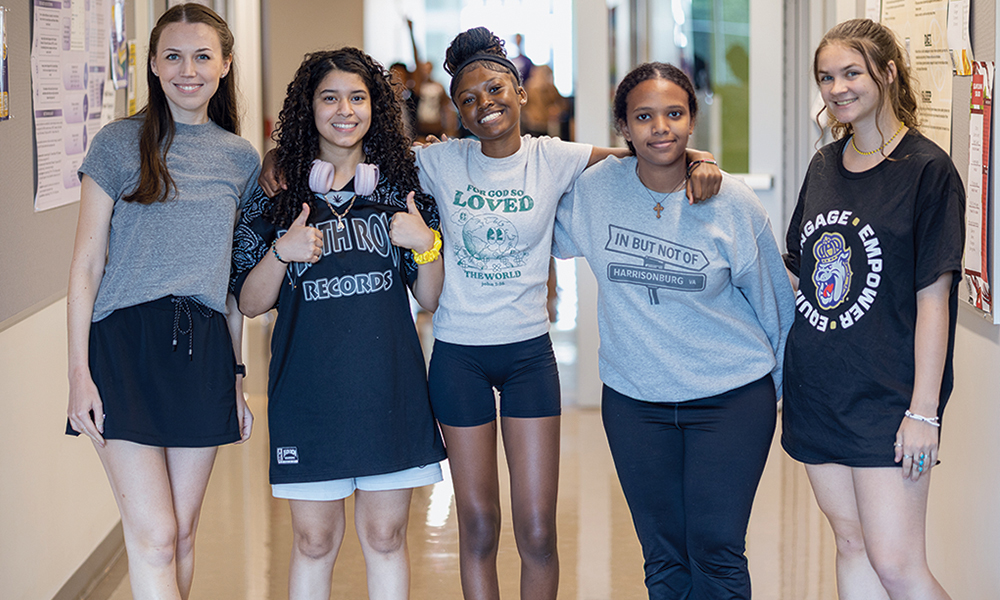
The youth also explored physical well-being.
“The priority was mental health, but we wanted to bring some physical health elements in it as well and tie in the importance of taking care of your body physically and how that feeds into your mental health,” Vaughn said. “The Occupational Therapy students designed some activities that were more physical to help them learn how to take care of themselves, like a kind of whole-body wellness approach … We took them to UREC a couple times as well, which they loved, just to get them active, and that was something we heard a lot from the counseling staff too: ‘Kids are too stationary.’”
Vaughn encourages members from the Harrisonburg and JMU communities to become involved in SPCE’s programs.
“We are always looking for people to collaborate with in one capacity or another. If you have a program idea, and you just don’t know who can help implement it, we’re here for that. If you want to be a counselor or an instructor, and you want to teach kids art or science, we’ve got programs that can do that. … We are always looking for people to teach in the camp-counselor role or just partner with in some way to either enhance our current programming or come up with new programming.”
Vaughn looks back fondly on the success of the first Headstrong program. “It was such a team effort,” she said. “It was really cool to see all the different people come together to make it happen, and then I think what made it extra special was it was tailored to the needs of youth in our specific community.”
“This is The Madison Promise in action, giving our students opportunities to apply what they are learning while making a tangible difference in the lives of others,” Swartz said. “Headstrong demonstrates what is possible when we erase the traditional boundaries between campus and community and make learning truly span generations.”


