

Debunking the cry-it-out method
Dr. Jennie Rosier challenges infant sleep-training myths
Featured Stories



SUMMARY: Dr. Jennifer Rosier, sparked by her own experience as a mother, researched infant sleep-training methods. In this process, Rosier, along with six other female scholars, heavily examined the cry-it-out method and published the book “Dispelling Cry-It-Out Sleep Training Myths and What to Do Instead.”
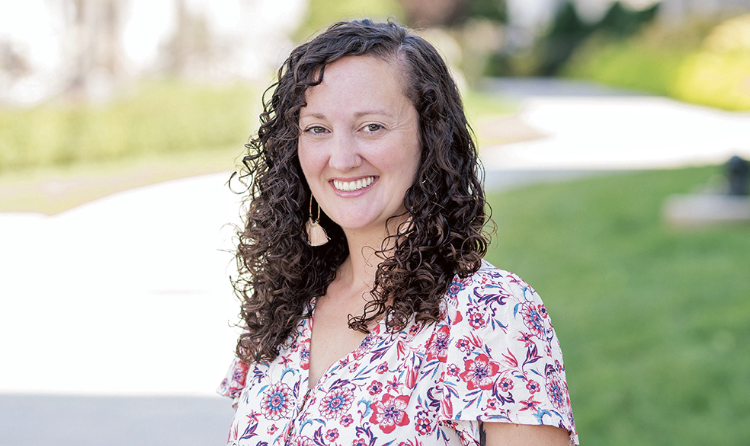
In 2009, Dr. Jennifer Rosier, a professor in the School of Communication Studies, gave birth to twins whom she described as “horrible sleepers.”
“I did what most women did when they have this problem — I talked to other moms who had been through it, and time and time again, the response was ‘Just let them cry it out,’” Rosier said. She acknowledges how the mothers who recommend this method often echo the myths she explores in her new book published in the spring.
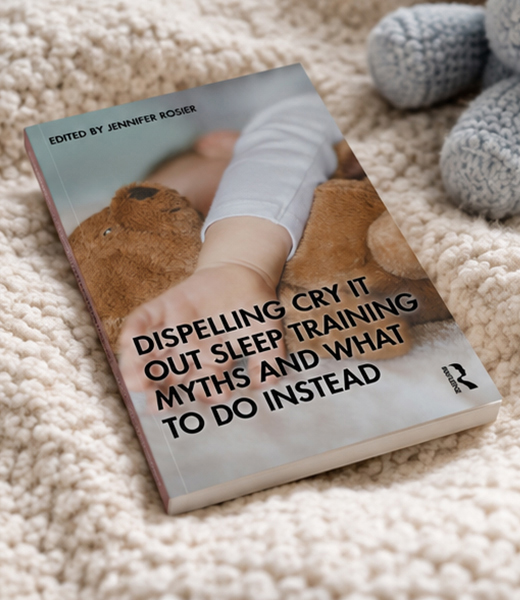
In Dispelling Cry-It-Out Sleep Training Myths and What to Do Instead, Rosier, along with six female scholars, debunk common infant sleep-training myths and provide healthier alternatives.
These myths include:
-
They’ll never learn how to be independent.
-
They’ll never learn how to sleep on their own.
-
They’ll never learn how to self-soothe.
-
They’ll have sleeping problems from childhood into adulthood.
Describing herself as a “crunchy” mom, Rosier didn’t find the cry-it-out method appealing. Ultimately, though, she gave it a try when her nearly 9-month-old twins were still not sleeping through the night. While her son easily drifted to sleep per the method, her daughter did the opposite — screaming, crying and fussing. When Rosier re-entered the room, she discovered that her daughter had vomited from crying so much. After that, Rosier never attempted the cry-it-out method again. “They did eventually learn to sleep through the night, because all humans eventually learn to sleep through the night,” Rosier said.
When Rosier became a professor at JMU, she studied a multitude of topics, including romance and love as well as attachment and communication in interpersonal relationships. Yet the cry-it-out method still lingered in the back of her mind. Rosier was unable to fathom how so many mothers were persuaded to do it. Around 2016, she began following Tracy Cassels, the founder of Evolutionary Parenting, an online platform that uses science, history and biology to guide parental decisions.
After Rosier initially reached out to Cassels, the two hopped on a Zoom call and came up with an idea. “We could show people that the reason that they think cry-it-out is acceptable is because they were tricked into believing that it was acceptable,” Rosier said.
The two decided to embark on a research project, where they analyzed media from the past 200 years related to cry-it-out. “We tried to figure out, who’s the first person who talked about it,” Rosier said. “Where did it even come from? How did it become what we called authoritative knowledge?” Notably, their findings uncovered that the cry-it-out method was never based on research.
Cassels and Rosier also learned that none of the studies that claimed to explore the cry-it-out method illustrated that the method works. “And by ‘works’ means teaches kids how to put themselves to sleep, decreases crying, allows children to know how to put themselves to sleep in the middle of the night better,” explained Rosier. “None of the studies actually did that, even though their PR message was that that’s what they were saying.”
The two women created three articles that focused on debunking the narrative that cry-it-out is an effective sleep training method for infants. This resulted in Rosier, Cassels and five other scholars writing a book, in which each author had their own chapter to break down a myth through research. “This book has been a long time coming,” Rosier said.
One of the most shocking discoveries from her research was the myth that crying expands a baby’s lungs. According to the lore, “You’re supposed to pay attention to how much they’re crying each day, and if they don’t cry for at least an hour, like just collectively, that you should pinch them to make them cry.” This theme of fearmongering is found at the heart of many of the myths that Rosier and the other scholars disproved.
Rosier highlights the problematic history of medical research that is still sometimes practiced today. “Prior to the 1800s, doctors didn’t go to medical school,” she explained. “You didn’t have to go to college. You just found another doctor. You’re like, ‘Let me follow you around for two years,’ and then you were a doctor. So for hundreds of years, we just had a bunch of people — mostly men — who just had certification from some other man, and if that man had out-there ideas, those became the next person’s out-there ideas.”
Their research attracted global attention. Rosier says the project has been picked up by the BBC, and she’ll be attending a sleep conference. “I work with a lot of people who are from other countries, which is also very interesting to me. … These people in other countries think that this stuff is ridiculous, and they just can’t even believe that this is a thing.”
Rosier believes that the popularization of the cry-it-out method largely lies in the fact that parents are desperate for sleep. She shared that when you do a Google search for sleep training and the cry-it-out method, the first page and a half of results were pro cry-it-out. “So you turn to the internet; it tells you to do it. You turn to your mom or your grandma; they tell you to do it. You turn to the pediatrician; they tell you to do it. So, you’re exhausted and tired, and cry-it-out seems like a quick fix, and Americans love quick fixes,” Rosier said.
She advises parents to become in tune with their child. “You know your infant and toddler better than anyone else,” she said. Rosier emphasizes the importance of establishing a relaxing routine like bathing, reading, turning off the lights and rocking. “It doesn’t mean your baby has to be asleep at the same time every night,” she said. “But just the routine of going to sleep should be as similar as you possibly can make it, because it does create patterns and then signals the baby that it’s time to go to sleep.”
Ultimately, Rosier believes “there is no one-size-fits-all for anything related to parenting” and encourages parents to trust their instinct. “If it doesn’t feel right, don’t do it,” she said. “Do not be pressured into doing anything that you don’t think feels right.”


