

Gen Z: Dismissive, hopeless romantics
JMU professor explores how young adults are trading traditional dating norms for ‘talking phases,’ ‘situationships’ and hyper-independence
JMU News



SUMMARY: Dr. Jennie Rosier adapts her Communication Studies courses to reflect Generation Z’s evolving dating experiences, leading her to encourage students to examine whether their current dating behaviors align with their long-term relationship goals.
As an associate professor in the School of Communication Studies, Dr. Jennie Rosier doesn’t just lecture her students; she listens to their experiences and frames her lessons around them.
Rosier wants to understand what students are experiencing and has evolved her coursework in the Interpersonal Communication concentration to include the realities students face and the research behind them. In her Romantic Relationship class, for example, there’s now a section on Generation Z’s views on dating and what it means to them.
“Over the years, I have noticed that the questions that students ask and the stories that they share have changed,” she said.
Amid the COVID-19 pandemic, as an alternative to lecture videos, Rosier decided to create a podcast for her students. The first season of Love Matters is essentially the audio version of her Attachment Theory class.
When she began teaching these courses, most of the questions she received were centered around hookup culture. Students often asked, “Is it OK to engage in hookup culture?” After a few years, Rosier began noticing that the questions shifted to “How do I get out of it?” This turned into a span of semesters in which students were telling her how much they hated dating — something Rosier had never heard before.
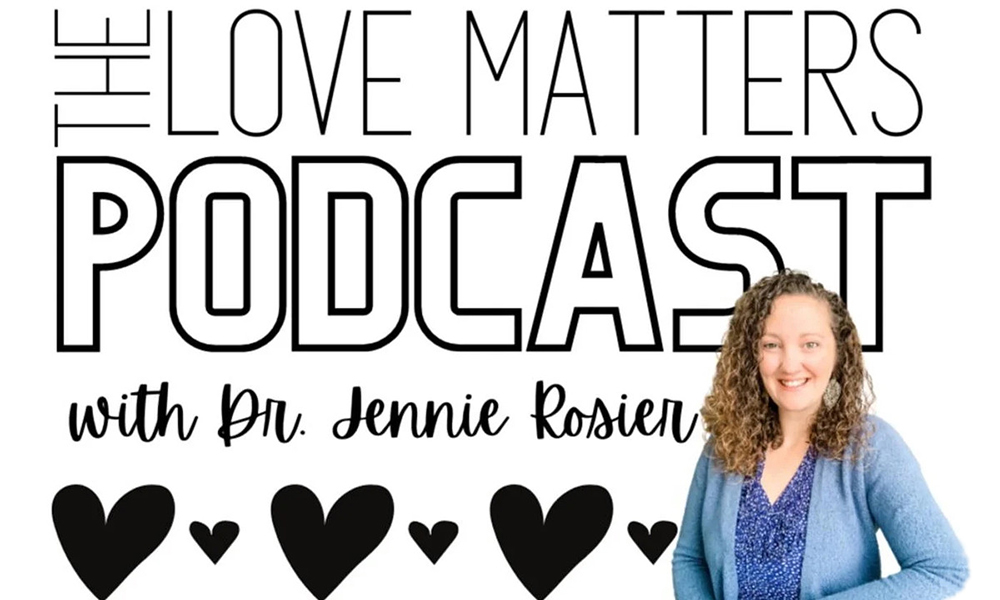
Rosier says when she talks with students, they usually have a long-term goal of marriage but aren’t always taking steps toward it. “I’m not saying that you can’t engage in hookup culture. I am saying that if you want a long-term, monogamous relationship, but you are spending months or years of your life engaging in hookup culture, you’re training your brain to need that dopamine hit so frequently and in new, exciting ways that it is going to be harder for you to achieve the goal that you want. You’re going to have to retrain your brain to enjoy being bored, to enjoy normalcy, to enjoy calm, to enjoy the same person.”
Rosier always keeps a notebook, where she writes down thoughts and occurrences in her everyday life, including conversations with students. When students mention “the ick,” “talking phases” or “situationships,” she takes note of them and investigates online. According to Urban Dictionary, friends with benefits is an example of a situationship.
Rosier noticed that there wasn’t much research on the Gen-Z dating topic, which led her to conduct two studies.
The first study, “When Dismissiveness Takes the Wheel: How Current Dating Trends Are Causing Generation Z to Put Their Long-Term Relationship Goals on the Back Burner,” involved hour-long interviews with Gen Zers from ages 19 to 26, not just college students. She asked them, “If you were to tell me what the script was, from how you get to that first contact/interaction to exclusively dating, what would that look like?” From their responses, Rosier recognized an emerging trend — a majority of men and women in Gen Z are “dismissive in nature” due to increasing hyper-independence and the concept of self-reliance as a defense mechanism, particularly among Gen-Z women.
“You don’t need another human being to be fulfilled,” Rosier said. “You don’t need another human being to feel satisfied, happy or complete. But relationships are valuable, and we do need other people to feel good in many ways.”
Her second study, “Getting the Ick Is Giving Me the Ick: An Examination of How the Trendy Joke Went Viral and Is Impacting Gen-Z Dating Culture,” was based on the phrase used by young adults to describe a sudden, strong feeling of disgust or irritation toward a romantic partner, despite that person having otherwise redeeming qualities. It can be triggered by something as simple as completing a basic task in a certain way or wearing skinny jeans.
Rosier learned through this study that a reality TV star on the popular Peacock show Love Island coined the term “the ick.” The rest of the show’s cast soon picked it up, and then TikTok launched it into Gen-Z pop culture.
Rosier’s study also examined cultural shifts and social media trends in dating. For example, TikTok creates an “express lane” for users to create, share, comment and stitch videos, which in turn makes trends like “the ick” spread rapidly.

There’s also been a shift among Gen Zers toward seeking out advice on relationships. But instead of turning to parents or friends for guidance, Gen Z consults TikTok and ChatGPT. Rosier believes “there’s definitely a study there” in the future.
“Everything is OK in moderation,” Rosier reflected. “Say you’re in a situationship where you’re not being clear with each other, and you’re not communicating your feelings and not setting boundaries. That’s not helping you learn how to be in that boundary-setting, clear, honest, loving, monogamous relationship later, either.
“So, I would love the whole generation to reflect a little bit on what they want, and ask themselves, ‘Is what I’m doing now in any way helping me get to that goal?’”


