

James Madison University secures $115.3M to expand College of Health and Behavioral Studies facilities
State budget also provides $30.5M to renovate Johnston Hall and $1M annually to support education of more undergraduate nurses
College of Health and Behavioral Studies


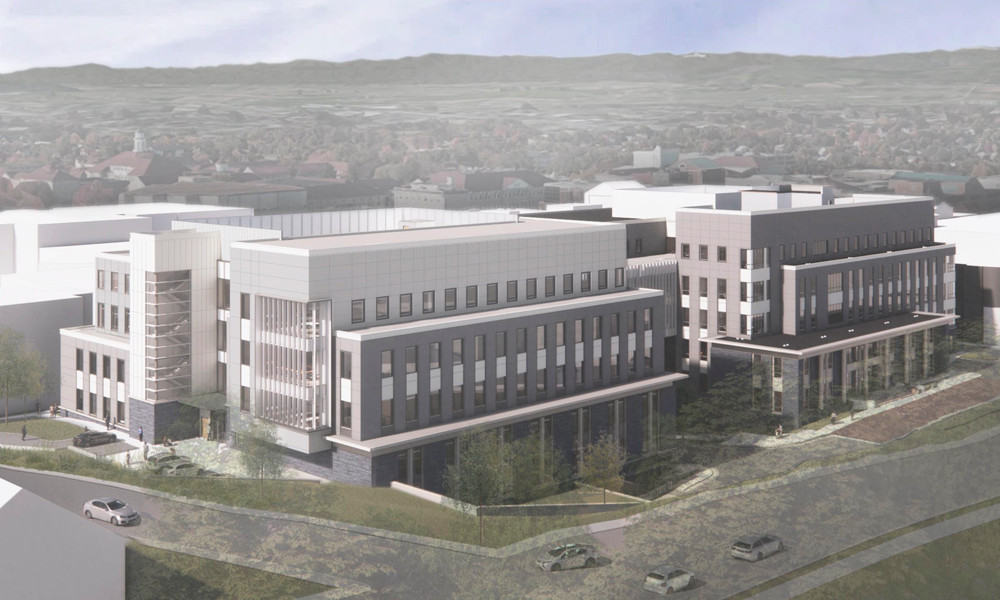
SUMMARY: Using funds approved by the Virginia General Assembly, JMU is moving forward with plans to add a new building in the College of Health and Behavioral Studies, begin an accelerated pathway for undergraduate nursing students, and expand and renovate Johnston Hall.
A new state budget passed June 29 by the Virginia General Assembly, incorporating Gov. Abigail Spanberger’s amendments, includes nearly $150 million to support nursing and other healthcare workforce expansion efforts at James Madison University.
The budget includes $115.3 million to expand the College of Health and Behavioral Studies Building (CHBS).
Additionally, the budget has allocated:
- approximately $30.5 million for the renovation and furnishing of Johnston Hall, which houses classrooms, labs and faculty offices
- $1 million per year to support JMU’s Fast Flex program, which offers hybrid learning and an expedited time to completion of a nursing degree
JMU President Jim Schmidt was quick to express his appreciation for the passage of the budget.
“This state funding will transform our campus and directly address critical workforce needs across the Commonwealth,” Schmidt said. “We greatly appreciate the General Assembly’s and Governor’s support as we put forth a solid case to fund these strategic initiatives. The ability to move forward on these projects will allow us to continue our focus on the goals of our strategic plan, The Madison Promise.”
While previous state budgets awarded JMU one-time appropriations of $1 million to allow the nursing program expansion to kick off in July 2026, the Fiscal Year 2027 budget ensures that JMU receives $1 million annually to support the viability of the program and fund nursing faculty salaries on an ongoing basis.
“On behalf of our students, faculty and healthcare partners, we are deeply grateful to Gov. Spanberger and members of the General Assembly for their investment in nursing education,” said Dr. Melody Eaton, director of the School of Nursing. “This support will help us educate more highly qualified nurses, expand access to innovative pathways like Fast Flex, and strengthen Virginia’s healthcare workforce for years to come.”
Nursing Fast Flex
The Bachelor of Nursing Fast Flex Pathway launched in June with a cohort of 30 nursing students seeking to complete their core nursing credits in one year instead of two.
“This is the first of its kind in the Commonwealth,” said Dr. Sharon Lovell, dean of the College of Health and Behavioral Studies and a professor of psychology. “Other universities have alternative or accelerated nursing programs, and this is accelerated. Ours is structured differently in that students are experiencing their coursework and clinicals in the evening and on the weekends.”
She expects the Fast Flex pathway to add to the number of nursing graduates each year, helping address Virginia’s critical nursing shortage. A comprehensive 2023 study for the Virginia Health Workforce Development Authority found that 102 of Virginia’s 133 localities are federally designated “Health Professional Shortage Areas,” and the George Mason University Center for Health Workforce reported in September 2024 that Virginia had a need for 20,254 nurses, a number projected to more than double over the following decade.
“Nursing is a profession that is challenging,” Lovell said. “The hours are long, and nurses face situations that can be stressful, so it’s difficult to keep nurses in the profession. We’re trying to give them every experience we can while they’re here with us to develop the skills that equip them to be successful and resilient.”
Fast Flex helps meet the need for nurses by allowing graduates to enter the nursing field faster than they would through a traditional undergraduate nursing program.
“Fast Flex is a pathway to the Bachelor of Science in Nursing degree that complements our Traditional BSN Pathway,” Lovell said. Dukes declare their nursing major when they begin their first year at JMU and apply for the Nursing program as early as the spring of their sophomore year.
“For the traditional program, they enter the nursing program, and they have four semesters of nursing coursework and clinicals over two years,” Lovell said. “In Fast Flex, they begin in the summer, and their coursework and clinical experiences last for just over one year. It reduces the amount of time to the degree. The students take their coursework in the evenings, and they’re doing their clinical work on the weekends, which is different from our traditional pathway.”
Students who started Fast Flex in late June are on track to complete their core nursing coursework in Summer 2027.
The state funding also helps JMU accept a larger group of qualified applicants to its Nursing program each year.
Though JMU is a top producer of nurses among four-year colleges and universities in Virginia — graduating up to 226 nurses with BSN degrees each year — the Nursing program could only accept about 68% of qualified applicants in 2023-24 because of faculty shortages, on-campus space constraints, and competition for regional clinical placements.
“The faculty are excited about this program,” Lovell said. “We’ve hired some individuals to help us with the program, and we’re continuing to hire faculty to help us as the Fast Flex continues.”
Building for the future
CHBS is JMU’s largest college with more than 7,000 students enrolled across eight undergraduate majors, 20 graduate programs, and various minors. However, more space is needed to support the growing programs.
Del. Tony Wilt, R-Harrisonburg, expressed excitement that the state funding will help “provide state-of-the-art facilities and create opportunities for students to pursue careers in high-demand, well-paying healthcare fields.”
“This project has been several years in the making and will be a tremendous investment in both JMU and the future of healthcare in the Shenandoah Valley and across rural Virginia,” Wilt said. “I was honored to carry the House amendment for the CHBS expansion and work for its inclusion in the final budget.”
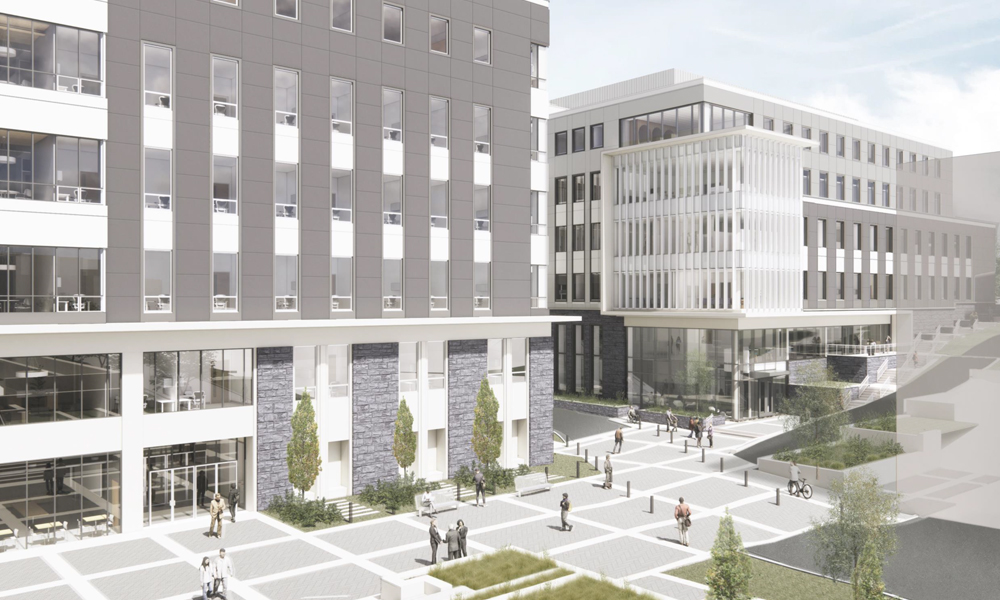
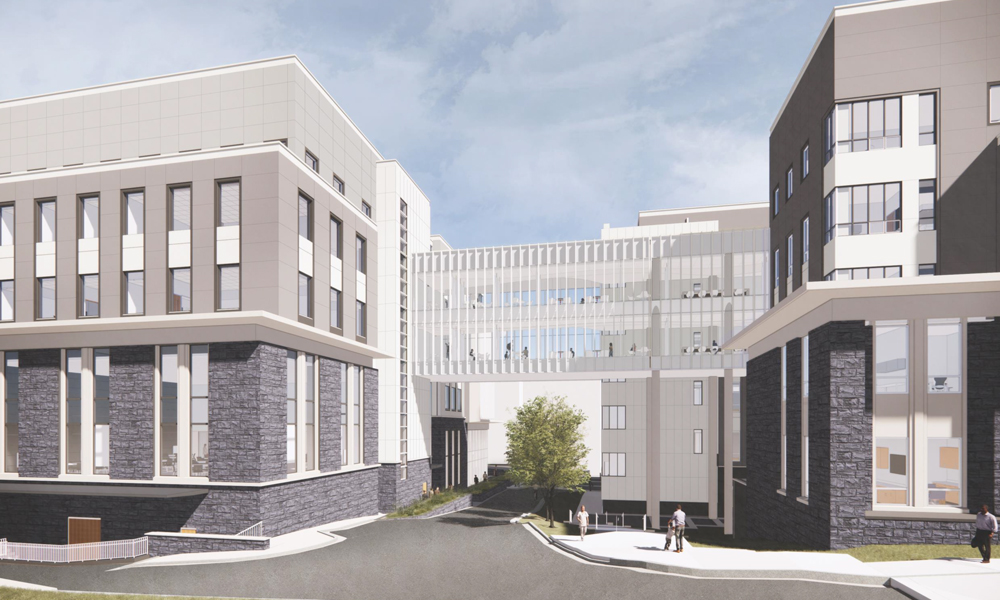
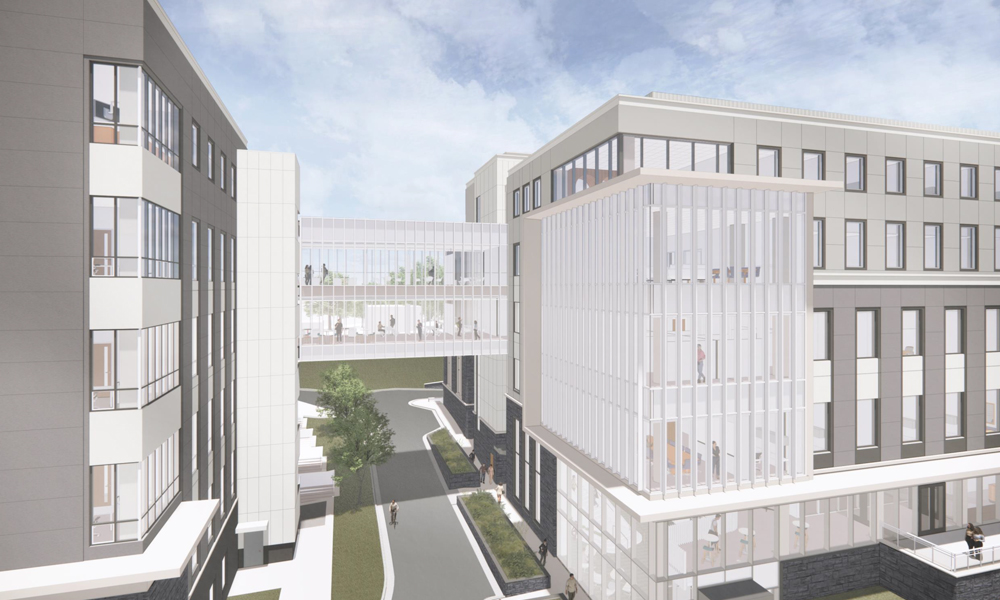
The proposed expansion site is located adjacent to the current CHBS building at 235 Martin Luther King Jr. Way, Harrisonburg. The new five-story addition will cover 125,367 gross square feet.
In addition to teaching labs for Nursing and Physician Assistant Studies, plans for CHBS include:
- community-oriented clinic spaces allowing supervised graduate students to provide mental health and other health services to the public
- lab space to increase research capacity
- space for interprofessional and interdisciplinary coursework, and other new student experiences
- classrooms and faculty workspaces.
“We know rural Virginia continues to face critical shortages of healthcare professionals, and this investment will help address that need,” Wilt said. “Just as importantly, the data show that many JMU graduates from these programs choose to stay in the Valley to build their careers and raise their families, making this an investment that will benefit our entire region for years to come.”
JMU received its full request of $115,320,000 from the FY27 General Fund for the CHBS building expansion. Because of $7.8 million in planning funds that JMU received in 2024, the university is set to begin work on the new building immediately. The new building is expected to open in Fall 2029.
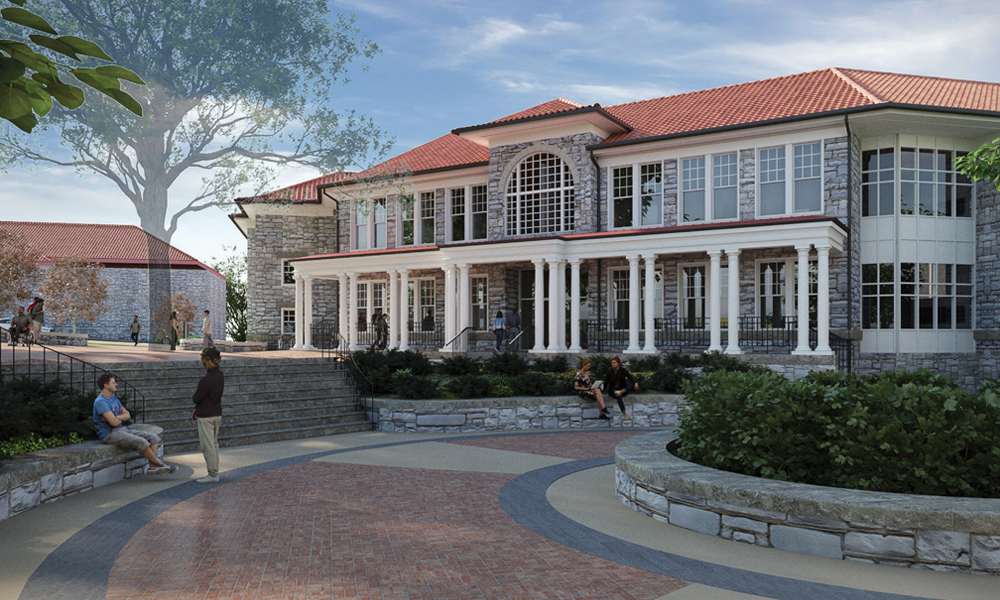
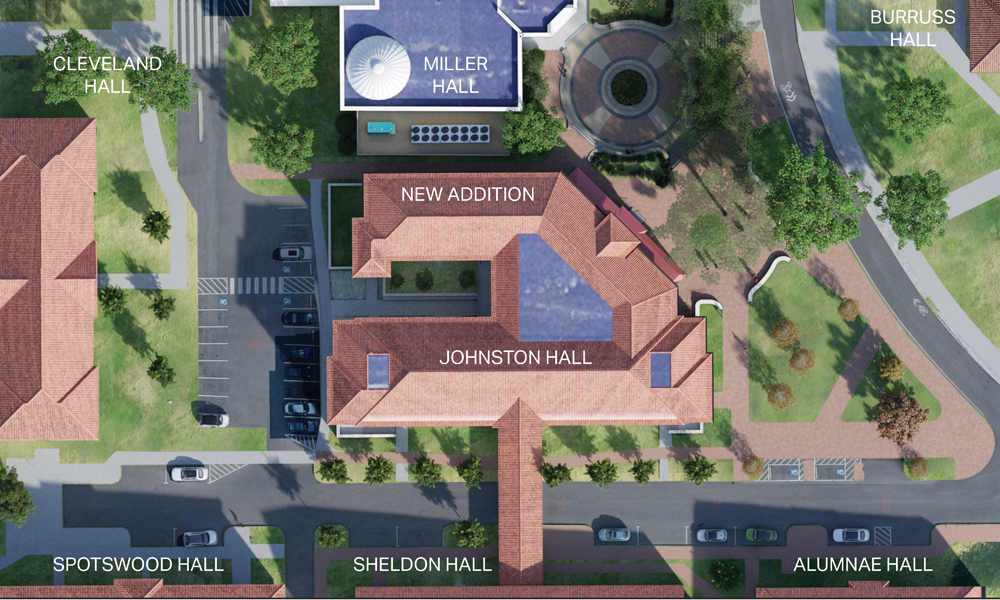
Johnston Hall renovation
JMU also received its entire 2026 General Fund requests of $28,750,000 to renovate and expand Johnston Hall, and $1,780,000 for furnishing and equipment.
Constructed in 1929 as a residence hall and later converted to academic use, Johnston Hall, at 70 Alumnae Drive, now houses faculty offices and instructional space for the Graduate Psychology and Anthropology programs. The building requires significant upgrades to address safety and infrastructure needs, and accessibility requirements through the Americans with Disabilities Act.
Renovations will include:
- new central air conditioning and building ventilation
- the replacement of obsolete electric, telecommunications, and plumbing systems
- 13,321 square feet of added space.
Planning funds were awarded in the 2024 General Assembly session, and the project was initially approved during the 2025 session.
Johnston Hall is expected to reopen in Fall 2028, following 18 months of renovations.
State Sen. Mark Obenshain, R-Harrisonburg, praised the new state budget, saying, “The General Assembly’s investment in James Madison University reflects a strong commitment to preparing Virginia's future workforce while meeting the growing needs of our communities.
“The funding for the new College of Health and Behavioral Studies building, continued support for the Fast Flex Nursing program, and the renovation of Johnston Hall will expand educational opportunities, prepare the next generation of healthcare professionals, and ensure JMU remains a leader in academic excellence,” he continued. “These strategic investments will benefit students and employers here in the Shenandoah Valley and across the Commonwealth. JMU has an outstanding record of producing graduates who are ready to work and serve their community.”
View project information here: https://www.bartonmalow.com/about-us/outreach/james-madison-school-of-health-and-behavioral-studies/
JMU anticipates holding a formal groundbreaking ceremony for the new CHBS building later this fall.


