

Supporting responsible research and international collaboration at JMU
An introduction from Michael Shannon, Associate Director of Research Security and International Compliance
News



SUMMARY: An examination of the mandated changes governing federally funded research, research security and international engagement
Research thrives on the exchange of ideas, the pursuit of discovery, and collaboration across institutional and national boundaries. At James Madison University, these activities are fundamental to our commitment to engaged learning, scholarship and meaningful contributions to society.
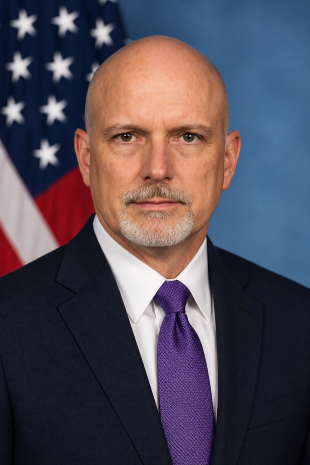
As JMU's Associate Director of Research Security and International Compliance within the Office of Research Integrity and Compliance (ORIC), I want to introduce myself, explain how our office can support your research, and highlight several important changes in the regulatory environment that may affect faculty, researchers and their international activities.
My professional background includes almost four decades of federal civilian and military service, with experience in national security, intelligence, organizational governance, oversight and risk management. Throughout my career, I have worked at the intersection of complex regulatory requirements, institutional accountability and operational decision-making. I am a practitioner-scholar in governance and organizational decision systems. I bring that experience to JMU with a straightforward objective: to help our researchers pursue opportunities while navigating an increasingly complex research environment toward achieving our individual and organizational aspirations.
A Changing Research Environment
Over the past several years, the federal government has placed greater emphasis on protecting federally funded research, ensuring transparency in international relationships, and safeguarding sensitive technologies and information.
These changes reflect concerns about the unauthorized transfer of research, undisclosed affiliations, conflicts of commitment and the potential misuse of technologies with national security applications. At the same time, federal agencies continue to recognize the importance of openness, scientific exchange and legitimate international collaboration.
For universities, the challenge is to thoughtfully balance these considerations. Research security should not be viewed as a reason to avoid international engagement. Rather, it provides a framework for understanding obligations, identifying potential concerns and making informed decisions that support and enable responsible collaboration.
Research Security and Disclosure Requirements
National Security Presidential Memorandum 33 (NSPM-33), issued in 2021, and the CHIPS and Science Act of 2022 established a foundation for stronger research security programs and greater consistency in federal disclosure expectations.
Federal agencies have subsequently implemented requirements involving research security training, disclosure of current and pending support, outside appointments, participation in foreign talent recruitment programs and institutional responsibilities for safeguarding federally funded research.
For example, the National Science Foundation implemented additional research security requirements effective December 2, 2025, including training certifications for senior/key personnel and requirements to maintain supporting documentation for certain foreign appointments and relationships.
For researchers, the central lesson is that accurate, complete and timely disclosures are a critical part of responsible research. An international appointment, research collaboration or external source of support may be entirely legitimate while still requiring disclosure under applicable sponsor rules.
Export Controls and International Research
Export controls are not new, but their importance to academic research has increased as technologies and international restrictions continue to evolve.
Three principal regulatory frameworks are relevant: the Export Administration Regulations (EAR), administered by the Department of Commerce; the International Traffic in Arms Regulations (ITAR), administered by the Department of State; and economic and trade sanctions administered by the Treasury Department's Office of Foreign Assets Control (OFAC).
These requirements can affect international shipments, software, technical information, laboratory equipment, research partnerships and certain financial transactions.
They can also apply without anything physically leaving the United States. Under deemed export rules, sharing or releasing certain controlled technology or source code to a foreign person within or outside the United States may constitute an export requiring authorization.
Most university research benefits from provisions protecting fundamental research and the open publication of research results. Nevertheless, some activities require additional review, particularly when they involve restricted technology, controlled information, publication limitations or specific foreign parties.
Our objective is to help identify these issues early before they interfere with research schedules or create avoidable compliance problems.
International Travel and Research Activities
International travel remains essential to scholarship, professional development and global engagement. However, travel can introduce considerations beyond personal safety.
Depending on the destination and purpose, researchers may encounter export-control restrictions, economic sanctions, cybersecurity concerns, limitations on transporting equipment or research data, and country-specific legal requirements.
Even ordinary research activities, traveling with a university laptop, sharing specialized software, transporting samples or conducting fieldwork may warrant additional preparation.
Recent changes in U.S. sanctions rules illustrate why destination-specific requirements should be checked before travel. Restrictions and available authorizations can change, and the rules applicable to academic activities may differ from those governing tourism or other travel.
Our role is to help you understand these considerations and identify practical precautions that allow international activities to proceed responsibly.
Foreign Collaborations, Affiliations and Research Partnerships
Federal agencies are also placing greater attention on institutional relationships, foreign research sponsorship and the ownership or control of organizations involved in research activities.
This does not mean that foreign partnerships are inherently problematic. International collaboration is indispensable to advancing knowledge.
It does mean that universities may need to conduct additional due diligence when entering certain agreements, receiving foreign funding, sharing technology or establishing relationships with organizations subject to federal restrictions.
An important distinction is that a potential concern is not necessarily a prohibition. The relevant facts, applicable authorities, and circumstances of the proposed activity must be evaluated before reaching a conclusion.
How ORIC Can Support You
Our Research Security and International Compliance function is intended to be a resource for faculty, staff and researchers.
We can assist with questions involving international collaborations, foreign funding relationships, research disclosures, export-controlled technologies, international travel, restricted-party screening and other activities that may intersect with federal requirements.
We also work with other university offices to help coordinate reviews and avoid unnecessary duplication of effort.
My approach is grounded in the principle that sound institutional decisions require reliable information, an understanding of applicable requirements and informed professional judgment. Where requirements are clear, we should provide clear guidance. Where uncertainty exists, we should work collaboratively to identify the information necessary to reach a defensible decision.
The earlier we become involved, the more opportunities we have to identify practical solutions.
Moving Forward Together
JMU's research enterprise continues to evolve, expand and inspire, creating opportunities for new partnerships, funding sources, technologies and international engagement.
As these opportunities expand, so does the importance of a research environment that supports both innovation and institutional responsibility.
I look forward to meeting faculty and researchers across the university, learning about your work and understanding how our office can better support your goals.
Our purpose is not to create barriers to research. It is to help JMU pursue research and international collaboration with confidence, transparency and appropriate safeguards.
I encourage you to contact ORIC early whenever a proposed activity raises questions about research security, export controls, international collaboration or related requirements.


