JY Zhou On The Global Stage
News


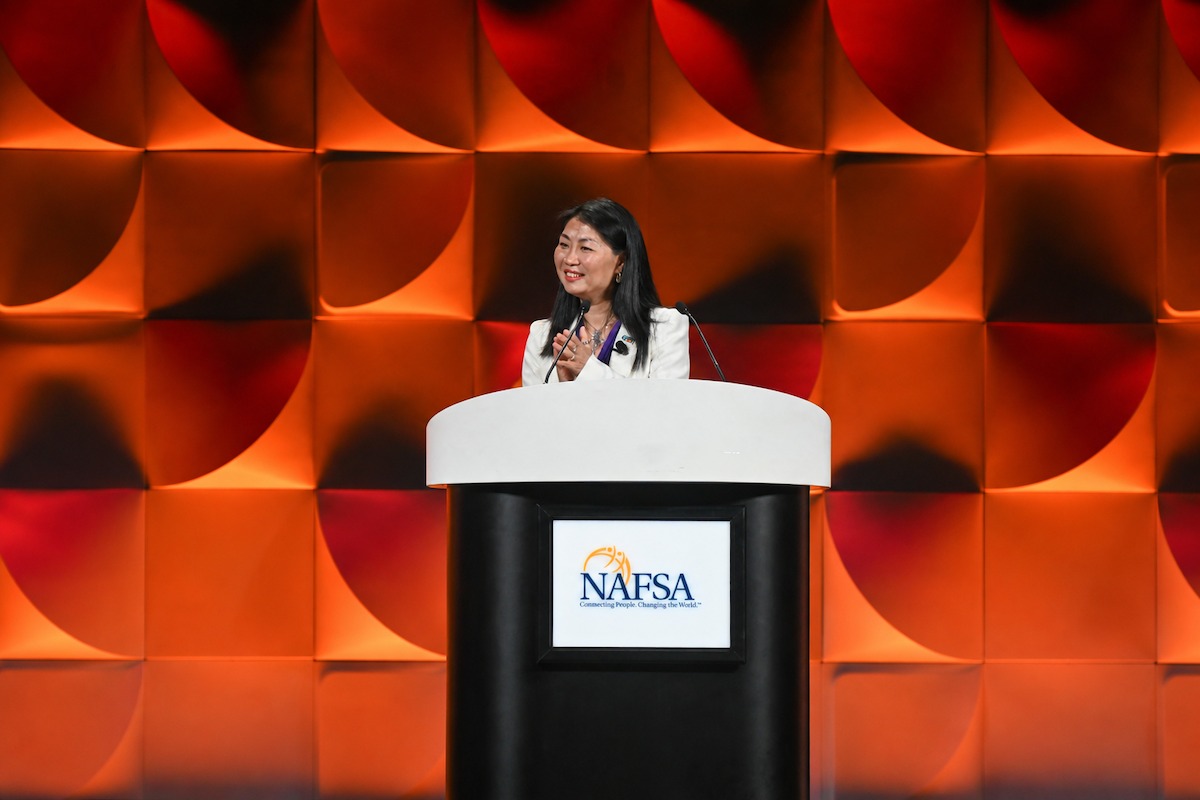
When Associate Provost and CGE Executive Director JY Zhou took the stage to address 7000+ people, she was not nervous. In fact, as she was re-reading her speech just before going on, she made some last-minute scribbles on her paper, crossing out one paragraph and moving another higher up: focused on sharpening her message and completely unfazed by the moment. For those in the audience, JY’s composed demeanor was notable at a time when many of them were feeling nervous about the state of higher education, and field of global education in particular. The content of JY’s message was reassuring and clear: “We know the value of international education, and we continue doing this work because it matters.”
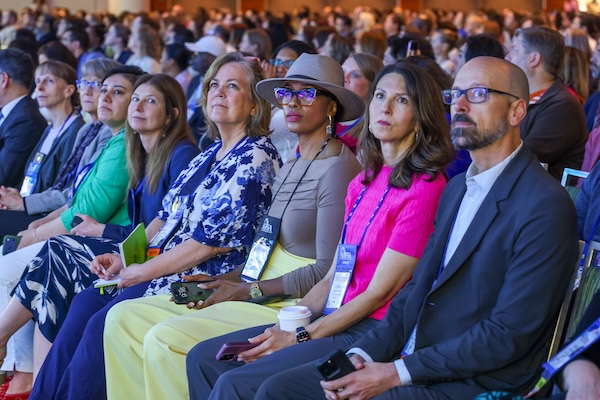 The large gathering in question was the 78th annual NAFSA Conference held in Orlando, FL in May, and this year Zhou served as the conference chair. NAFSA is the professional association for international educators, that has over 10,000 members representing 3,000+ higher education institutions around the world. NAFSA’s primary function in the field of international education is to advocate for better policies, share information between universities, provide opportunities for professional development, and facilitate global partnerships. As Zhou explains it, “NAFSA represents every aspect of international education– from international students to study abroad, global partnerships, and international education leadership.” The conference is the center piece of the organization’s calendar, and it’s the one time of year where the entire field gathers in one place.
Serving as conference chair for the largest gathering of NAFSA members was a huge honor for Zhou and took more than two years of planning to pull off. She received a call out of the blue in the fall of 2023 offering her the role, and she accepted on the spot. She was then responsible for assembling a conference committee team to work through every detail of planning. She also spent the entire 2025 conference shadowing her predecessor to learn what to expect in the role. The major responsibility was to plan out the conference program: develop content focus and tracks, write the call for proposals, cultivate workshop, session, and poster proposals, review presentation proposals, and make tough decisions about the content of the week-long event. This was a challenge for Zhou because “I felt responsible for the knowledge we wanted to share.” Additionally, they were planning the conference well in advance, so they didn’t know what challenges might arise for the field. They had to anticipate the needs and topics of interest for 2026 a year in advance to curate the content to address it. No easy task in the rapidly changing landscape of higher education.
Zhou and her committee also developed the theme for this year's conference, Global by Design. Drawing a contrast with being "global by accident" or "global by convenience," the theme encourages international educators to approach their work with intentionality, purpose, and innovation. Global by Design emphasizes the creativity inherent in global education to solve big challenges and connect people across borders. According to Zhou, the theme was meant to resonate with people who all come to NAFSA with different hopes and expectations: “Some people come to learn, some come to build partnerships, some come to reconnect with colleagues, and some come because they're looking for solutions to challenges they're facing.” She concludes, “Everyone comes with a different purpose, but together we create the conference experience.” The theme Global by Design validates all these reasons and gives each of them structured ways to participate in the conference.
 Apart from the role NAFSA plays in the field of global education, it holds a special place for Zhou as she’s been attending the conference and participating in events for more than 10 years. Of the importance of the conference, Zhou says, "I've learned so much from this community. Serving as conference chair was one way I could give something back." In global education, the large conference is especially vital to convening and facilitating meetings between partner institutions. “It creates space where people can build partnerships, collaborate, and learn from one another” says Zhou, “Rather than traveling to many different countries, educators can meet colleagues from more than 100 countries all in one place.” This is crucial in this moment because many institutions have fewer resources, and there are more barriers to traveling internationally. This was a large and consequential responsibility that took conscious effort and careful planning.
This year the NAFSA conference took place amidst a changing landscape for international education worldwide. As alluded to earlier, budgets at even the most prestigious universities have been slashed, many countries are facing increased travel restrictions, international students are experiencing more scrutiny, and global conflicts have created greater instability. These are difficult times for global education, and tough questions are being asked about the value of this work. The nervousness in the air at the conference was merited. Zhou, keenly aware of the challenges facing the field of international education, remained calm. In a prescient move by NAFSA, the organization entrusted the conference to a leader whose greatest strengths aligned perfectly with what the community needed most: empathy, collaboration, and hope. Though too modest to attribute this to her own leadership, Zhou agreed that the mood at the conference was especially powerful this year: “One thing I love about our community is that people support each other. There's never a feeling that we're competing with one another. We're all working together to move the field forward.” Reflecting on what was accomplished she said “I think people showed more empathy this year, but at the same time I also felt people were more hopeful.” If that’s true, they were guided in that direction by example.
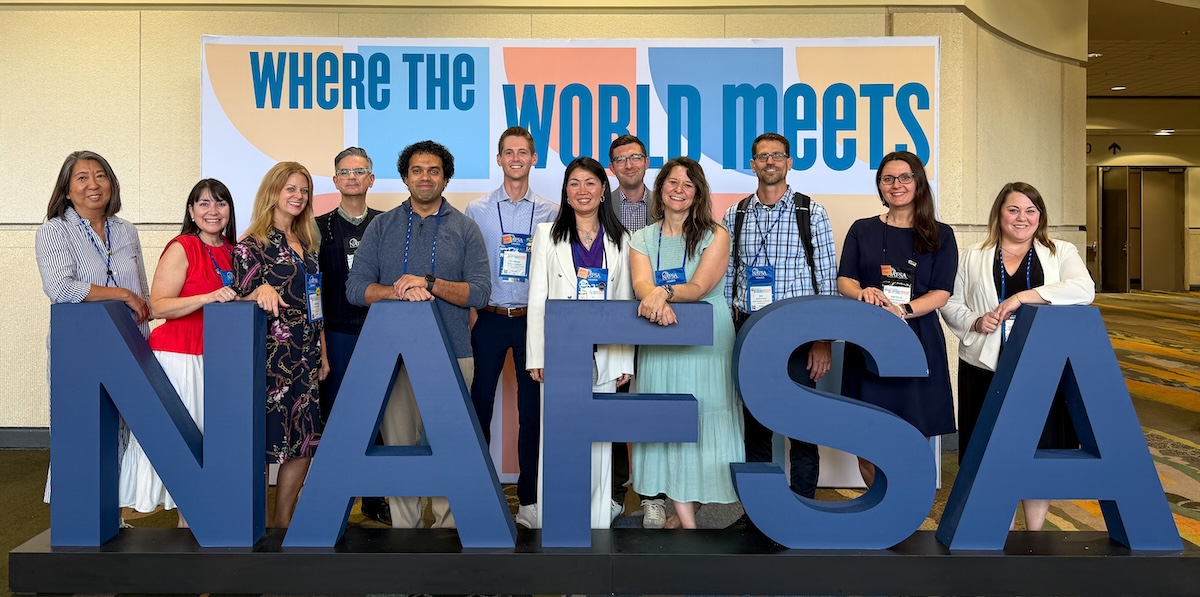
Another aspect of leading the NAFSA conference that Zhou emphasized was what it means to represent JMU at the largest gathering of international educators in the world. This is the first time someone from JMU has served in a leadership role at a NAFSA national conference and validates the work being done by Zhou and her team as noteworthy in the field of global education. Zhou said, “I'm proud not only of serving as conference chair, but of representing James Madison University on an international stage.” Zhou was not there by herself. In fact, more than 10 members of the CGE staff as well as Provost, Bob Kolvoord were in attendance for JY’s opening address. Study Abroad director Katie Sensabaugh and Associate Study Abroad Director Angeline McMullin presented their work at the conference.
For JMU, Zhou's leadership on the international stage is a testament to the impact of the CGE and the university's growing reputation within the field. It also reinforces JMU's commitment to preparing students to thrive in an interconnected world by building meaningful partnerships and broadening worldviews.
More than a decade after attending her first NAFSA conference, Zhou returned this year not as a participant, but as a leader. The person entrusted with guiding the profession through one of its most uncertain moments. As the conference ended, the challenges facing international education have not disappeared. Budgets remain tight, policies continue to evolve, and uncertainty persists. But attendees left with something equally important: a renewed sense of purpose and a reminder that they are not facing those challenges alone. Standing before thousands of colleagues, Zhou delivered a simple message: "We know the value of international education, and we continue doing this work because it matters."