

Furious Flower Announces Fellows for Archival Engagement Fellowship
News


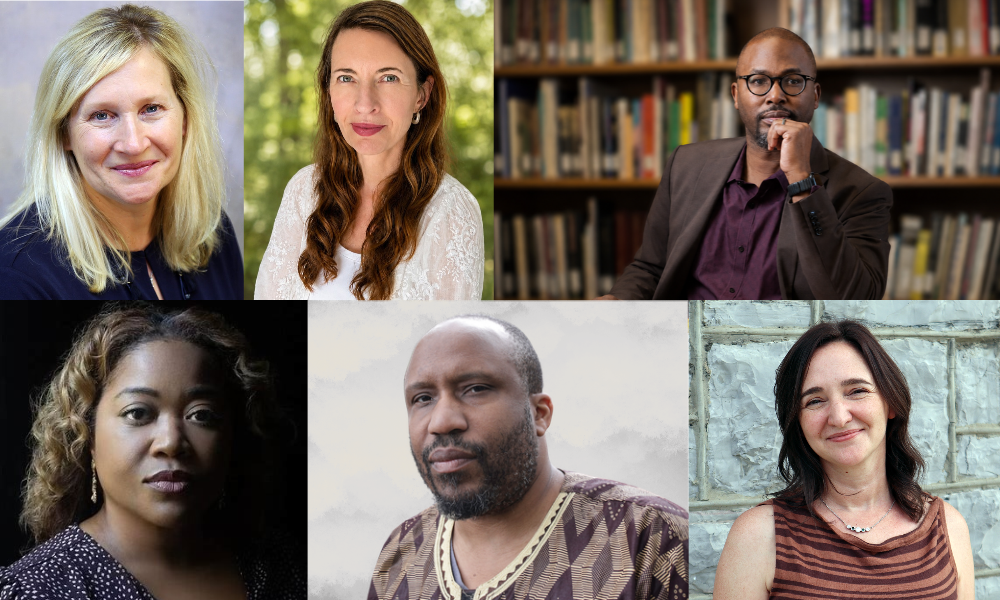
SUMMARY: As Furious Flower and JMU Libraries finalize the digitization of the Mellon-funded Flowerings archive, six archival fellows will stress-test its infrastructure to ensure it can support research, education, and creativity for years to come.
Thanks to a 2022 Mellon grant, Furious Flower continues to work in partnership with JMU Libraries to digitize, preserve, and make accessible materials in the Furious Flower collection, including 1994, 2004, 2014, and 2024 conferences. As processing of the archives nears its completion, the next steps involve a stress test of the archival infrastructure to ensure it meets the needs of the kinds of projects that engagement with these archives might produce.
This is the purpose of the Furious Flower Archival Engagement Fellowship, an 8-month project-focused fellowship designed to utilize the extensive Furious Flower audio/visual materials housed in JMU Libraries’ Department of Digital Scholarship and Distinctive Collections (DSDC). Fellows will engage in one of three streams of inquiry: Pedagogical (How might these archives support, expand, and innovate teaching and learning?); Scholarly (What do these archives invite us to learn about the field of Black poetry? What do they contribute to the study of American and world letters?); and Creative (How might these archives serve as a site of inspiration for new work and new manifestations of creative expression?). After “media reformatting, audio transcription, detailed descriptive information, and implementation of new online systems over a period of several years,” DSDC director Caitlin Birch describes the fellowships as “an exciting first foray into the many pedagogical, scholarly, and creative initiatives these records will inspire and support for generations to come.”
“When we were first envisioning what this could look like, in the Flowerings Phase One planning stages, we reached out to a variety of stakeholders internal and external to JMU who spent time thinking and sharing their experiences with Furious Flower and their hopes for what these archives could do,” said Furious Flower executive director, Lauren K. Alleyne. “It was exciting to go back to some of those participants, and invite them to see what’s been done, help us test its limits, and also show us its potential.” Fellows receive $8,000 and will engage with the archives on-site at JMU and remotely over the course of the next eight months. The fellowships will culminate in a project showcase in the fall of 2027, alongside the official unveiling of the digitized and fully accessible Furious Flower archives.
Here are the 2026-2027 Archival Engagement Fellows:
Mary Beth Cancienne, Ph.D. (JMU, Pedagogy) is a professor of English education in the Middle and Secondary Education Department at James Madison University. Her research focuses on Black poetry, digital archives, and innovative teaching methods, which she applies in partnership with the Furious Flower Poetry Center to educate English education undergraduates, graduates, in-service teachers, and high school students. She has published in journals such as the Virginia English Journal, Qualitative Inquiry, Theory into Practice, the Journal of Curriculum and Teaching Dialogue, and the Journal of Curriculum Theorizing, highlighting her contributions to curriculum development, arts-based research, and literary education. Additionally, she co-edited, with C. Bagley, a book and CD-ROM titled "Dancing the Data" (2002, Peter Lang). In 1999, she co-founded the AERA Arts & Inquiry in the Visual and Performing Arts SIG.
Dr. Cancienne has worked with Furious Flower for over a decade as a collaborator on several Furious Flower initiatives, from giving talks in our Legacy Seminars for educators to serving as faculty on the X-lab course that produced the prototype digital project, Furious Flower Archive, and most recently contributing to the Furious Flower Syllabus Project. She continues to incorporate Furious Flower into her teaching, research and educational practice.
“I plan to provide an initial framework to help high school teachers understand how to access the archive, why they should teach Black poetry using it, and how to navigate the archive to find poets and poems to teach their high school students.” – Mary Beth Cancienne
Erica Cavanagh (JMU, Pedagogy) is Professor of English and Creative Writing at James Madison University. Her writing has appeared in The Missouri Review, North American Review, Iowa Review, Bellevue Literary Review, Gastronomica, and elsewhere, including the anthologies "Letters to a Stranger: Essays to the Ones Who Haunt Us" and "Solastalgia: An Anthology of Emotion in a Disappearing World". She is the editor of Come and Eat: Essays on Food and Care for the Dispossessed, forthcoming from UVA Press. Her awards include the Ruth Murray Prize, Iowa Arts Fellowship, Missouri Review’s Editor’s Prize, Mid-Atlantic Arts Fellowship, Valley Arts Council Grant, and an artist residency at Millay Arts. Raised in Rochester, New York, she lives in the Shenandoah Valley of Virginia with her family.
Cavanagh was a JMU undergraduate student of Dr. Gabbin’s during the first Furious Flower conference in 1994, and has been a friend, advocate, collaborator, and contributor ever since. Her photos can be found in the Furious Flower archives and on the cover of some issues of The Fight & The Fiddle. She continues to connect students to the Center through classroom visits, using Furious Flower materials and teaching Black poetry units in her classes.
“…I aim to empower students to search Furious Flower’s archives to learn more about the poets who interest them. I also want to inspire them to take an active role in Furious Flower’s mission to celebrate, educate, and preserve Black poetry.” – Erica Cavanagh
This is the purpose of the Furious Flower Archival Engagement Fellowship, an 8-month project-focused fellowship designed to utilize the extensive Furious Flower audio/visual materials housed in JMU Libraries’ Department of Digital Scholarship and Distinctive Collections (DSDC). Fellows will engage in one of three streams of inquiry: Pedagogical (How might these archives support, expand, and innovate teaching and learning?); Scholarly (What do these archives invite us to learn about the field of Black poetry? What do they contribute to the study of American and world letters?); and Creative (How might these archives serve as a site of inspiration for new work and new manifestations of creative expression?). After “media reformatting, audio transcription, detailed descriptive information, and implementation of new online systems over a period of several years,” DSDC director Caitlin Birch describes the fellowships as “an exciting first foray into the many pedagogical, scholarly, and creative initiatives these records will inspire and support for generations to come.”
“When we were first envisioning what this could look like, in the Flowerings Phase One planning stages, we reached out to a variety of stakeholders internal and external to JMU who spent time thinking and sharing their experiences with Furious Flower and their hopes for what these archives could do,” said Furious Flower executive director, Lauren K. Alleyne. “It was exciting to go back to some of those participants, and invite them to see what’s been done, help us test its limits, and also show us its potential.” Fellows receive $8,000 and will engage with the archives on-site at JMU and remotely over the course of the next eight months. The fellowships will culminate in a project showcase in the fall of 2027, alongside the official unveiling of the digitized and fully accessible Furious Flower archives.
Here are the 2026-2027 Archival Engagement Fellows:
Mary Beth Cancienne, Ph.D. (JMU, Pedagogy) is a professor of English education in the Middle and Secondary Education Department at James Madison University. Her research focuses on Black poetry, digital archives, and
innovative teaching methods, which she applies in partnership with the Furious Flower Poetry Center to educate English education undergraduates, graduates, in-service teachers, and high school students. She has published in journals such as the Virginia English Journal, Qualitative Inquiry, Theory into Practice, the Journal of Curriculum and Teaching Dialogue, and the Journal of Curriculum Theorizing, highlighting her contributions to curriculum development, arts-based research, and literary education. Additionally, she co-edited, with C. Bagley, a book and CD-ROM titled "Dancing the Data" (2002, Peter Lang). In 1999, she co-founded the AERA Arts & Inquiry in the Visual and Performing Arts SIG. Dr. Cancienne has worked with Furious Flower for over a decade as a collaborator on several Furious Flower initiatives, from giving talks in our Legacy Seminars for educators to serving as faculty on the X-lab course that produced the prototype digital project, Furious Flower Archive, and most recently contributing to the Furious Flower Syllabus Project. She continues to incorporate Furious Flower into her teaching, research and educational practice.
“I plan to provide an initial framework to help high school teachers understand how to access the archive, why they should teach Black poetry using it, and how to navigate the archive to find poets and poems to teach their high school students.” – Mary Beth Cancienne
Erica Cavanagh (JMU, Pedagogy) is Professor of English and Creative Writing at James Madison University. Her writing has appeared in The Missouri Review, North American Review, Iowa Review, Bellevue Literary Review, Gastronomica, and elsewhere, including the anthologies "Letters to a Stranger: Essays to the Ones Who
Haunt Us" and "Solastalgia: An Anthology of Emotion in a Disappearing World". She is the editor of Come and Eat: Essays on Food and Care for the Dispossessed, forthcoming from UVA Press. Her awards include the Ruth Murray Prize, Iowa Arts Fellowship, Missouri Review’s Editor’s Prize, Mid-Atlantic Arts Fellowship, Valley Arts Council Grant, and an artist residency at Millay Arts. Raised in Rochester, New York, she lives in the Shenandoah Valley of Virginia with her family. Cavanagh was a JMU undergraduate student of Dr. Gabbin’s during the first Furious Flower conference in 1994, and has been a friend, advocate, collaborator, and contributor ever since. Her photos can be found in the Furious Flower archives and on the cover of some issues of The Fight & The Fiddle. She continues to connect students to the Center through classroom visits, using Furious Flower materials and teaching Black poetry units in her classes.
“…I aim to empower students to search Furious Flower’s archives to learn more about the poets who interest them. I also want to inspire them to take an active role in Furious Flower’s mission to celebrate, educate, and preserve Black poetry.” – Erica Cavanagh
Mollie Godfrey (JMU, Scholarship) is Professor of English and African, African American, and Diaspora Studies at James Madison University, where she also serves as Director of Graduate Studies for the Department of English. She is the author of "Brave Humanism: Black Women Rewriting the Human in the Age of Jane Crow" (The Ohio State
 University Press, 2025), editor of "Conversations with Lorraine Hansberry" (University Press of Mississippi, 2021), and co-editor of "Neo-Passing: Performing Identity after Jim Crow" (Illinois University Press, 2018) and "A Miserable Revenge: A Story of Life in Virginia" (JMU Libraries, 2025). She has also co-directed several Black archival recovery and digital humanities projects, including the Furious Flower Archive: A Prototype, Celebrating Simms: The Story of the Lucy F. Simms School, and Mapping the Black Digital and Public Humanities.
As a professor and scholar of Black literature, a digital humanities practitioner, and an archival researcher, Dr. Godfrey has engaged with Furious Flower on multiple fronts. Most impactfully, she served as one of the lead professors in the X-lab course that produced the prototype digital project, Furious Flower Archive, which served as the concept for what became the Flowerings project funded by the Mellon Foundation.
“My project asks what the Furious Flower archives invite us to learn about Black literary history when we shift our focus away from literary movements defined by conflict and exclusion to the intergenerational communities of care that sustain Black writers and Black literary production…” – Mollie Godfrey
DaMaris B. Hill (Creative) is a poet and creative scholar. Her books include "Breath Better Spent: Living Black Girlhood", "A Bound Woman Is a Dangerous Thing", "The Fluid Boundaries of Suffrage and Jim Crow: Staking Claims in the American Heartland", and "\Vi-zə-bəl\ \Teks-chərs\ (Visible Textures)". Her digital work, “Shut Up In My Bones”, is
 a twenty-first century poem. Her next book, a memoir entitled "Blood Bible: An American History", will be published with Bloomsbury in 2027. A former Fellow at the John Carter Brown Library at Brown University and the Hutchins Center for African and African American Research at Harvard University, Hill is Chair and Professor of Creative Writing and English Literature at Morgan State University in Baltimore, MD.
Dr. DaMaris Hill was Furious Flower’s inaugural Poet-in-Residence and has remained a steadfast collaborator and advocate ever since. She was a Legacy Seminar fellow, a teaching artist for Furious Flower in eSwatini, a contributor to the Furious Flower Syllabus Project, and a featured poet at the fourth Furious Flower conference.
“One goal of this project concerning the Furious Flower Poetry Center archives is to make evident how poetry generates and answers questions about the limits of public histories, the stubborn and unfinished business of abolition and resistance, and being human in the context of public histories that center nationhood or empire.” – Hill
Fred L. Joiner (Creative) is a poet, curator, and former Poet Laureate of Carrboro, North Carolina. Joiner has published work and curated exhibitions nationally and internationally. Joiner’s work explores Black diasporic poetics, ekphrasis, music/sound, computational concepts, and visual arts; and he has worked extensively with museums
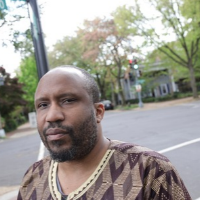 and art spaces. Joiner was a member of the Academy of American Poets Laureate Fellowship’s inaugural cohort. He is the founder of the Black Ekphrastic, co-founder of The Center for Poetic Thought, and former curator for the American Poetry Museum. Combining over two decades of IT leadership with public humanities engagement, Joiner builds community through interdisciplinary creative practice and service. He currently serves as a Board member for the Orange County Arts Alliance (NC), Southwest Renaissance Development Corporation (DC) and as Town Council Member in Carrboro, NC. Joiner is author of the debut poetry collection "The Mirror in Our Music" (Birds, LLC) and lives in Carrboro, NC with his wife and two daughters.
A longtime Furious Flower friend and fan, Joiner participated in the consulting stages of Flowerings. His poem “For the Builders,” published in the Furious Flower anthology Furious Flower: Seeding the Future of African American Poetry, became a foundational text for the Flowerings project, and continues to serve as an epigraph, illuminating the project’s purpose of preservation.
“As an interdisciplinary poet with experience in technology, I am always looking for ways for poetry to interface with other technical disciplines. I will approach my time during the fellowship to think about ways to bring together creative tech and Black poetry.” – Fred L. Joiner
Howard Rambsy II (Scholarship), Distinguished Research Professor of Literature at Southern Illinois University Edwardsville (SIUE), is the author of "Writing Black Panther: Ta-Nehisi Coates and Representation Struggles" (2026) and "The Convergence: When Collegiate Black Men Meet African American Literary Studies" (2026), and, with
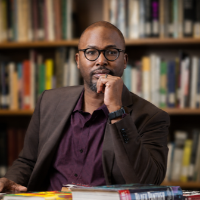 Kenton Rambsy, co-author of "One Black Writer at a Time: How Literary Coverage Shapes Reception" (2026). He is the creator of "Remarkable Receptions", a podcast examining responses to African American literary and artistic productions.
As a scholar of Black literature, Dr. Rambsy has engaged with Furious Flower as faculty for the 2019 Furious Flower Legacy Seminar and as a member of the Flowerings Project Advisory Committee. He has attended and written about Furious Flower conferences and initiatives.
“My larger goal is to demonstrate how the archive of a Black poetry gathering can expand literary history. The project will contribute new scholarship on Baraka while also demonstrating how conferences function as important sites of literary reception, community formation, and intergenerational exchange.” – Howard Rambsy II


