

Intelligence Analysis students present research at national symposium
News


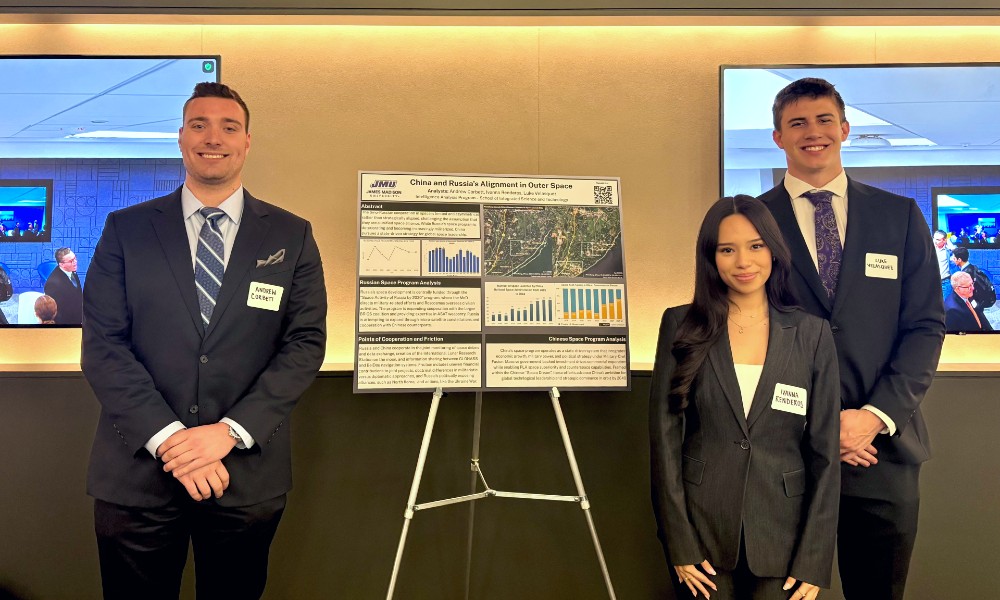
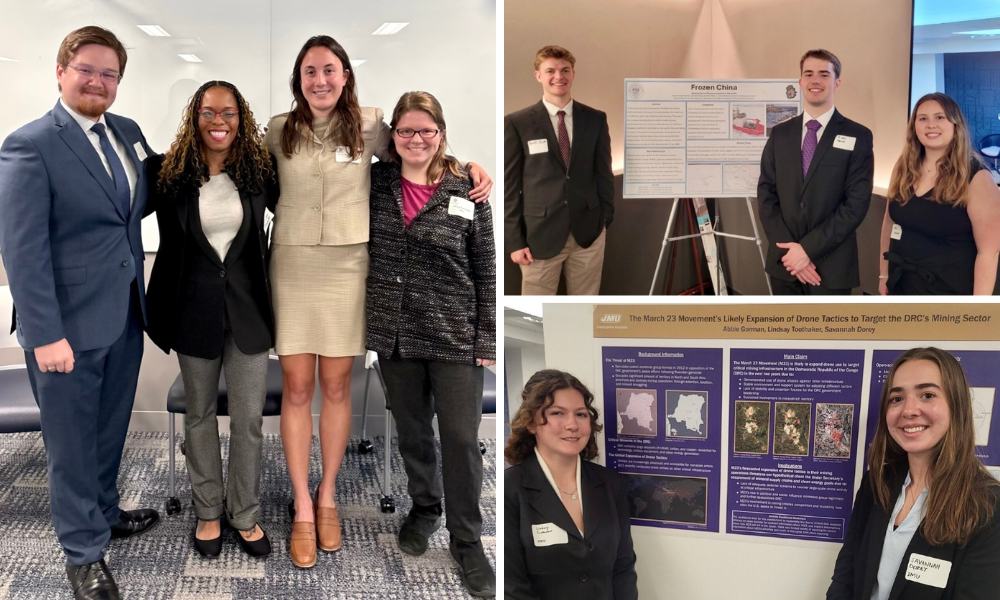
JMU Intelligence Analysis students presented their research at the 2026 Intelligence Studies Consortium Spring Symposium at Georgetown University’s Capitol Campus. The symposium, titled “The Intelligence Profession: Future Challenges & Opportunities,” brought together more than 600 attendees, including graduate students, faculty and intelligence professionals.
JMU expanded its presence this year, with four student groups presenting posters and two additional students selected as panelists. This representation highlights both the rigor of the program and the competitiveness of the symposium.
“JMU’s presence at the ISC Symposium reflects the strength of our undergraduate students and our commitment to engaging directly with the broader intelligence community in meaningful, applied ways,” said Dr. Philip Baxter, IA professor.
The ISC, established by the National Intelligence University and partner institutions, serves as a collaborative platform for addressing critical national security challenges. The event featured keynote speakers, panel discussions, a career fair and networking opportunities that connected students with professionals across the intelligence community and private sector.
For students, the experience marked a transition from classroom learning to real-world application. Presenting alongside graduate-level researchers required strong analytical work as well as the ability to communicate findings clearly and confidently.
“What stood out most was not just the quality of the research, but the professionalism and confidence our students brought to their presentations and conversations with practitioners,” Baxter said.
IA professor Dr. Giangiuseppe Pili emphasized the value of engagement. “All the students who participated in this conference reported strong engagement and meaningful feedback.”
One of the teams examined Sino-Russian cooperation in space, building on prior research into Arctic relations.“Our research on Sino-Russian cooperation in space was a natural evolution of our prior research on Sino-Russian relations in the Arctic,” Luke Velasquez said. “The dynamic between these two countries is fascinating, and the differences in their roles across domains add greater depth to our understanding.”
Andrew Corbett said the project also addressed a gap in existing research.
Students highlighted the role of faculty mentorship in shaping their research and preparing them to present in an interactive, professional environment. “The ISC gave me opportunities to interact with students and professionals that would otherwise be unavailable,” Velasquez said. “Those conversations helped sharpen my presentation skills, strengthen my reasoning and build my confidence by exposing me to new perspectives.”
Students said the networking component was equally impactful, with poster sessions allowing for direct engagement with practitioners.“Presenting at the poster session was a great experience that gave us a unique opportunity not only to improve briefing skills, but to network with members of the intelligence community with well-established reputations,” Corbett said.
“Events like the ISC give students the opportunity to stress-test their ideas, methods and research in front of professionals and get critical feedback,” Baxter said. “This is one of the most valuable steps in transitioning from classroom learning to real-world impact.”


