Ruth Symposium connects students to their future in audiology
College of Health and Behavioral Studies


SUMMARY: At the 2026 Ruth Symposium, students discovered new possibilities, shared their research and began envisioning their futures in hearing healthcare, all while connecting with a legacy that continues to inspire.
The Ruth Symposium returned on November 5-6, 2026, and for James Madison University (JMU) Audiology students, it offers something that goes beyond the classroom: a chance to see where their education can take them. The symposium brought students face-to-face with practicing professionals, emerging research and new possibilities within the field of hearing healthcare. By connecting students with established clinicians and researchers, it provided a glimpse into the profession they are preparing to enter, and an opportunity to begin seeing themselves as part of the broader audiology community.
“My first time attending the conference was last year, and it was probably the first time in my audiology career where I felt less like a student and more like an up-and-coming peer,” said Abigail Smith, a second-year doctoral student in JMU’s Audiology program.
That sense of belonging is central to the symposium’s purpose, which has evolved considerably since the event first began in the early 2000s as the Innovations in Clinical Communication Sciences Conference. Originally, it brought together audiologists and speech-language pathologists from across Virginia and the surrounding region. Organized by Dr. Roger Ruth, former professor and founding member of the American Academy of Audiology (AAA), the conference was eventually renamed in his honor. Over the past 15 years, its focus has shifted toward audiology, reflecting Ruth’s area of expertise and his lasting contributions to the profession.
Today, the symposium serves as both a professional development opportunity and a way to strengthen connections across the field, according to Ayasakanta Rout, one of the event’s organizers. By bringing nationally and internationally recognized speakers to campus, the event exposes faculty and students to emerging research and developments in audiology. It also provides free continuing education units (CEUs) to clinical preceptors who supervise JMU students, giving practicing audiologists an opportunity to advance their professional knowledge without traveling to a larger conference.
“It’s our thank you gift to them,” Rout said.
The symposium’s content is shaped in part by the people who attend. Following last year’s event, organizers surveyed participants to learn which topics they wanted to explore further. Their responses helped determine this year’s presentations, with an emphasis on information that clinicians could bring directly into their practices.
“We started with that exit survey from last year, just to see what topics generally people were interested in learning more about,” said Beth McCall, JMU educator and one of the symposium’s organizers.
This year’s presentations covered a range of topics, including tinnitus, commonly described as ringing in the ears, and hyperacusis, a heightened sensitivity to everyday sounds that can significantly affect patients’ quality of life.
“We also had someone who specializes in work in the connection between hearing loss and diabetes, which is an interesting thing, and I think relevant for our practicing clinicians too,” McCall said. “So, it’s practical rather than higher-level scientific research.”
While the symposium looks toward the future of audiology, one of this year’s most significant moments also paid tribute to its history at JMU.
The keynote address is named in honor of Dr. Brenda Ryals, a JMU professor who spent 27 years at the university and made significant contributions to hearing science. Ryals was the first researcher to discover that birds could regenerate auditory hair cells following hearing damage, a finding that helped advance research into hearing restoration.
This year’s keynote speaker, Kate Fernandez (‘08Au.D., ‘10Ph.D.), has a personal connection to that legacy. A former doctoral student of Ryals, Fernandez has gone on to become a scientist at the National Institutes of Health, where her work focuses on understanding the mechanisms involved in developing treatments for hearing loss.
For organizers, Fernandez’s return to JMU represents a meaningful connection between the university’s research history and the next generation of discoveries. Having a former student deliver a keynote honoring her mentor brings that legacy full circle, demonstrating how mentorship and research can influence the future of an entire field.
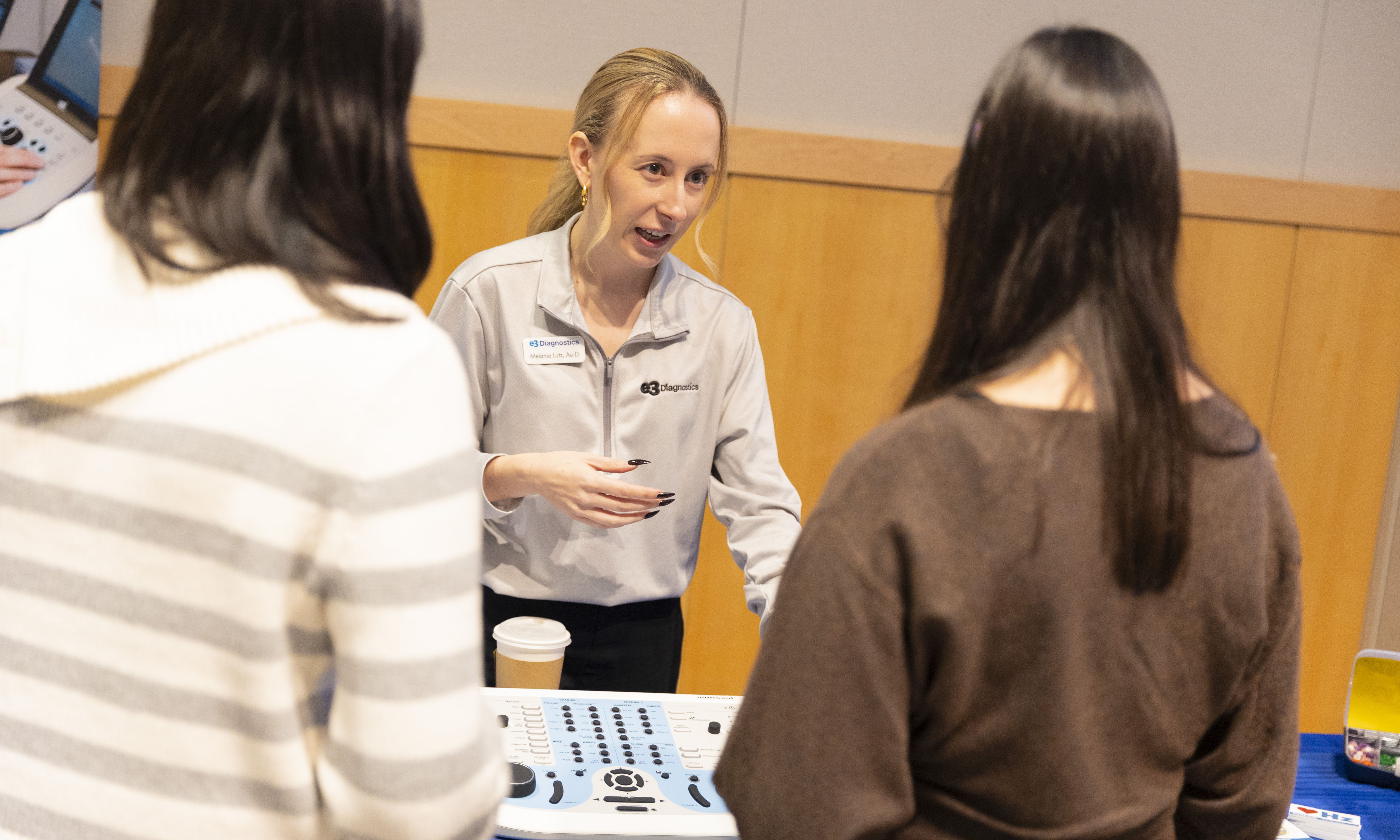
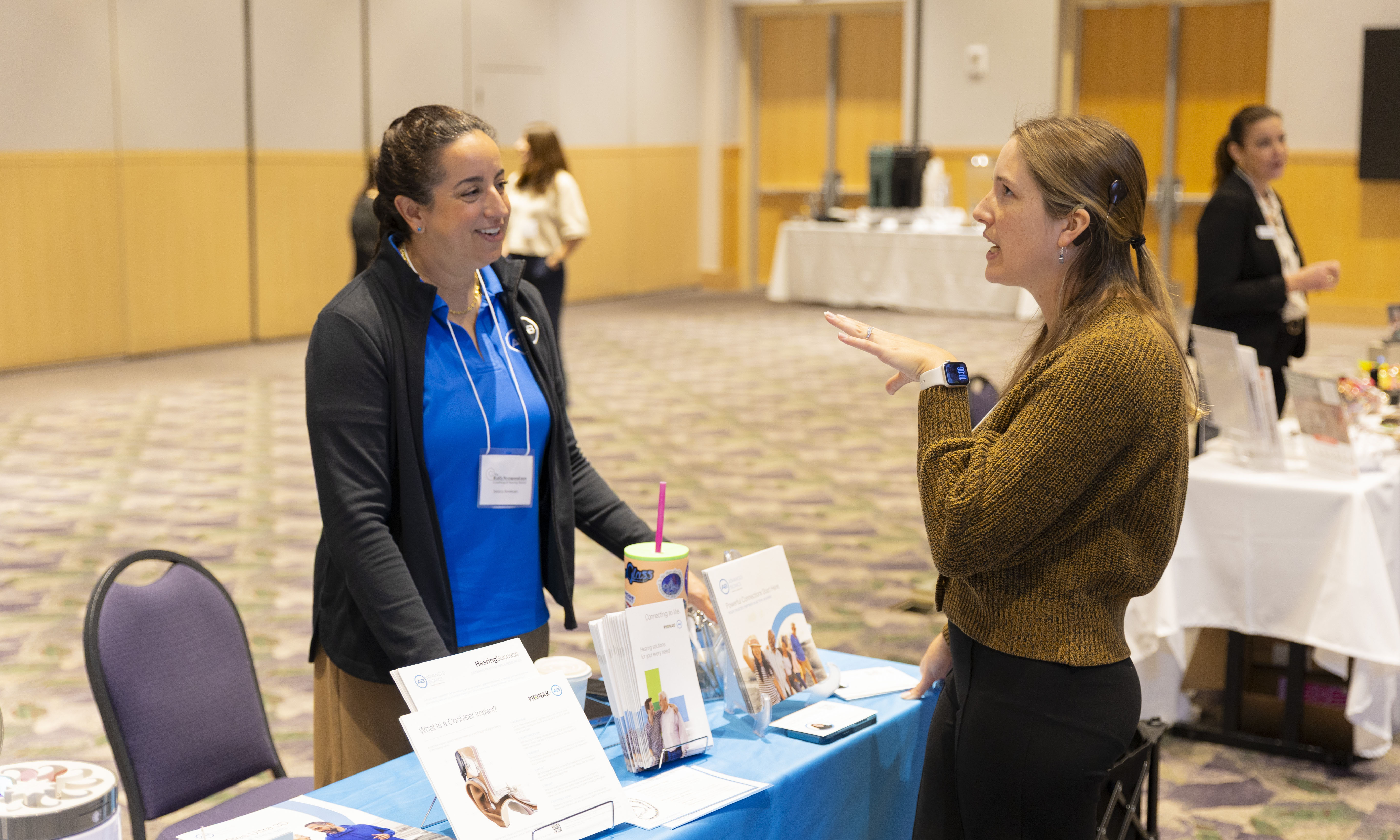
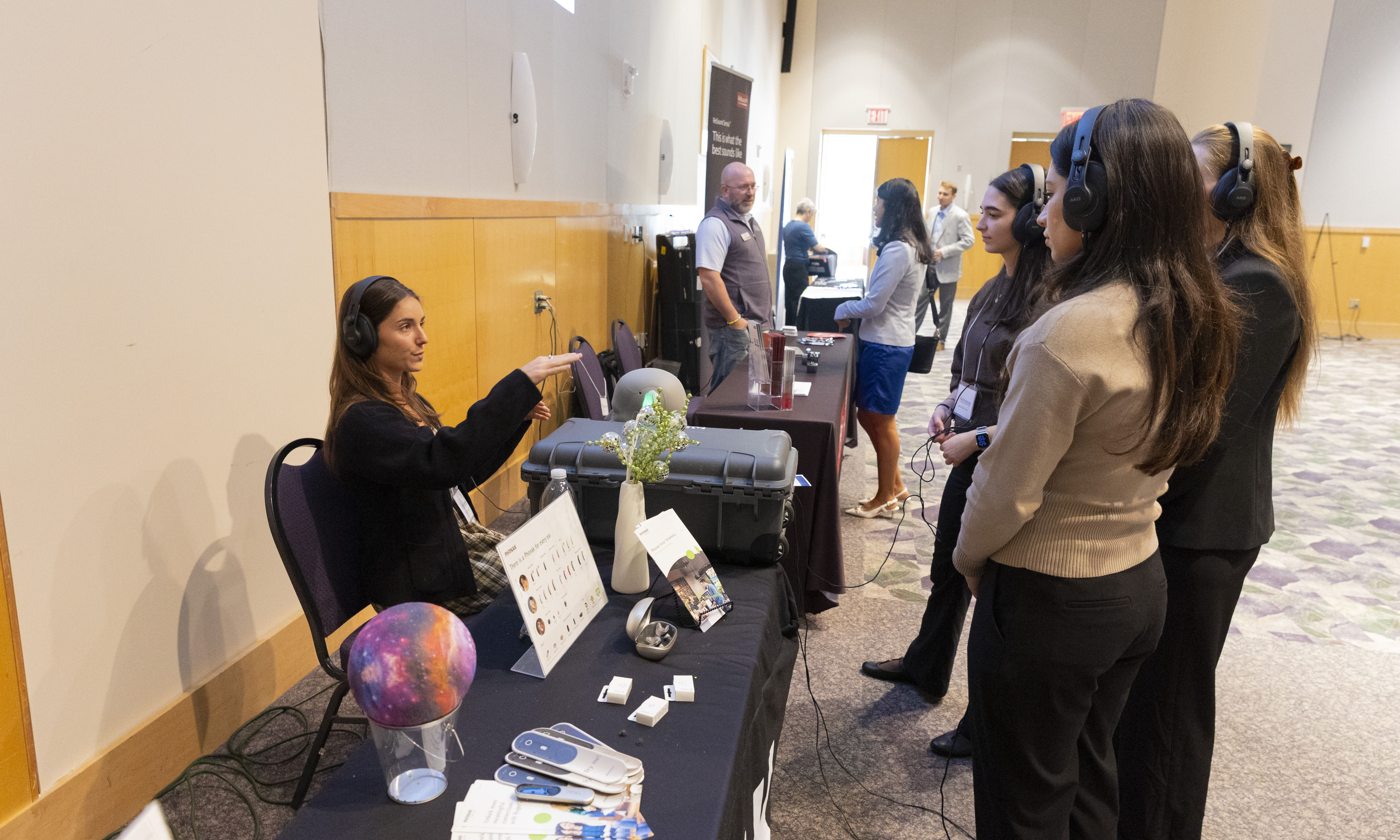
The opportunities extend beyond the invited presentations. Doctoral students shared their dissertation research during a student poster session, while representatives from hearing aid and cochlear implant manufacturers demonstrated their latest technologies. The symposium also brought together practicing audiologists and students from other Virginia universities, creating opportunities for conversations and connections across institutions.
For third-year Audiology student Samantha Haramis, presenting research is one of the most valuable aspects of the symposium. Her research examines whether Apple Watch technology can be used to objectively measure an individual’s noise exposure and identify potential risks for noise-induced hearing loss.
“Up until this point, noise studies in the human population have used questionnaires, but as we know, questionnaires are subjective and they’re very prone to recall bias,” she said. “So, I’m hoping the Apple Watch, given that number that we get from all the calculations I’ve been doing, can estimate if someone is at risk for developing hearing loss.”
Sharing research in a professional setting gives students the chance to receive feedback from people working in the field, potentially opening the door to new questions and perspectives. Just as importantly, it allows them to discover career paths they may not have previously considered.
Haramis recalled previously attending a presentation by a JMU alumna who had opened her own private practice.
“Learning about her experience and the different barriers there are, also how awesome it is to establish your own clinic and run it the way you want…it just opened that whole new world for me that I might consider one day down the line,” Haramis said.
Those kinds of conversations can make the possibilities within audiology feel more tangible. Whether students are interested in research or clinical practice, hearing directly from professionals offers a perspective that cannot always be replicated through coursework.
JMU offers the only audiology program in Virginia, giving the university a unique role in supporting the profession statewide. Through the Ruth Symposium and its partnership with the Association of Virginia Audiologists (AVA), JMU works to strengthen connections among clinicians, educators and future audiologists while creating opportunities for professional growth and collaboration.
“There’s nothing quite like discussions and learning the current research that’s coming out and just talking about it with our fellow professionals,” Haramis said.
Ultimately, the Ruth Symposium is about more than continuing education or presenting the latest research. It is a space where the profession's history, current work and future come together. It honors the individuals who have advanced audiology, supports the clinicians who serve their communities and gives aspiring audiologists a chance to find their place within the field.