

Mikayla Dolina: Psychology major, powerlifting record holder
College of Health and Behavioral Studies


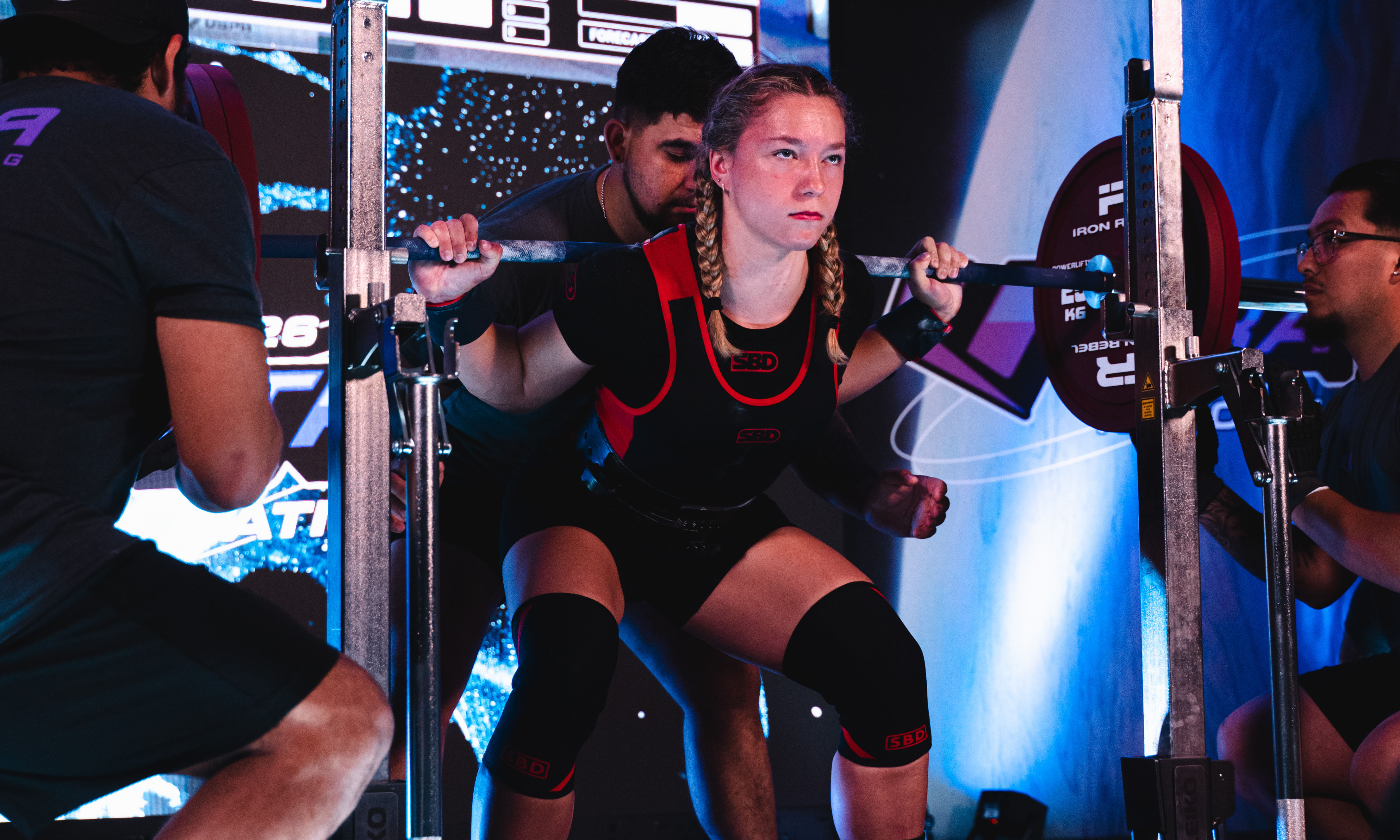
At 19 years old, Mikayla Dolina had already put her name in the record books.
In May 2026, the James Madison University (JMU) sophomore and powerlifter competed in the Tested Ultra Nationals in the junior 18-19 division, where she took first place and set three USPA world records in the 67.5-kilogram weight class. Among those records were a 348-pound squat and a 400-pound deadlift.
For Dolina, however, powerlifting has never just been about how much weight she can lift.
“I think a lot of it is mental,” Dolina said.
After four years in the sport, she has learned that success requires something less visible: discipline, focus, resilience and trust in herself. Those lessons extend beyond the gym, shaping the way she approaches challenges, relationships and her studies in psychology at JMU.
That mental strength is perhaps most visible in the moments just before a lift.
On the platform, Dolina prepares. Bright lights shine overhead. The crowd calls her name. Judges shout instructions. Yet beyond the noise, she remains collected.
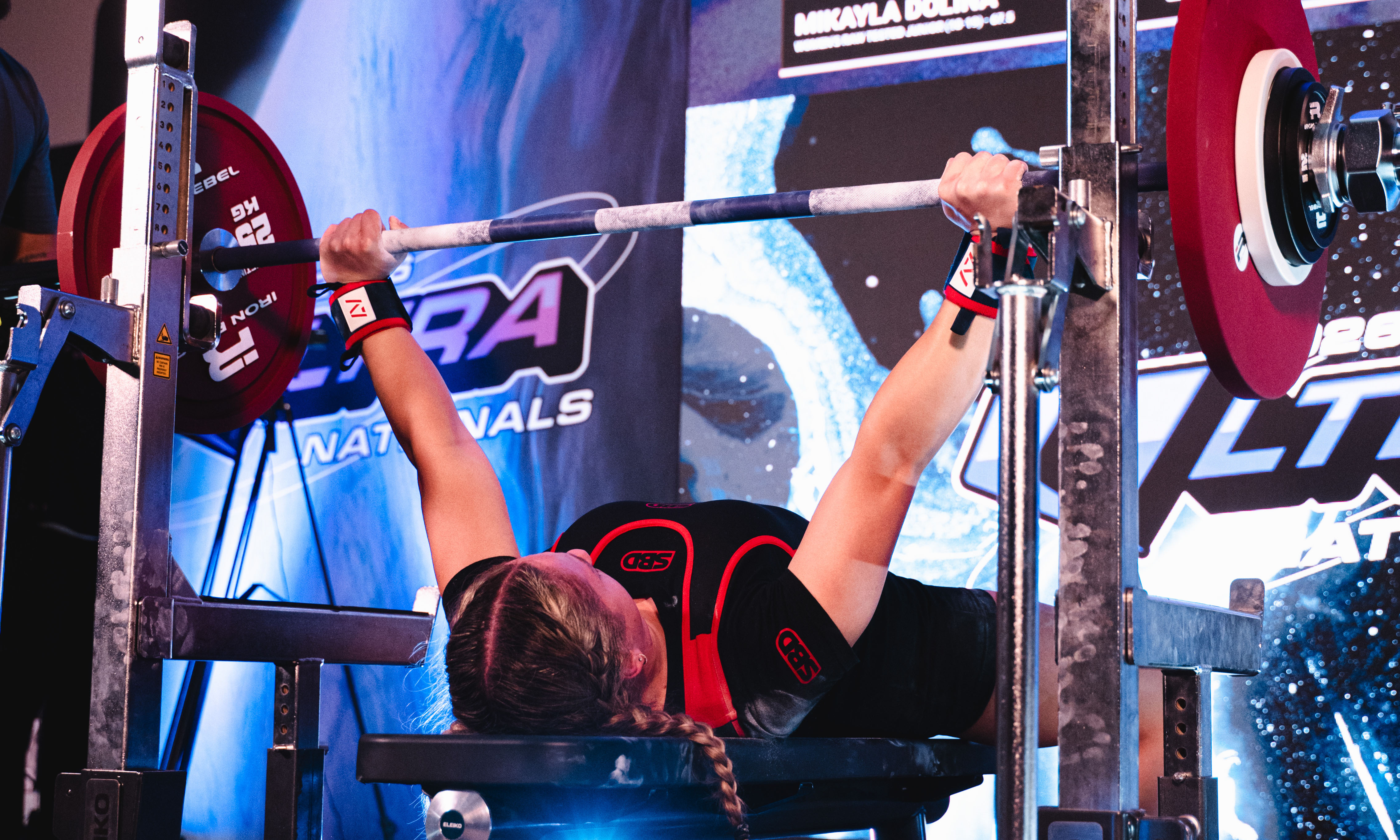
“I'm very focused on me in that moment. I'm very in my head,” she said.
For Dolina, every lift requires her to tune out distractions, listen for the head judge's commands and execute the movement correctly. With three judges watching her form, even the smallest mistake can result in a red light.
The audience sees a 400-pound deadlift. Dolina experiences a moment that is almost entirely mental.
“I'll finish the lift, and my coach will be like, ‘Mikayla, how hard did that feel?’ And I'll say, ‘I mean…I did it. It felt kind of hard. But I don't know exactly. How did it look?’” she said.
That ability to focus, reflect and respond in the moment is part of what makes powerlifting meaningful to Dolina, and it also mirrors the curiosity about people that drew her to psychology.
However, her path to the national stage began in a much less intimidating setting: her family’s basement.
Dolina began powerlifting as a high-school freshman, a little over four years ago. Her family’s home gym already had a squat rack and a bench; all she needed was someone to show her how to use them. Her au pair, Agatha, had competed as a powerlifter in Poland and trained in the family’s home gym. When Dolina’s father suggested Agatha teach her, Dolina decided to give it a try.
“Agatha started teaching me. She was my first coach. And I really enjoyed it, and I’ve just kept with it for four years,” Dolina said.
What started as something simple became a sustained passion, and an experience that would teach Dolina lessons far beyond lifting technique.
Dolina currently trains four days a week, with sessions lasting around two hours. Fitting that commitment around school and other responsibilities has required consistency, even on days when motivation is harder to find.
“I think that powerlifting has taught me a lot of discipline and self-respect,” she said. “It's really taught me that I can have a lot of trust in myself, and I know that if I put my mind on something, I can do it. Like, it'll be hard, but I can do it.”
That self-trust has been tested throughout her journey.
After about two years training with Agatha, Dolina switched coaches. The change gave her a new perspective on training and a program that could better fit her schedule.
“Coaches have different philosophies of lifting,” Dolina said. “And so, we switched coaches and that helped.”
The experience also taught her that progress does not always happen in a straight line.
“I do have off days, and that is a natural part of lifting,” she said. “Sometimes I'll just have a day where I'm not there mentally, and the lift will feel harder than I expected. I just have to remind myself that that's normal. It's just today. Tomorrow's a new day.”
For a student in the College of Health and Behavioral Studies (CHBS), athletic challenges offer broader perspectives for life challenges. They provide Dolina with firsthand experiences of motivation, setbacks, relationships and human behavior, the same kinds of questions that she is beginning to explore through psychology.
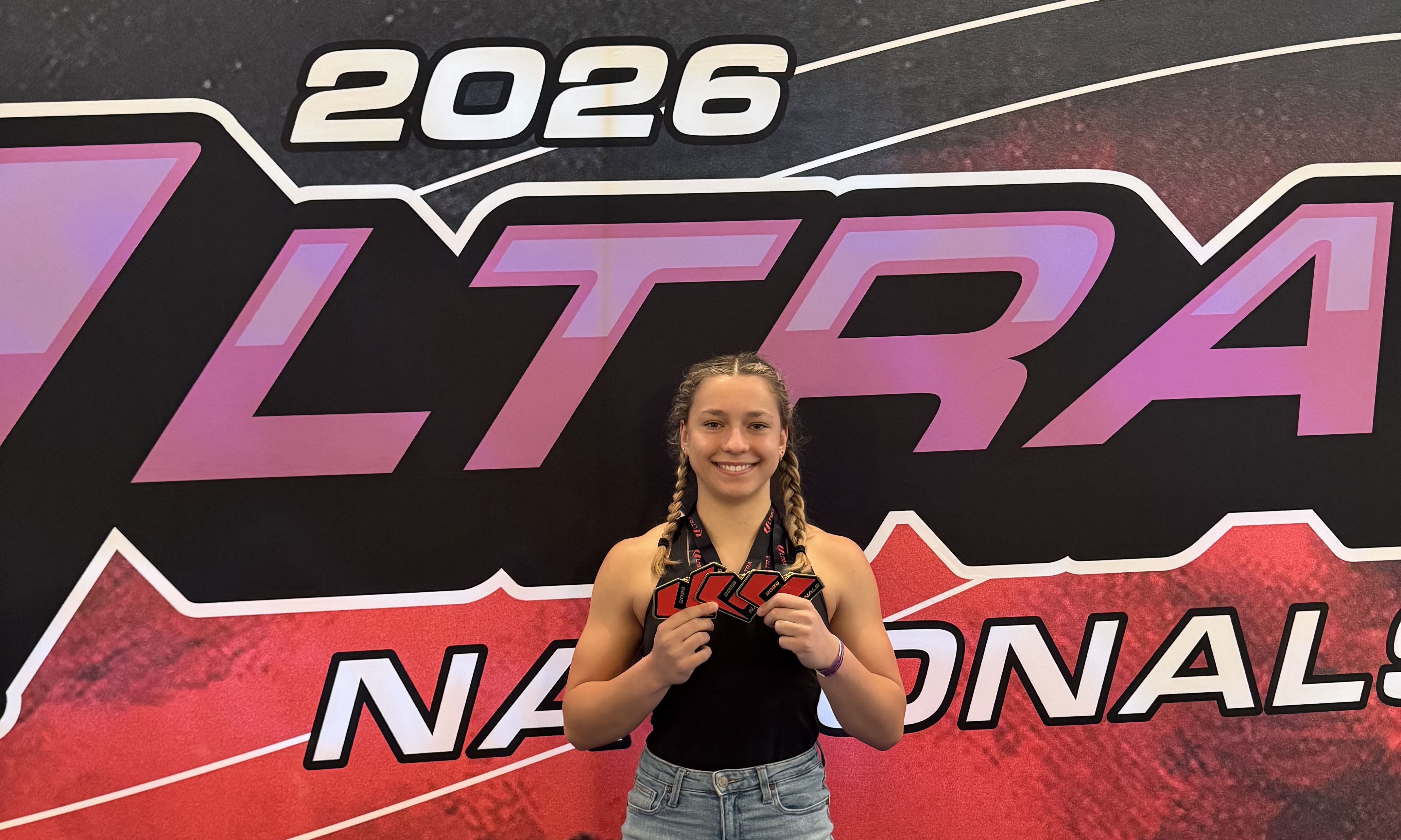
Dolina chose the major after taking AP Psychology in high school, a class she calls her favorite. Her interest also grew from watching her mother, a clinical psychologist, talk about her work.
At JMU, Dolina has begun building on that interest through her coursework, including Psyc 160 and Psyc 210. While she is still early in her academic journey, she is already drawn to the human side of the field.
“I just find it very interesting to talk to people, learn how they think and learn about them,” Dolina said.
That curiosity is at the heart of an interdisciplinary approach to education: understanding people and behavior while connecting classroom learning to the experiences and communities around us. For Dolina, powerlifting has become one of those experiences.
The sport has also shown her the importance of learning from others. Her current coach sends her a weekly program and provides feedback on videos of her lifts.
“I contact him daily,” Dolina said. “Like when I take videos of all my lifts, I send them to him, he gives me feedback. So that's probably my closest person in lifting.”
Dolina’s brothers began lifting after she did, and at JMU, she has found other students who share her interest in fitness. She has started bringing friends to the gym and helping them learn proper form.
“I think I have two or three friends who I kind of feel like their coach,” she said.
Powerlifting has also broadened the way Dolina thinks about people. She competes about twice a year and said one of her favorite parts of the sport is seeing the wide range of people who participate, from young children to competitors in their 80s.
“It's just so cool to see how powerlifting is, there’s such a variety of people,” she said.
For a psychology student interested in understanding how people think and behave, that variety is part of what makes the sport so meaningful.
As Dolina looks ahead, she can see powerlifting remaining part of her life, even as she works toward a career in clinical psychology.
“I think that I could be a coach as a part-time job, and then being a psychologist would be my main job,” she said.
Four years after first stepping into her family’s basement gym, Dolina knows that strength isn't measured only by the weight on the bar. It can be found in showing up when training is difficult and trusting herself when progress slows, learning from mentors and using what she has learned to help others.
At JMU, those lessons are becoming part of her larger journey. Through psychology, Dolina is developing her understanding of people; through powerlifting, she continues to experience the discipline and human connection that make that understanding personal.
As she looks toward a future in clinical psychology, and perhaps coaching on the side, Dolina is carrying both experiences with her.


