

Kinesiology senior finds career-ready skills in an unlikely internship
JMU News


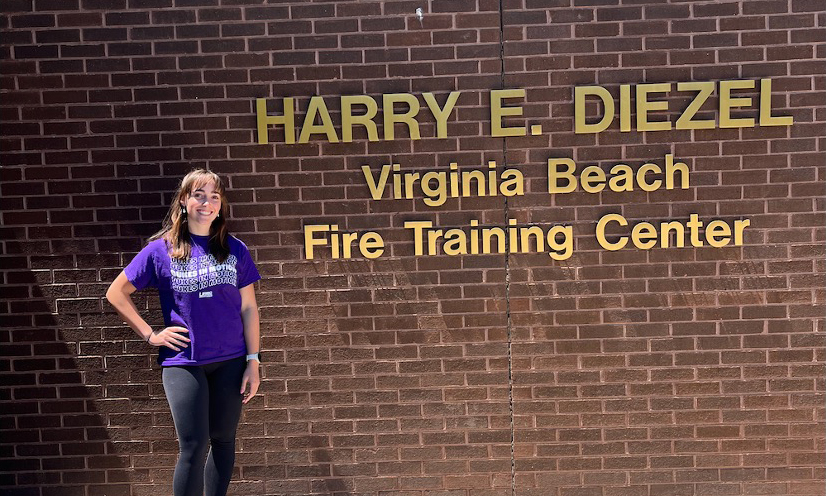
On her first day interning with the Virginia Beach Fire Department’s wellness division, Aimee FitzPatrick was handed a quiz. It covered biomechanics, exercise physiology and prescription, material she hadn’t expected to recall before she’d even unpacked her bag.
“I don't know how this is going to go,” she remembers thinking.
She didn’t need to worry. According to her supervisors, it was the strongest quiz result they’d seen from any intern the department had brought on. For FitzPatrick, a senior kinesiology major in James Madison University’s College of Health and Behavioral Studies (CHBS), the moment was proof that the classroom work she’d put in over the past three years had prepared her for the unexpected.
FitzPatrick is concentrating in exercise science and pursuing minors in dance and pre-physical therapy. Before coming to JMU, she was drawn to a career as a ballet dancer.
“Then I had a surgery of my own and went through rehab for that,” FitzPatrick said. “I decided, ‘Oh, maybe physical therapy is something I’m interested in.’”
At JMU, that interest in movement and rehabilitation grew. She looked into working at UREC and was offered a position as a fitness coach.
“This is what I’m on this earth to do," FitzPatrick said. "I love the fact that I get to be a part of that process for anyone. [They go] from super shy, not sure what to do in the weight room, to feeling completely confident to move on their own.”
It was a natural path, one that seemed to point toward physical therapy. But an unexpected opportunity would take FitzPatrick somewhere very different.
“I had planned on doing an unpaid internship with a physical therapy clinic because I felt like that was typically the standard for anyone who wanted to pursue physical therapy,” FitzPatrick said.
Then one of her professors introduced her to a new possibility: a paid internship with the Virginia Beach Fire Department’s wellness division.
“It came out of nowhere, and something in me decided to go for it,” FitzPatrick said.
The opportunity checked all her boxes. At 32 hours a week, it also meant she wouldn’t have to find another job on the side. Still, stepping into a fire department wellness division was unfamiliar territory.
“I feel like I did far more research than I've done in the past, just because I've never worked with a fire department before,” she said. “They said to Dr. Magrum, 'We are looking for someone who has really, really high initiative.'”
And that’s exactly what FitzPatrick brought.
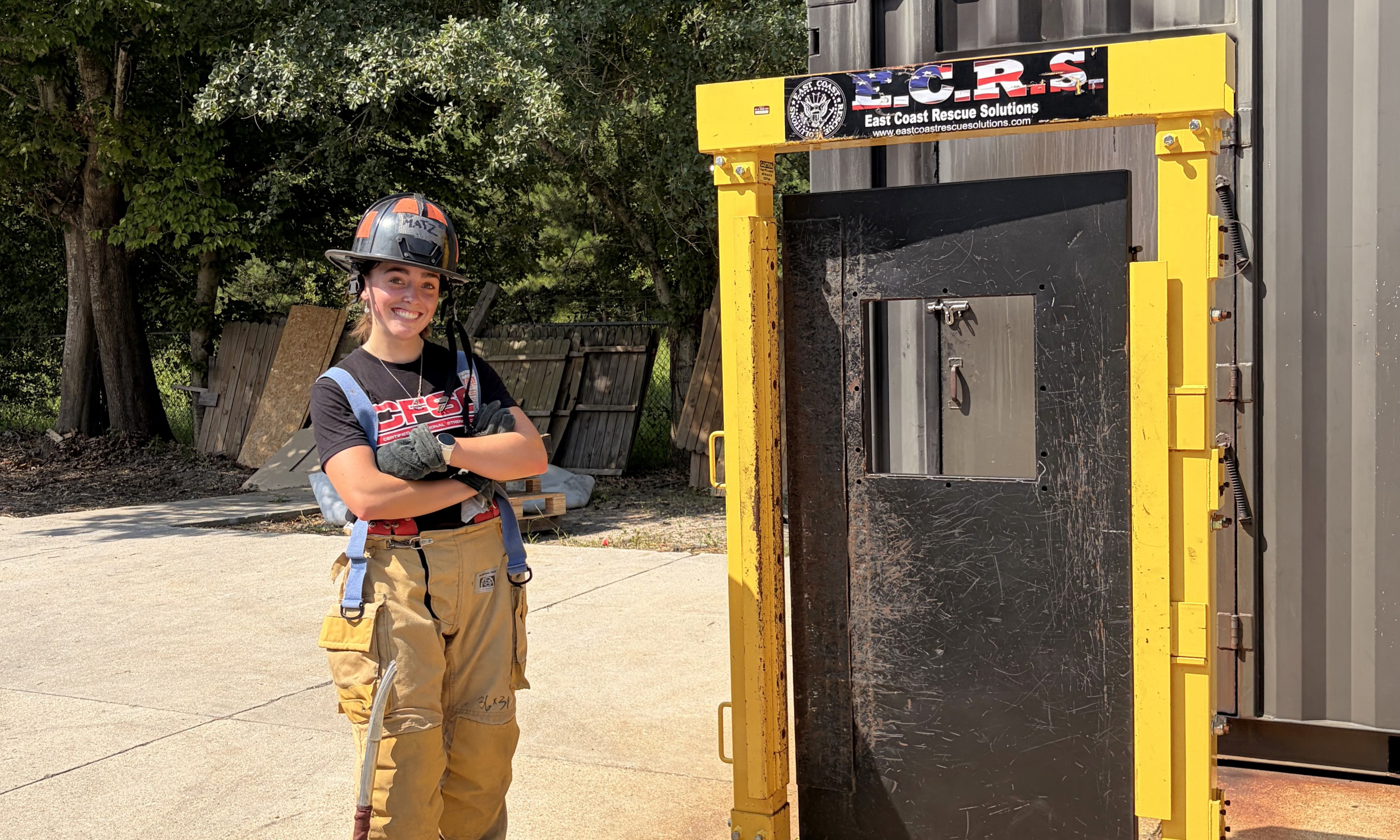
During her internship, she completed DEXA scans every 30 minutes to monitor bone density and body composition. The scans served employees across the fire, police and EMS departments. She also conducted annual physicals for firefighters and recruits, led workouts and provided one-on-one training to department chiefs.
“I set things up to make sure the recruits are put in a good position each day,” FitzPatrick said.
But the experience required more than technical knowledge. Walking into a firehouse as a young woman with limited professional experience meant FitzPatrick first had to earn the trust of the people she was there to coach.
“It's a very male dominated space and I'm a female coming in there,” she said. “I'm also 21 years old, so I'm a lot younger than most of them. I don't have a lot of experience, so it's like, 'What is this girl about? What does she know?’”
That skepticism, she said, was fair. Rather than trying to prove herself through authority alone, FitzPatrick leaned into the questions the firefighters asked her.
“I love to give them the reasons why I'm doing the things that I'm doing, which for anyone going into an internship, I think that's an important skill to walk in with,” she said. “You need to know your why's, not just make decisions.”
That philosophy became the foundation of her coaching style: not simply handing someone a program, but explaining the reasoning behind it so they could eventually understand and own it themselves.
The payoff showed up gradually in the progress of one firefighter FitzPatrick had been training for about four weeks.
“Within the last two weeks, he's been like, ‘I get it now,’” she said. “He had a lot of questions at first and wasn't really sure if he agreed with what I was doing, but he then saw the progress week by week and how much stronger he had gotten.”
That trust opened a door beyond training. The one-on-one setting, something FitzPatrick hadn’t expected to become her favorite part of the internship, gave firefighters space to talk between sets about their shifts, calls and the weight they carried home.
“They’ve also talked to me a lot about mental health with firefighters, and that's not something you get to do with group training. You don't get to have those long conversations,” she said.
Due to one-on-ones, FitzPatrick was often the first person they talked to after difficult calls. Physical progress mattered, but so did the human connection that developed underneath it.
That combination, putting knowledge into practice while learning how to communicate, adapt and build trust, is at the heart of what JMU and CHBS seek to offer students. This includes stronger, career-connected learning and continued support for students as they move from college into their next chapter.
FitzPatrick’s internship offers a glimpse of what that kind of education can look like in practice.
“Even with the DEXA scans, we have those at JMU,” FitzPatrick said. “Just my CHBS classes alone have equipped me so well that my supervisors say, ‘Have you done this before? Do you feel comfortable doing this?’ And I have the background to answer, ‘Yeah, absolutely.’”
Her experience also illustrates the value of being prepared for opportunities that don’t necessarily fit neatly into a career plan. She encourages students to be willing to step outside of what they're comfortable with.
“I was just going to go the physical therapy route and shadow a physical therapist for my internship because the hours would look good on my application, but I want to remind people that just because it's not an immediate transfer, that doesn't mean that it's not going to bring something else valuable,” she said. “I have been told by advisors and professors that this internship is different, and it's not the typical route that people would go, but that gives me something to talk about that other people cannot talk about because they do not have this experience.”
For FitzPatrick, the value of a JMU education wasn’t simply knowing the answers on a quiz. It was having the knowledge and confidence to walk into an unfamiliar environment and know she belonged there, and then discovering that the experience could shape her just as much as she could shape the people she was there to serve.
That is the promise of learning by doing: an education that doesn’t end when the class does, but gives students the tools to step into what comes next, even when they don’t yet know what that will be.


