

Preparing future healthcare leaders through Central Virginia Burn Camp
College of Health and Behavioral Studies


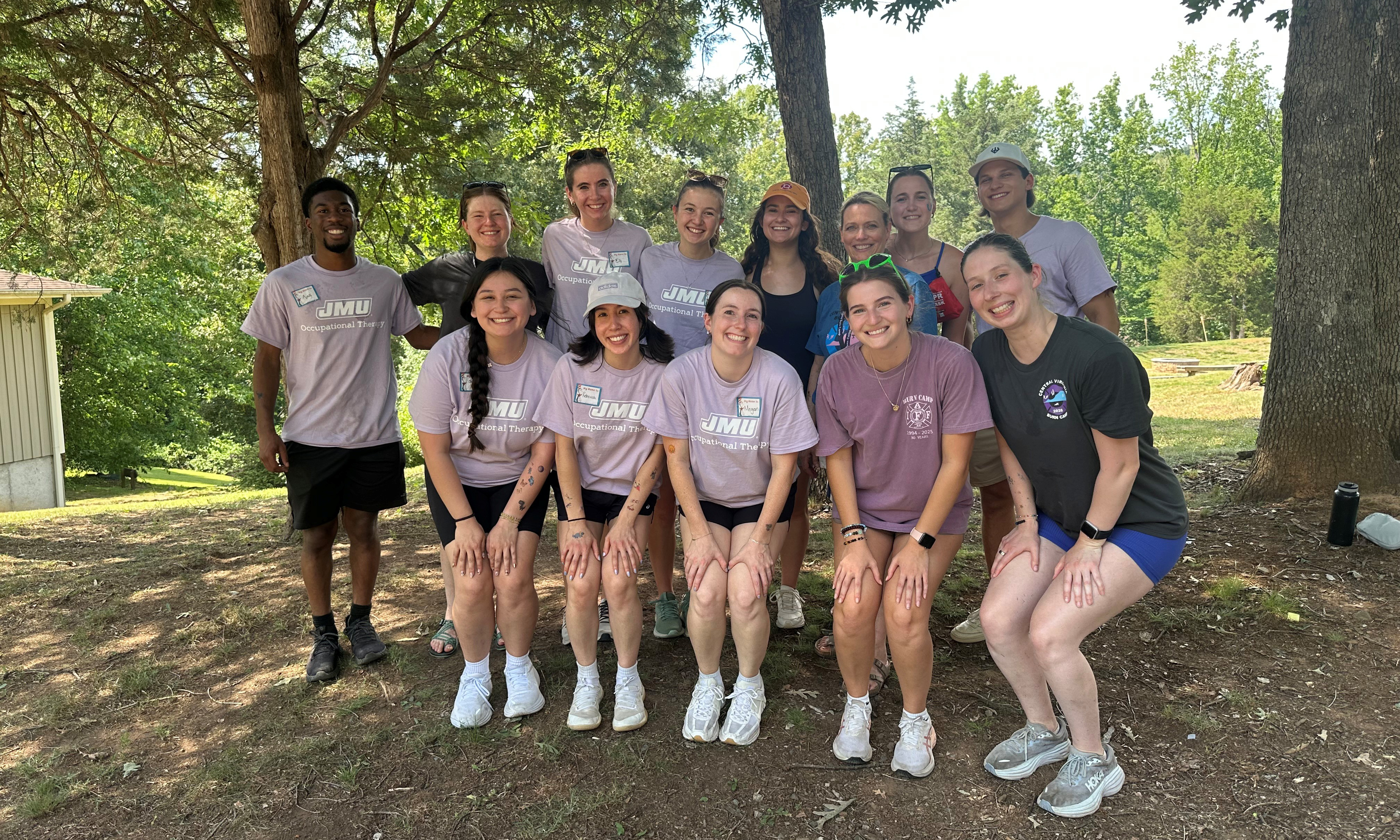
JMU Master of Occupational Therapy (MOT) student Callie Doyle arrived at Central Virginia Burn Camp (CVBC) as a counselor, expecting to spend the week supporting a burn survivor attending camp. What she didn’t expect was to find herself in a lip-sync competition with a group of camp participants.
She and her camper tied for first.
For Doyle, the moment captured something unique about the camp: In this environment, children aren’t defined by their burns.
Central Virginia Burn Camp is a weeklong summer camp for burn survivors ages 7-17. Counselors come from a variety of backgrounds and are paired with a camper to provide support throughout the week. Many counselors return each year, often continuing their relationships with campers they have worked with before. This past summer alone, 17 current JMU students and alumni volunteered at CVBC, serving in a variety of professional roles, including nursing, physical therapy and occupational therapy.
“We had sports; there was horseback riding, fishing, lots of crafts and beading. We would typically have some pool time at some point in the day and always eat breakfast, lunch and dinner together,” Doyle explained.
The camp gives children an environment where they can participate, build friendships and simply be themselves without constantly being conscious of their injuries.
“I was working with some of the pre-teens the first year, and so around that time they’re starting to become a little bit more aware of their appearance and asking, ‘Do I belong with my peers?’” said third-year MOT student Chloe Swan. “Seeing how that can affect them and their self-esteem, that was huge. I just learned how to be patient and meet them where they’re at.”
Swan also learned that a patient’s injuries rarely exist in isolation.
“Yes, they may have gone through some really difficult situations related to their burn injuries, but there’s also this whole other psychosocial aspect, maybe they've had a hard upbringing or maybe they've suffered from abuse or neglect,” Swan explained.
The experience reinforced an important lesson she will carry into her career: effective healthcare professionals must understand the whole person, not just the diagnosis. Learning to build trust, communicate with patients and adapt to individual circumstances are skills that cannot be fully developed in a classroom alone.
Doyle and Swan are examples of how James Madison University's Master of Occupational Therapy program transforms classroom learning into career-connected experience. Through immersive fieldwork opportunities like Central Virginia Burn Camp, students apply clinical knowledge in real-world settings while developing the communication, adaptability, problem-solving and relationship-building skills that healthcare employers value. These experiences help prepare graduates to enter the workforce ready to make an immediate impact on the patients and communities they serve.
JMU MOT Program Director Julie Patrick Bonham (’92) previously served as a burn therapist at Children’s National Hospital in Washington, D.C. Inspired by the strength and resilience of the children and the families she worked with in burn rehabilitation, she has continued her commitment to this population for decades, including 15 years’ service with the CVBC.
“These JMU students and alumni exemplify Being the Change,” Bonham said. “They are scholars and professionals who translate their knowledge, compassion and commitment to service into action. Their impact extends beyond their individual professions, as they contribute to the camp community and serve as leaders within their respective fields.”
“We do it as part of our fieldwork curriculum.” Doyle explained. “There was me, and there was one other MOT student who was also in her first year being a counselor. She was from VCU. I think we both just felt so welcomed so quickly, which was cool, and I was able to make connections with campers that weren’t technically mine.”
For Swan, it was her second year as a counselor at CVBC.
“Throughout the first full week that I was there, people kept coming up to me and saying, ‘You need to come back next year,’ and, ‘Are you going to come back next year?’ I was getting that from staff and the campers,” Swan said. “That was encouraging to hear, that what I’m doing must be helping in some way if they want me to come back. I developed great relationships with some of the girls I was with because we all shared a cabin together, and by the last day, just hugging them and saying goodbye, I knew I wanted to come back because I needed to see them again.”
“It was a long, exhausting week, but it was super fun,” Doyle said with a smile. “I think just seeing the resilience of these kids who have been through so much is something that was really rewarding and encouraging as a future practitioner.”
Korinna Weber (’16), a Health Sciences alumna and traveling physical therapist, has only missed two years of CVBC since becoming a counselor in 2016. Over the years, she has watched the camp become an important part of her life and has seen the lessons she learned there carry into her career.
“I’ve had some different roles,” Weber explained. “My focus has always been working with my camper and my cabin. I’ve also helped organize our camp carnival at the end of the week with one of the firefighters there."
She continued, “Our meals are cooked by different firefighter stations throughout the week. We get to go along the line and meet the people that have come to feed us for the day.”
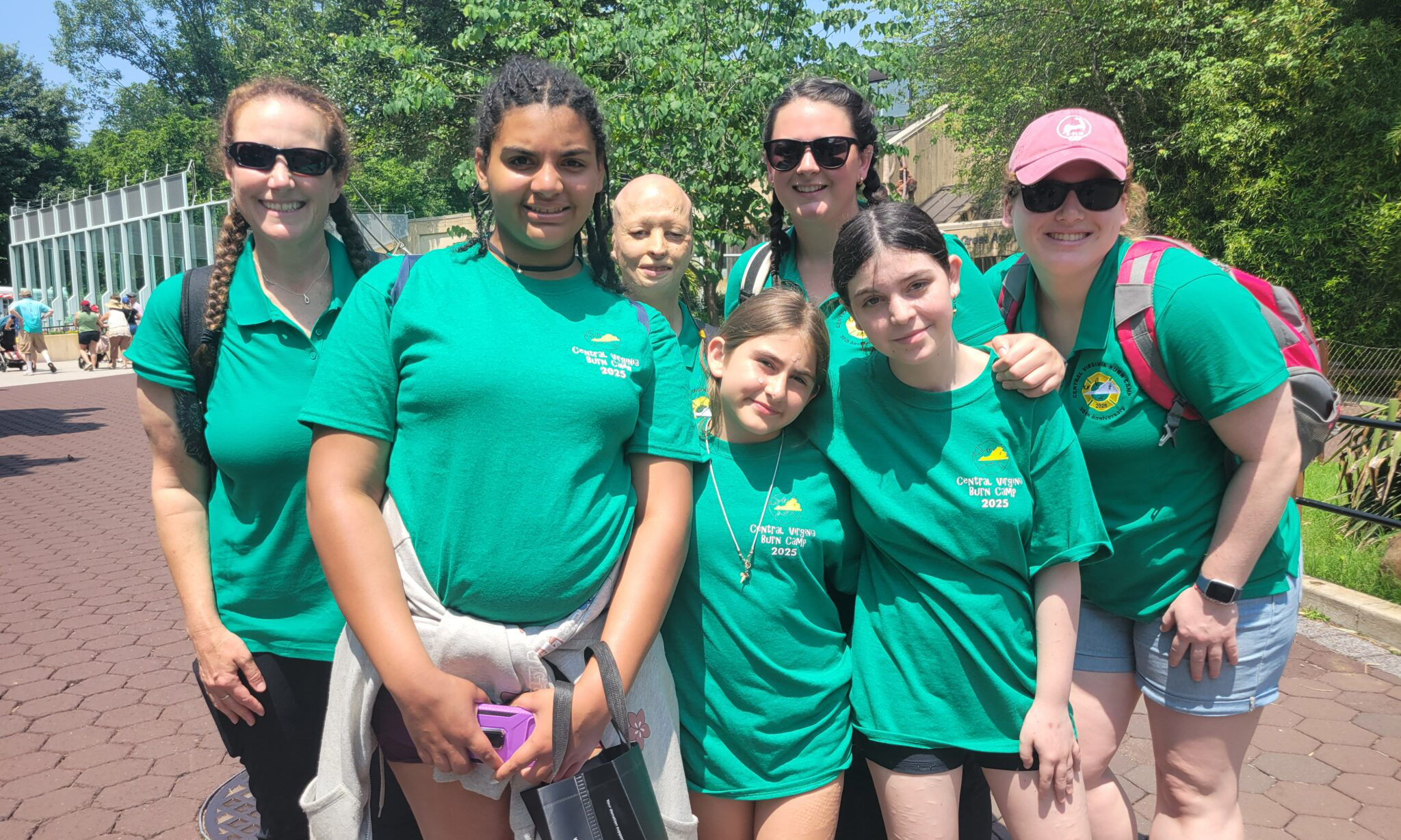
CVBC has also affected the way Weber approaches patient care.
“The camp has helped me a lot with being able to build relationships with people and see people as more than a diagnosis,” Weber said. “Especially at camp, the purpose is to offer support for everybody, especially for any kind of challenges that they’re facing the rest of the year.”
She continued, “It’s helped my ability to talk with people from different backgrounds, form different connections and try to find things in common with people, just so that way, we get past the surface level and down to something that’s a little deeper, a little more meaningful.”
Weber has also had the opportunity to be paired with the same camper for the past several years, allowing their relationship to grow well beyond the traditional counselor-camper dynamic.
“I just adore her and I love her so much,” Weber said. “I wasn’t with her when she first came to camp, but I knew she was very quiet and reserved. Then I was paired with her not long after, and she was still pretty quiet, but she would blossom again by the end of the week, and friends would bring her out of that shell every year.”
This past August, Weber and her camper were chosen to attend International Burn Camp in Washington, D.C., representing CVBC alongside burn survivors and counselors from across the country and Canada.
“Just seeing her come with me to this camp where we knew nobody, she is always able to be so much herself no matter what,” Weber said through tears. “She’s so good at making sure other people feel included. She will be vulnerable and try to start conversations, and if you start the conversation with her, her personality just shines so brightly. She leads with a quiet, lead-by-example kind of manner. I really admire that in her, and she always supports me, too. We take turns hyping each other up.”
For Weber, that relationship is a reminder that the impact of camp doesn’t move in only one direction. While counselors arrive ready to support campers, they often leave having learned from the very people they came to help. In a place built to help young burn survivors find confidence and connection, the relationships formed can become a source of strength for everyone involved.
Central Virginia Burn Camp looks, at first, like a traditional summer camp: horseback riding, fishing, crafts, swimming and evening dances. But for campers, the week offers something deeper, a place to build friendships with people who understand their experiences, try new things without being defined by their injuries and simply be kids.
For the MOT students and other future healthcare professionals who serve as counselors, camp offers a different kind of education, one that extends beyond textbooks and clinical simulations. By working alongside burn survivors and their families, students gain hands-on experience while developing the empathy, communication and leadership skills that define exceptional healthcare providers.
Experiences like Central Virginia Burn Camp illustrate the value of a JMU education: combining academic excellence with meaningful real-world learning opportunities that prepare graduates to enter the workforce ready to make a difference. For students like Doyle, Swan and Weber, the camp is more than service. It is career preparation, personal growth and a powerful reminder that the greatest impact often begins with human connection.


