

Scottish Rite Camp builds more than just communication skills for children and future clinicians
College of Health and Behavioral Studies


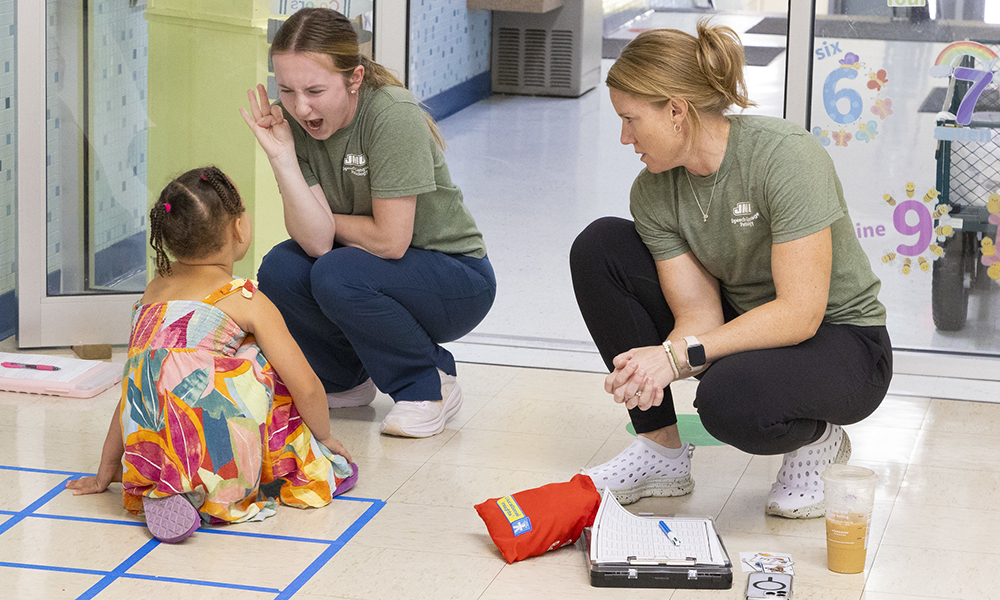
Every summer, children from across the Shenandoah Valley come to James Madison University (JMU) for an experience that looks like a camp but is carefully designed to change their lives.
For more than four decades, the Scottish Rite Camp in the College of Health and Behavioral Studies' (CHBS) Department of Communication Sciences and Disorders (CSD) has provided intensive speech-language services to children with communication challenges. Funded through the Scottish Rite Freemasons, the five-week program pairs each child with a graduate student clinician in JMU's Speech-Language Pathology master's program, creating an environment where both children and future clinicians grow together.
"We invite individuals from the community who have identified communication difficulties," said Sarah Teter, CSD clinical educator and lecturer. "That can be anything from speech sound disorders to language difficulties, to the diagnosis of autism."
The program is offered free of charge, filling an important need for families whose children may not have access to speech-language services during the summer months.
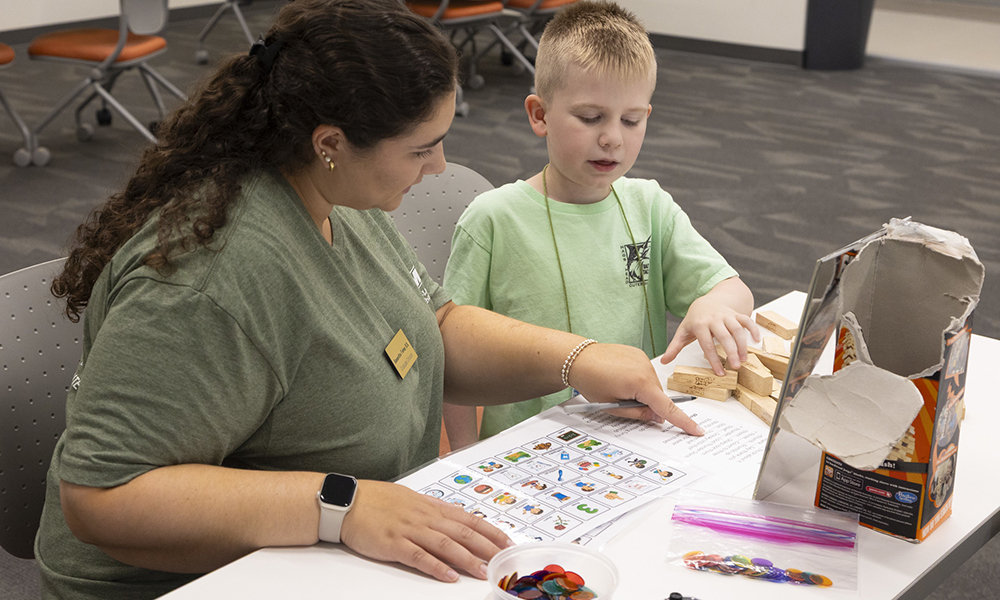
"It's helpful in the summer when they don't have school, and so they're not getting potentially school-based speech pathology services," Teter said. "We provide an intensity of service and experience that they just wouldn't get otherwise."
This year’s camp served younger children in morning sessions four days a week and elementary-aged students in the afternoon sessions twice a week with the same children returning each week. The camp’s frequency gives children significantly more practice than they would typically receive through traditional therapy, while allowing graduate students to apply evidence-based practices in a real-world setting.
This year's "Around the World" theme, developed by Scottish Rite Fellows and first-year graduate students Allie Beddard and Zadie Yane-Grey, guided weekly lessons focused on travel, culture, food, languages and places. Behind each activity were carefully planned speech and language objectives.
"One thing I didn't realize until we started planning was how much thought goes into every aspect of this camp," Beddard said. "We weren't just asking, 'Will the kids have fun?' We were thinking about how one activity can target different communication goals, how we can adapt activities for different strengths or needs."
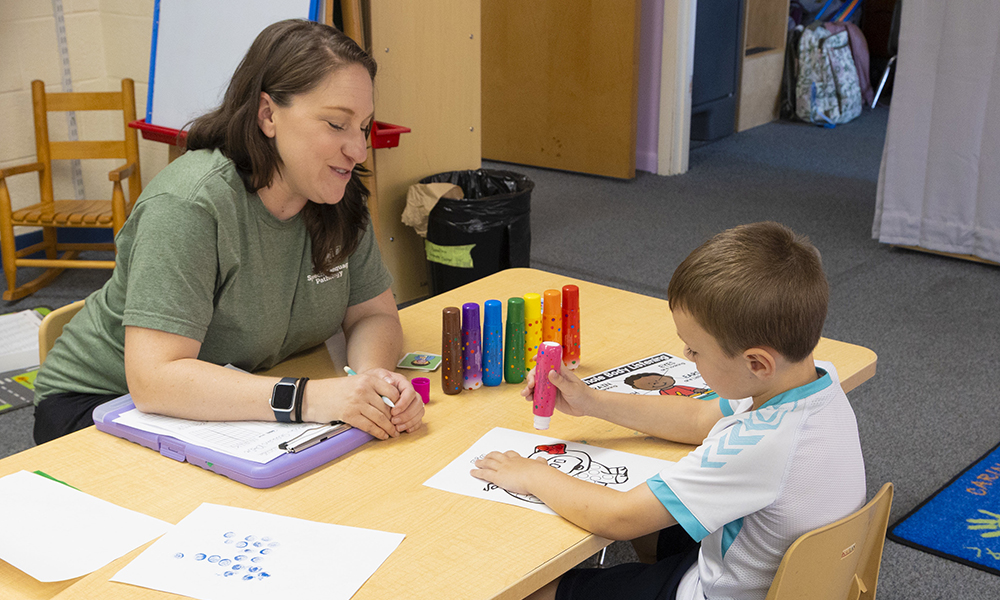
They created weekly lesson plans and taught their peers how to implement them. "They (graduate students) really are in charge of the camp," Teter said. "We just serve as supervision and support."
For Yane-Grey, designing the camp became one of the most rewarding parts of the fellowship."The kids thought they were just getting to play, but we knew they were really practicing skills like following directions,” she said.
Everyday routines became opportunities for communication. During snack time, campers practiced initiating conversations and asking questions, skills that often carried over into friendships formed throughout the summer. The most meaningful moments weren't always the biggest milestones. Often, they came as small conversations that represented tremendous progress.
"We've seen individual growth in all of the children," Teter said. She recalled two young campers with autism who were initially reserved.
"Yesterday my colleague said, 'You have to come into the room and listen to them,'" Teter explained. "One of them was just going on and on about superheroes, and they were having this amazing conversation with each other. It's just delightful to see them coming out of their shell and gaining those speech, language and social skills that we didn't see at the beginning."
Yane-Grey found it especially rewarding to hear the campers recognize their own progress.
"What surprised me the most was how often they would tell us about a new speech sound they were working on, a new strategy they were practicing or a conversation they had with a friend. They recognized they were learning, and they were proud of it."
While the campers made remarkable progress over five weeks, the experience also transformed the graduate students leading the camp.
"I think it's been great to see their confidence increase from the first week until now," Teter said. "Initially they were nervous. They didn't quite know how to manage a group of kids. Now they have this repertoire of skills both within our scope of practice and more generalized skills of how to work with a group of children."
She pointed to one example during snack time, when graduate students realized campers were directing every conversation toward the clinicians instead of one another. The students developed a simple system of asking and answering questions in a circle, helping campers practice social communication with their peers.
"It was fun to see the graduate students figure out how to facilitate those skills," Teter said. The experience also challenged the students in ways traditional clinical placements often cannot.
"Before the summer, most of my clinical experience had been one-on-one therapy," Beddard said. "This definitely challenged me to juggle multiple goals at once, collaborate with my peers and become more confident in making clinical decisions. Those are things you only really learn by doing."
Some campers return years later, allowing faculty members and students to witness how far they've come.
Teter remembers one child she first met five years ago. "When he was first here, we were working on basic language," she said. "Now he has lots of spontaneous language. We're working more on social skills and answering questions."
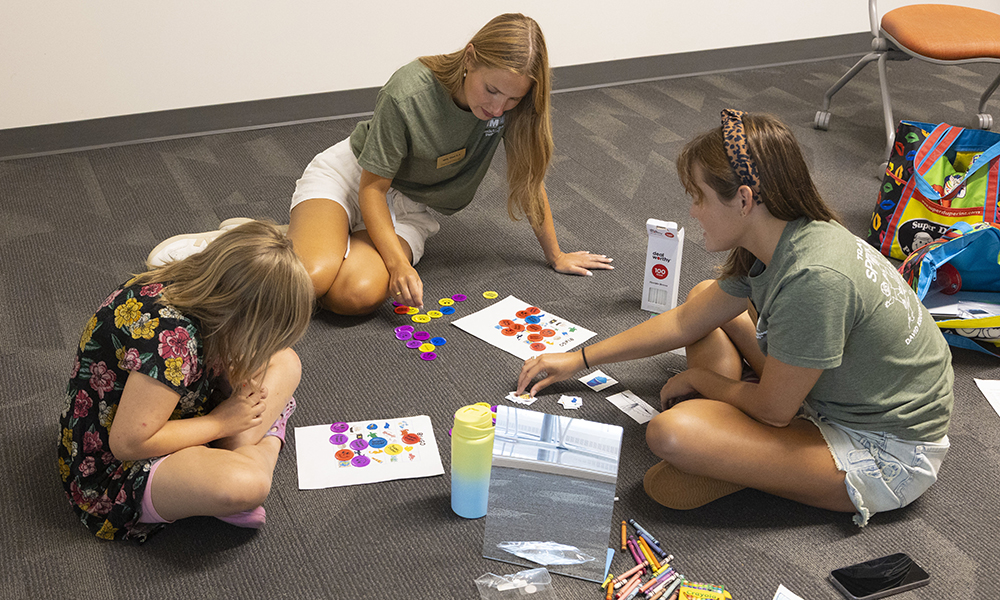
She recalls another former camper who was once difficult to understand because of severe speech sound challenges. "This year he's just working on his R's," she said with a smile.
Stories like those reflect the lasting impact of a program that has served hundreds of children over more than 40 years. "It's a sweet program," Teter said. "It really does serve the community well. It's had a huge impact, and it's a great learning experience for our students.
By the end of each summer, campers leave with stronger communication skills and newfound confidence. Graduate students leave with practical experience that shapes their careers. Together, they demonstrate how JMU's commitment to community engagement creates meaningful change, one conversation at a time.


