

From classroom to commonwealth: JMU’s Christine May joins state museum board
JMU Headlines


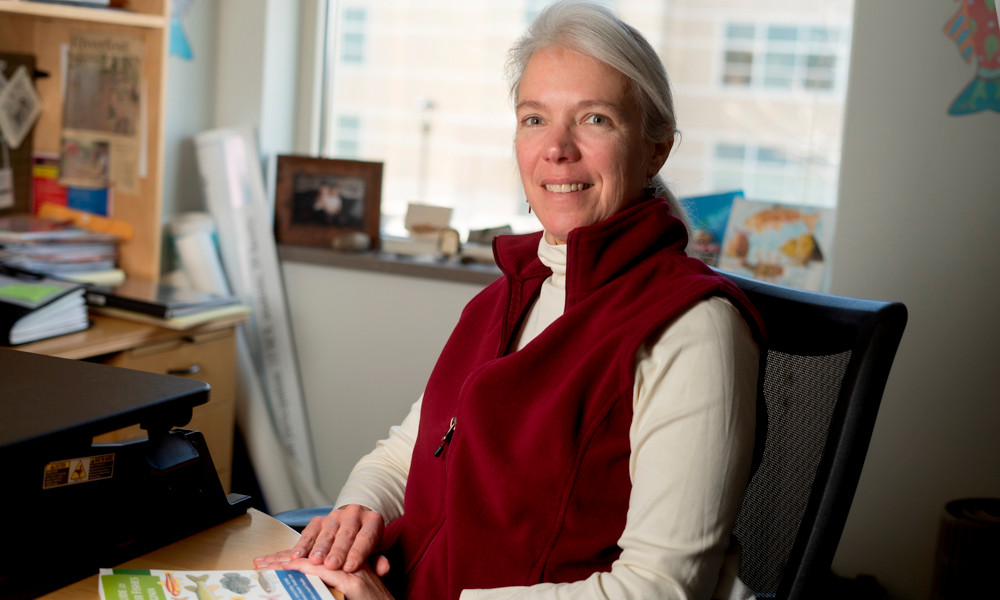
Christine May, a professor in the College of Science and Mathematics, was recently appointed by Virginia Gov. Abigail Spanberger to a five-year term on the board of trustees of the Virginia Museum of Natural History.
While this is her first appointment to the board, May has worked with the museum for more than a decade, and as an Augusta County resident, she is particularly excited about its expansion into Waynesboro.
“The museum showcases Virginia's unique natural heritage and does exceptional work with STEM outreach and education throughout the commonwealth,” she said.
May also addressed the museum’s role and what she hopes to contribute as a trustee.
Q: How does your professional expertise prepare you to serve on the board?
A: I am an interdisciplinary scholar who works at the interface between ecology, geology and the human experience of the natural world. This interdisciplinarity helps connect science and the humanities through teaching, research and outreach to the community. I will use this perspective to serve the museum and help it meet its mission to interpret our natural heritage in ways that are relevant to all citizens of the commonwealth.
Q: What do you see as the museum's most important role?
A: I share the view of current board members that the museum’s most important role is helping people better understand the natural world and our place within it. Through research, preservation, education and public outreach, the museum not only safeguards important scientific knowledge, but also inspires curiosity in future generations.
Q: What perspective will you bring to the board's work?
A: I bring the perspective of a teacher-scholar at JMU who is also a parent of children in the local schools and a resident of Augusta County. I value the role of the museum in bringing science and educational opportunities to our schools and community groups. I also hope to further the vision of being a 'museum without walls' and making its unique resources accessible to all citizens of the commonwealth.
Q: What opportunities are you most excited about during your term?
A: I am most excited about the efforts to establish a new natural science interpretation facility in downtown Waynesboro near the south entrance to the Shenandoah National Park. A great deal of planning has been completed and there is an amazing amount of enthusiasm for this new facility, which will reach new audiences and offer broader opportunities for collaboration.
Q: Will your service on the board benefit JMU students and the university community?
A: Yes, JMU is a long-time collaborator with the museum, and the museum’s mission for STEM education is well aligned with JMU's mission to prepare students to be educated and enlightened citizens. The museum collections are available to faculty and students for research and teaching, and our shared efforts toward STEM education are mutually beneficial. Serving on the board will strengthen these collaborations and provide opportunities for new endeavors.


