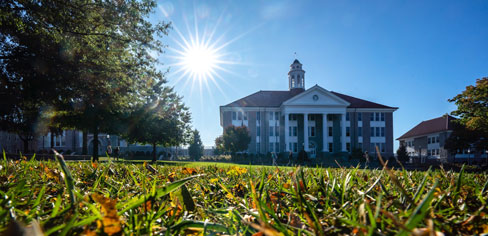
Student Handbook 2007-2008
The Student Handbook and Academic Planner
James Madison University
2007-2008
JMU reserves the right
to develop and implement new policies or regulations not presently
included in this document. It is the responsibility of the
university to make a reasonable attempt to inform the student
body of any change in or addition to the current policies and
regulations.
Some policies in the
James Madison University Manual of Policies and Procedures are
applicable to students as well as employees. You can find these
policies at
www.jmu.edu/JMUpolicy/.
TABLE OF CONTENTS
Policies and Judicial Procedures
University Administration
Family Educational Rights to Privacy Act of 1974
University Rights and Responsibilities
Student Rights and Responsibilities
Rights in Violation Procedures
Student Standards of Conduct (Judicial Policies)
Other University Policies
Philosophy of the University Judicial System
University Judicial Structure
Student Rights in the Judicial Process
Judicial Procedures
Sanctions
University Honor System
Campus Services & Resources
Getting Started at JMU...
Office of Admissions
Financial Aid and Scholarships
Orientation
Academic Resources...
Academic Policies
Office of the Registrar
Career and Academic Planning
Major Advising
Office of International Programs (OIP)
Learning ResourceCenters
Communication Resource Center
Disability Services
Reading and Writing Resource Center
Science and Math Resource Center
Libraries
University Ombudsperson
Outreach Programs
Taking Care of Business...
JMU Bookstore
University Business Office
Card Services
University Copy Centers
Dining Services
Events and Conferences
Facilities Management
Information Technology
Mail Services
Parking Services
Telecommunications
University Information
Living Well...
Counseling and Student Development Center
University Health Center
Office of Health Promotion
Office of Sexual Assault Prevention and Women's Resource Center
LGBT and Ally Education Program
Off Campus Life
Public Safety
Office of Residence Life
Student Affairs and University Planning
University Recreation (UREC)
Getting Involved and Giving Back...
Athletics
Student Duke Club
Team Participation
Center for Multicultural Student Services
Community Service Learning (CS-L)
Constituent Relations
Office of Development
Student Media
Student Organization Services (SOS)
Student Government Association (SGA)
Taylor Down Under (TDU)
University Unions
Special Thanks To:
Athletics
Center for Multicultural Student Services
Student Organization Services
University Health Center's Office of Health Promotion
Office of Residence Life
Design Support:
Emily Bunch, Class of 2008, cover design
Kendall Woodard, Class of 2007, ad designs
Carolyn Windmiller, University Marketing
From President Linwood H. Rose
Dear JMU Student:
Welcome to the beginning of the new academic year at James Madison University. I
hope that this year will include a multitude of experiences that will help you
develop academically, and prepare you to be an active and engaged citizen of the
world.
As a student, your main objective is to broaden your intellectual horizons and to
build a strong foundation of knowledge and skills. At JMU, you have virtually
unlimited educational opportunities to achieve this goal. You must, of course,
meet established degree requirements, which are designed to give you a broad base
of knowledge and help you develop critical thinking, reasoning, and communication
skills. As you plan your course of study, I encourage you to take advantage of
the wide range of learning experiences that are available, so that you can make
the most of your academic experience.
Your collegiate years are also a time for personal growth and enrichment, for
making life-forming decisions and creating life-long friendships. I challenge you
to make the most of your undergraduate experience by being an active member of our
campus community. Take advantage of the abundant extracurricular offerings that
exist on the JMU campus and in the surrounding communities. Make an effort to
meet new people, join a student organization, participate in a sport, attend a
play or lecture, or volunteer your time to a service organization. Being involved
will enrich your JMU experience and help you learn more about yourself.
Remember that along your academic journey, there are countless resources available
to you, which are intended to help you have a fulfilling undergraduate experience.
All of us at JMU are delighted that you are here, and we wish you all the best
for a successful and fulfilling year.
Sincerely,
Linwood H. Rose
President
JUDICIAL POLICIES AND PROCEDURES
University Administration
The general responsibility for the administration of the university has been
assigned to the president, who is appointed by the JMU Board of Visitors. When the
board is in recess, its executive committee may exercise the power of the board.
Assisting the president in the administration of the university are the provost
and vice president for academic affairs, the senior vice president for
administration and finance, the senior vice president for student affairs and
university planning, the senior vice president for university advancement, and the
executive assistant to the president. Appointments to these positions and to the
university’s instructional and administrative faculty are made by the JMU Board of
Visitors upon the recommendation of the president. JMU consists of a College of
Graduate and Outreach Programs and six undergraduate colleges:
- College of Arts and Letters
- College of Business
- College of Education
- College of Integrated Science and Technology
- College of Science and Mathematics
- College of Visual and Performing Arts
Student's Role in University Governance
Student participation in institutional decision making at JMU is essential and highly valued. Participation is achieved through student representation on the JMU Board of Visitors and on university commissions and committees. The Student Government Association has a particularly important role, as it is the organization with primary responsibility for accepting and considering student initiatives.Return to Top
Annual Notice to Students:
The Family Educational Rights and Privacy Act of 1974
James Madison University adheres to and annually informs students of the Family Educational Rights and Privacy Act of 1974, as amended. This act, with which the institution intends to fully comply, was designated to protect the privacy of educational records. Under the Family Educational Rights and Privacy Act (FERPA) students have certain rights with respect to their education records. These rights include:
- The right to inspect and review the student's education records within 45 days of the day the university receives a request for access. Students should submit to the registrar, dean, head of the academic department, or other appropriate official, written requests that identify the record(s) they wish to inspect. The university official will make arrangements for access and notify the student of the time and place where the records may be inspected. If the records are not maintained by the university official to whom the request was submitted, that official shall advise the student of the correct official to whom the request should be addressed.
- The right to request the amendment of the student's education records that the student believes are inaccurate or misleading. Students may ask the university to amend a record that they believe is inaccurate or misleading. They should write the university official responsible for the record, clearly identify the part of the record they want changed, and specify why it is inaccurate or misleading. If the university decides not to amend the record as requested by the student, the university will notify the student of the decision and advise the student of his or her right to a hearing regarding the request for amendment. Additional information regarding the hearing procedures will be provided to the student when notified of the right to a hearing.
- The right to consent to disclosures of personally identifiable information contained in the student's education records, except to the extent that FERPA authorizes disclosure without consent. One exception which permits disclosure without consent is disclosure to school officials with legitimate educational interests. A school official is a person employed by the university in an administrative, supervisory, academic or research, or support staff position (including law enforcement unit personnel and health staff); a person or company with whom the university has contracted (such as an attorney, auditor, or collection agent); a person serving on the Board of Trustees; or a student serving on an official committee, such as a disciplinary or grievance committee, or assisting another school official in performing his or her tasks. A school official has a legitimate educational interest if the official needs to review an education record in order to fulfill his or her professional responsibility. Upon request, the university may disclose education records without consent to officials of another school in which a student seeks or intends to enroll. The following is considered "Directory Information" at James Madison University and may be made available to the general public unless the student notifies the Office of the Registrar in person or in writing within five days after the first day of class registration: Student's name, telephone numbers, addresses, date and place of birth, major and minor fields of study, college of major and year (first-year, sophomore, etc.), enrollment status (full-time/part-time) including credit hours, dates of attendance, degree sought and time, degrees conferred, awards and honors conferred, participation in officially recognized activities and sports, weight and height of members of athletic teams, the most recent previous educational agency or institution attended by the student, fraternity and/or sorority and educational societies.
- The right to file a complaint with the U.S. Department of Education concerning alleged failures by James Madison University to comply with the requirements of FERPA. The name and address of the office that administers FERPA is: Family Policy Compliance Office, U.S. Department of Education, 400 Maryland Avenue, SW, Washington, DC 20202-4605.
Return to Top
University Rights and Responsibilities
- The university has the right and an obligation to provide an open forum to present and debate public issues.
- The university has the right to prohibit individuals and groups who are not members of the university community from using its name, finances, and physical operating facilities for commercial or political activities.
- The university has the right to prohibit students from using its name, finances, and physical and operating facilities for commercial activities.
- The university has the right and obligation to provide students with the use of meeting rooms under the rules of the campus, including the use of space for political purposes such as political clubs; to prohibit the use of its rooms by individual members or groups of members on a regular or a prolonged basis as free headquarters for political campaigns; and to prohibit the use of its name, finances, and office equipment and supplies for any political purpose at any time.
- The university has neither the right nor the obligation to take a position in party politics and public issues, except on those issues which directly affect its autonomy, academic functions, financial support and the freedom of its members.
- The university has the right and obligation to protect students and their visitors from physical harm, threats of harm or abuse; its property from damage and unauthorized use; and its academic and administrative processes from interruption.
- The university has a right to require students to identify themselves by name and address. Additionally, visitors to the campus may be required to state what connection, if any, they have with the university.
- The university has the right to set reasonable standards of conduct in order to safeguard the educational process and provide for the safety of students and protection of university property.
Return to Top
Student Rights and Responsibilities
The following statements of rights and responsibilities are not viewed as a final accomplishment of a completed institution, but rather as themes of a direction for a growing and changing educational environment.Students enjoy the same basic rights and are bound by the same responsibilities to respect the rights of others, as are all citizens. James Madison University considers individuals as students upon receipt of deposit for admission.
- The student as a citizen has the rights of freedom of speech, freedom of the press, freedom of peaceful assembly and association, freedom of political beliefs and freedom from personal force and violence, threats of violence and personal abuse.
- The student as a citizen has a right to be considered equally for admission to, employment by and promotion within the campus in accordance with the provisions against discrimination in the general law.
- James Madison University is no sanctuary from the general law; furthermore, the campus is a community of growth and fulfillment for all rather than a setting described in the concept of in loco parentis.
Return to Top
Educational
All students have other responsibilities and rights based on the nature of the educational process and requirements of the search for truth and its free presentation. These rights and responsibilities include the following:- Each student has the freedom, dependent on level of competence to teach, learn and conduct research and publish findings in the spirit of free inquiry.
- Each student has the right to pursue normal curricular and co curricular activities, including freedom of movement.
- Students have the right to expect that records maintained on them contain only information which is reasonably related to the educational purposes or to the health and safety of the individual or others. Furthermore, it is assumed that the student has the right to protection from unauthorized disclosure of confidential material contained in university records.
- Students have the right to reasonable and impartially applied rules, designed to reflect the educational purposes of the institution and to protect the safety of the campus.
- Students have the right to recourse if another member of the campus is negligent or irresponsible in the performance of his/her responsibilities, or if another member of the campus represents the work of others as his/her own.
- Students who hold opinions about basic policy matters of direct concern to them have the right to have them heard and considered at appropriate levels of the decision-making process. It should be noted that students who have a continuing association with the institution and who have substantial influence have an especially strong obligation to maintain an environment supportive of the rights of others.
- The student has the responsibility to act in a manner that is conducive to learning by the student and by other students by: being prepared, prompt, attentive and courteous in all academic settings (including classrooms, laboratories, libraries, advising centers, departmental and faculty offices, etc.) and complying with requests made by a faculty or staff member in an academic setting.
Return to Top
Rights in Violation Procedures
All students have the right to fair and equitable procedures which shall determine the validity of charges that they have violated university regulations.
- Students have a right to expect that the procedures shall be structured to facilitate a reliable determination of the truth or falseness of the charges, provide a fundamental fairness to the parties and be effective as an instrument for the maintenance of order.
- Students have the right to know in advance the range of sanctions for violations of university policies. The definition of adequate cause for separation from the university should be clearly formulated and made public.
- Students charged or convicted of violations of a general law may be subject to university sanctions for the same conduct, in accordance with university policies and procedures, when the conduct is in violation of a university rule.
- James Madison University does not represent accusing faculty or staff members or students, but provides a process for fact finding and fair decision making.
- James Madison University reserves the right to hold students accountable for certain types of off-campus behavior. Disciplinary action will result if a student’s behavior compromises the educational atmosphere or mission of the institution. Examples of such off-campus behavior would include, but not be limited to, crimes of violence, sexual assault and/or alcohol or drug violations, as determined by the Office of Judicial Affairs
Return to Top
Student Standards of Conduct (Judicial Policies)
- James Madison University is a community of diverse individuals who have come together for the purpose of education. As with any community, the university must establish guidelines for behavior which will produce the type of environment necessary to best achieve its mission.
- JMU reserves the right to develop and implement new rules, guidelines and student standards of conduct not presently included in this document.
- It is the responsibility of the university to make a reasonable attempt to inform the student body of any change in or addition to the current policies and regulations.
- Students are also expected to comply with university policies as these policies pertain to student conduct. Students who violate state laws, county laws, or city ordinances are subject to prosecution and also university disciplinary action.
J38-101Alcohol
J38-101.1 Individuals must be 21 years of age to buy,
possess or drink alcoholic beverages.
J38-101.2 Alcoholic beverages may not be sold or
furnished to any person who at the time of sale or exchange is underage or visibly
under the influence of alcohol.
J38-101.3 Falsely representing one's age for the purpose
of purchasing or possessing alcohol is against University standards of
conduct.
J38-101.4 Drunkenness and/or possession of open
containers of alcohol in public areas are prohibited.
J38-101.5 Alcoholic beverages may not be possessed,
distributed or consumed at events open to the general university community and
held on university property except when specific written approval has been
obtained for the event in advance. Sponsors are responsible for assuring that all
persons in attendance at an event comply with state alcohol law and university
alcohol policy.
J38-101.6 Kegs, party balls or other large containers
with alcohol are prohibited unless previously approved by Special Events and
Catering Services. All kegs and other alcohol containers must also comply with
Virginia's ABC rules and regulations.
J38-101.7 Driving a motor vehicle while intoxicated is
prohibited.
J38-103.1Criminal Sanctions - Alcohol
Virginia’s Alcohol Beverage Control Act contains a variety of laws governing the possession, use and consumption of alcoholic beverages. The act applies to the students and employees of this institution. As required by the Federal Drug-Free Schools and Communities Act of 1989, the pertinent laws, including sanctions for their violation, are summarized below:
- It is unlawful for any person under age 21 to purchase or possess any alcoholic beverage. Violation of the law exposes the violator to a misdemeanor conviction for which the punishment is either confinement in jail for up to 12 months, a fine up to $2,500 or both. Additionally, such person’s Virginia driver’s license may be suspended for a period of not more than one year.
- It is unlawful for any person to sell alcoholic beverages to persons under the age of 21. Violation of the law exposes the violator to a misdemeanor conviction for which the punishment is either confinement in jail for up to 12 months, a fine up to $2,500 or both.
- It is unlawful for any person to purchase alcoholic beverages for another when, at the time of the purchase, he knows or has reason to know that the person for whom the alcohol is being purchased is under the legal drinking age. The criminal sanction for violation of the law is the same as item 2 above.
- It is unlawful for any person to consume alcoholic beverages in unlicensed public places. Violation of the law, upon conviction, exposes the violator to a misdemeanor conviction for which the punishment is a fine up to $250.
J38-107 Conditions for Approval of Events Where Alcohol is Served
- The expectation is that the majority of persons in attendance will have reached the legal age for the beverage being served before consideration will be given for the application of an ABC license.
- The focus of the event is not limited to alcohol consumption.
- Nonalcoholic beverages must be available at all times that alcoholic beverages are being sold and at a comparable price.
- Sponsors will provide solid food in order to moderate the effects of alcohol consumption and will continue to have food available as long as alcohol is being served.
- No social event shall include any form of “drinking contest” in its activities or promotion.
- Publicly distributed materials, including advertisements for any university event, shall not make reference to the availability of alcoholic beverages.
- Individuals sponsoring the event are responsible for taking measures to ensure that alcoholic beverages are not accessible or served to persons under the legal age. This requires verifying age on entry to the event and checking those who may drink alcohol where it is served. Persons serving or checking alcohol may not consume it prior to or while serving.
- The entry or exit of persons with alcoholic beverages at events where alcohol is served is not permitted.
- Sponsors are expected to abide by any additional rules for the facility where the event occurs.
J2-100 Camping or Shelter Construction
Constructing shelters/tents, camping or sleeping out on university-owned or operated properties is prohibited unless approved by Student Organization Services for philanthropic or fund-raising purposes.
J3-100 Campus Election Rules
No student shall in any way tamper with or illegally influence voting or vote counting procedures or regulations as set forth by the Student Government Association for any campus election.
J5-100 Computer Misuse (Refer to JMU Policy 1200)
Any misuse of university network or computing resources or services is expressly
prohibited. Examples of misuse include, but are not limited to, the following
activities:
J5-101 Committing computer fraud, creating false identities,
forgery, harassment, personal abuse, trespassing, theft, embezzlement or invasion
of privacy.
J5-102 Tampering with files or information that belongs to
someone else.
J5-103 Using the computer to examine, modify or copy programs or
data other than one's own without proper authorization. This includes plagiarism
and/or violations of copyright.
J5-104 Degrading or attempting to degrade computer hardware or
software performance or to alter or circumvent established security measures.
J5-105 Depriving or attempting to deprive other users of access
to computing/network resources or services. Under no circumstances does the
university condone or permit: the unauthorized copying of computer software or
other copyrighted material; the use of another person's computer I.D.,
telecommunications account or access privileges; the unauthorized access or use of
another person's files (whether inside or outside the computer system); the
intentional abuse or interference with the operation of any university computer,
network or telecommunications system; the intentional interference with the work
of other users or wasting of computer resources. Using computing resources in
other forms of misconduct such as harassment, invasion of privacy, libel,
falsifying identity, etc. are violations of university standards of conduct and/or
law.
J6-100 Dangerous Practices
No student shall engage in any activity which shall endanger the lives or safety of that student or of others. This includes, but is not limited to, the following activities:
J6-101 The use, possession or false reporting of fireworks, firecrackers, gunpowder or any dangerous chemicals or explosive materials.J6-102 Inappropriate or dangerous use of fires, open flames, candles, matches or other flammable materials.
J6-103 Blocking or in any way preventing use of fire exit doors, handicapped ramps, residence hall room doors and building hallways.
J6-104 Improper use of electrical appliances or wiring which creates a fire hazard. Activities carried out in science classes or laboratories under faculty guidance are exempt from this policy.
J7-100 Destruction or Attempted Destruction of Property
J7-101 No student shall intentionally or negligently
damage/vandalize, attempt to damage/vandalize or participate in the damage of
property belonging to another.
J7-102 Damage, which is caused accidentally, should be promptly
reported to a residence hall staff member or an appropriate official. Failure to
report accidental damage will be considered a violation of this policy.
J8-100 Disorderly Conduct
No student shall cause or incite any disturbance including excessive noise in or near any building or any other property owned or operated by the university that interrupts the orderly operation of the university.
J38-102 Drugs
J38-102.1 No student shall use or possess an illegal drug as
defined by the Drug Control Act of the Commonwealth of Virginia.
J38-102.2 University policy conforms with state law with regard
to drug paraphernalia.
J38-102.3 Drug Distribution: no student shall distribute an
illegal drug as defined by the Drug Control Act of the Commonwealth of
Virginia.
J38-103.2 Criminal Sanctions - Controlled Substances and Illicit Drugs
The unlawful possession, distribution and use of controlled substances and illicit drugs, as defined by the Virginia Drug Control Act, are prohibited in Virginia. Controlled substances are classified under the act into schedules ranging from Schedule I through Schedule VI, as defined in sections 54.1-3446 through 54.1-3456 of the Code of Virginia (1950), as amended. As required by the Federal Drug-Free Schools and Communities Act of 1989, the pertinent laws, including sanctions for their violation, are summarized below:
- Possession of a controlled substance classified in schedules I or II of the Drug Control Act, upon conviction, exposes the violator to a felony conviction for which the punishment is a term of imprisonment ranging from one to 10 years or, in the discretion of the jury or the court trying the case without a jury, either confinement in jail for up to 12 months, a fine up to $2,500 or both.
- Possession of a controlled substance classified in Schedule III of the Drug Control Act, upon conviction, exposes the violator to a misdemeanor conviction for which the punishment is either confinement in jail for up to 12 months, a fine up to $2,500 or both.
- Possession of a controlled substance classified in Schedule IV of the Drug Control Act, upon conviction, exposes the violator to a misdemeanor conviction for which the punishment is either confinement in jail for up to six months, a fine up to $1,000 or both.
- Possession of a controlled substance classified in Schedule V of the Drug Control Act, upon conviction, exposes the violator to a misdemeanor conviction for which the punishment is a fine up to $500.
- Possession of a controlled substance classified in Schedule VI of the Drug Control Act, upon conviction, exposes the violator to a misdemeanor conviction for which the punishment is a fine up to $250.
- Possession of a controlled substance classified in Schedule I or II of the Drug Control Act with the intent to sell or otherwise distribute, upon conviction, exposes the violator to a felony conviction for which the punishment is imprisonment from five to 40 years and a fine up to $100,000. Upon a second conviction, the violator must be imprisoned for not less than five years but may suffer life imprisonment, and be fined up to $100,000.
- Possession of a controlled substance classified in Schedules III, IV or V of the Drug Control Act with the intent to sell or otherwise distribute, upon conviction, exposes the violator to a misdemeanor conviction for which the punishment is either confinement in jail for up to one year, a fine up to $2,500 or both.
- Possession of marijuana, upon conviction, exposes the violator to a misdemeanor conviction for which the punishment is confinement in jail for up to 30 days, a fine up to $500 or both. Upon a second conviction, punishment is either confinement in jail for up to one year, a fine up to $2,500 or both.
- Possession of less than one-half ounce of marijuana with intent to sell or otherwise distribute, upon conviction, exposes the violator to a misdemeanor conviction for which the punishment is confinement in jail for up to one year, a fine up to $2,500 or both. If the amount of marijuana involved is more than one-half ounce to five pounds, the crime is a felony with a sanction of imprisonment from one to 10 years or, in the discretion of the jury or the court trying the case without a jury, either confinement in jail for up to one year, a fine up to $2,500 or both. If the amount of marijuana involved is more than five pounds, the crime is a felony with a sanction of imprisonment from five to 30 years.
J10-100 Failure to Comply with a Disciplinary Decision
No student shall fail to comply with any disciplinary sanctions imposed by the Honor Council, Judicial Council or the Office of Judicial Affairs. Violations include but are not limited to not attending or being late for sanctioned educational classes, failing to complete assignments or failing to follow the guidelines of sanctions or sanctioned programs.
J11-100 False Alarms
No student shall pull a fire alarm except in case of an actual fire.
J11-100 Fire Drills
J11-102 No student shall disregard a fire alarm signal or refuse
to evacuate a building.
J11-103 No student shall enter or exit from a fire escape except
during a fire drill or in the case of an actual fire.
J12-100 Falsification of Official Information
J12-101 No student shall alter, replicate or have in his or her
possession an altered university identification card (JMU Access Card), or parking
permit. No student shall replicate or enter false information on an official
university document or electronic form.
J12-102 No student shall provide false information or fail to
provide current information to the university including for the purpose of
defrauding the university.
J12-103 No student shall misrepresent themselves as a JMU
official.
J13-100 Fire Suppression/Detection Equipment
J13-101 No student shall, without authorization, operate, tamper
with or otherwise misuse any fire suppression equipment.
J13-102 No student shall tamper with or otherwise misuse any fire
detection or early warning devices, emergency lighting or evacuation systems.
J14-100 Gambling
No student shall illegally wager or assist in the illegal wagering of money or any other thing of value on any game or contest.
J16-100 Harassment (also refer to JMU policy 1324)
It is the established policy of JMU to provide a work and study environment for
faculty and staff members and students free from all forms of harassment,
intimidation and exploitation. Prohibited harassment is offensive verbal, written,
or physical conduct when:
J16-101 Submission to the conduct is made a condition of
employment or admission of an applicant;
J16-102 Submission to or rejection of the conduct is the basis
for personnel action (recommendation for promotion or grades);
J16-103 The conduct seriously affects an employee or student's
performance or creates a hostile work or study environment. The conduct includes
but is not limited to behaviors referring to a person's race, color, national
origin, religion, gender, sexual orientation, age, veteran status, political
affiliation, or disability.
J16-100 Harassment Guidelines
J16-104 Questions, assistance or violations related to this
policy should be directed to the university’s Office of Equal Opportunity, 1017
Harrison Street, MSC 5802, Harrisonburg, VA 22807, 540-568-6991.
J16-105 If you believe that you have been harassed by a staff
member or faculty member, you should take one or more of the following
actions:
- J16-105.1 Discuss the matter with the faculty or staff member involved, explaining why a particular comment or action was offensive.
- J16-105.2 Discuss the matter with the immediate supervisor of the faculty or staff member, giving an account of the comment or action in question.
J16-106 If you believe that you have been harassed by a student, you should take one or more of the following actions:
- J16-106.1 Discuss the matter with the accused, explaining why a particular comment or action was offensive.
- J16-106.2 Bring a charge of harassment to the Office of Judicial Affairs in Frederikson Hall, C-Section.
J16-107 If a student employee believes that he or she has been a victim of harassment, he or she should take one or more of the following actions:
- J16-107.1 Discuss the matter with the accused, explaining why a particular comment or action was offensive.
- J16-107.2 Discuss the matter with the immediate supervisor of the accused, giving an account of the comment or action in question.
- J16-107.3 Contact the Student Work Experience Center at 568-8167. J16-108 Regardless of who the alleged harasser is, you may discuss the matter with the Ombudsperson, the director of the Counseling and Student Development Center or the Director of the Office of Equal Opportunity. You will be advised of proper university procedures that can be pursued.
J16-109 All complaints will be held in strict confidence and counseling will be provided if requested. However, although you may wish not to be identified, the university has an obligation to intervene in the matter if sexual harassment has occurred. Remember, you may not be the only victim.
J16-110 A student also has the option of filing a formal charge of harassment with the U.S. Department of Education. Its address and telephone number are available from the Office of Equal Opportunity, 1017 Harrison Street, MSC 5802, Harrisonburg, VA 22807, 540-568-6991.
J17-100 Hazing
In keeping with JMU's expectations for a positive academic environment, the
university prohibits any situation created intentionally to produce mental or
physical discomfort, embarrassment, harassment or ridicule. Hazing, is defined as
activities for the initiation or induction into an organization which include, but
not limited to, calisthenics or other strenuous physical activity; exposure to
inclement weather; consumption of any food, liquid, beverage, drug or other
substance; confinement in any room or compartment; spraying, painting or pelting
with any substance; burying in any substance; burning, branding or tattooing; or
any other activity which may result in physical injury or endanger the health or
life of the individual being hazed.
J17-101 Section 18.2-56 of the Code of Virginia, as amended,
which declares hazing illegal, establishes conditions for civil and criminal
liability and outlines the duties of the university when a student has been found
guilty of hazing.
J18-100 Interference with the Judicial or Honor Council Process
No student shall engage in any activity which disrupts, unfairly influences or
obstructs the Judicial or Honor Council process of JMU. This includes, but is not
limited to, the following activities:
J18-101 Attempting to influence, intimidate or threaten any witness,
council member or other participant involved in the preparation of a case or the
procedures constituting a judicial or Honor Council proceeding.
J18-102 Distributing, announcing or publishing judicial information,
letters or decisions.
J18-103 Giving false information to the Judicial or Honor Council or to a
judicial hearing officer or honor council coordinator.
J19-100 Littering
J19-101No student shall intentionally dispose of refuse of any kind in or
near any building owned or leased by the university except in receptacles provided
for that purpose.
J19-102 No receptacle used for trash shall be overturned anywhere on owned
or leased university property.
J20-100 Newman Lake
J20-101 No physical activity is allowed in or on the lake such as boating,
skating, swimming, wading or walking on the ice.
J20-102 Fishing is permitted. Anglers must possess a valid Virginia fishing
license.
J21-100 Noncompliance with an Official Request
J21-101 No student shall fail to comply with reasonable and/or lawful
requests or directions by members of the faculty, administrative staff, residence
hall staff or other employees acting in the performance of their official duties.
A request for proper identification from a student is a reasonable
expectation.
J21-102 No student shall fail to answer promptly lawful requests by faculty
member, administrative staff, residence hall staff or other employees acting in
the performance of their official duties. This includes failing to attend or
schedule an administratively requested meeting.
J21-103 No student shall intentionally provide false information, verbally
or in writing, to faculty member, administrative staff, residence hall staff or
other employees acting in the performance of their official duties.
J24-100 Obscene Conduct
J24-101 No student shall engage in lewd, indecent or obscene conduct or
expression on university property or in university-owned or operated
buildings.
J24-102 No student shall possess and/or produce illegal sexual materials.
J25-100 Parking
All vehicles parked on property owned, operated, or leased by JMU are required to display a valid JMU parking permit. For complete information regarding the university's parking regulations, please refer to the Parking and Traffic Regulations handbook. Handbooks are available and free of charge upon request at the Parking Services office located on the ground level of the parking deck. Updated information can be obtained throughout the academic year by accessing the parking Web site:www.jmu.edu/parking. For additional questions or concerns contact Parking Services at 568-3300.
J26-100 Personal Abuse
J26-101 No student shall threaten anyone with physical harm.
J26-103 No student shall direct expressions at anyone that can be
reasonably anticipated to provoke a violent reaction from that person.
J27-100 Pets
J27-101.1 Students shall not bring any pet belonging to them or under their
control into any university-owned or operated building, or chain a pet outside any
academic building where it may disrupt classroom activities through barking or
other noise. Owners must keep dogs on a leash at all times. All actions of any dog
will be the responsibility of the owner. In or near classrooms, academic
buildings, administrative buildings or physical education facilities, the person
responsible for bringing the pet into the building will be asked to remove the pet
immediately. If the individual refuses or the owner cannot be found, university
police will be called and appropriate action taken.
J27-101.2 Students found with a pet in university housing will
automatically be given notice that they are being charged for each pet and that
they have 24 hours to remove the pet. Students failing to remove their pet within
the 24-hour period will be charged an additional daily fine per pet. Continued
failure to comply with this regulation may result in termination of the housing
contract.
J27-101.2 Students bringing pets into Warren Hall, Taylor Hall, Phillips
Hall, Gibbons Hall or the Shenandoah Room of Chandler Hall will be assessed a fee
for each occurrence.
J27-101.3 A service animal (guide dog, or other animal individually trained
to provide assistance to an individual with a disability) is permitted in any
place that any student/customer is generally allowed.
J28-100 Projectiles
J28-101 No student shall throw or cause to be projected any object or substance, which has potential for damaging or defacing university or private property or causing personal injury or disruption.
J31-100 Responsibility for Guests
Student will be held accountable for any damage or violation of regulations by their guests on-campus or in their residence hall room.
J34-100 Sexual Assault
Sexual assault is defined as sexual contact without consent and includes intentional touching, either of the victim or when the victim is forced to touch, directly or through clothing, another person's genitals, breasts, thighs or buttocks; rape (sexual intercourse without consent whether by an acquaintance or a stranger); attempted rape; sodomy (oral sex or anal intercourse) without consent; or sexual penetration with an object without consent. To constitute lack of consent, acts must be committed by force, intimidation or through use of the victim's mental incapacity or physical helplessness. Intoxication may indicate an inability to give consent. Verbal misconduct, without accompanying physical contact as described above, is not defined as sexual assault. Verbal misconduct may constitute harassment, which is also prohibited under university regulations and is specifically addressed elsewhere in this handbook.
J35-100 Smoking (Refer to JMU Policy 1111.)
J35-101 Smoking in university buildings and residence hall courtyards is
prohibited.
J35-102 Exceptions may include faculty and staff members' private offices.
J36-100 Soliciting, Petitioning, Selling, Surveying and Publicizing
J36-101 No student organization shall engage in advertising or selling any
goods, services or tickets; nor shall they solicit for any purpose whatsoever on
university property or in university buildings without first obtaining the written
approval of the coordinator of clubs and organizations. Sales and solicitation may
only take place in the areas designated by the University Unions. (For activities
in residential buildings refer to J36-103.)
J36-101.1 Students or student organizations must obtain written approval
from the coordinator of clubs and organizations, before petitioning or surveying
students. Surveys that are a part of an academic requirement must be approved by
the instructor, department head and academic dean before approval will be given by
the coordinator of student organization development.
J36-101.2 No student, non-university-related organizations or individuals
may sell or solicit on the campus for any purpose whatsoever without first
obtaining the sponsorship of a recognized student organization. The sponsoring
organization must then obtain the written approval of the coordinator of student
organization development, make all arrangements for space, acknowledge sponsorship
in writing and delineate the financial arrangements between the sponsor and the
non-university organization or individual.
J36-101.3 Sales or solicitation involving food items require additional
approval by the dining services department. Sales or solicitation of merchandise
require additional approval by the director of the university bookstore.
J36-101.4 All students or organizations that solicit off campus on behalf
of a group or organization associated with JMU must have the written approval of
the vice president for university advancement and the University Unions.
J36-102 All students or organizations planning to conduct programs on or
off campus requiring a contractual agreement with non-university agencies must
obtain the written approval of the director of the University Unions and other
pertinent university officials.
J36-103 Soliciting, petitioning, selling, surveying, publicizing, and
distribution by students, university organizations, non-students and
non-university related organizations are prohibited in the residence halls.
Programs or demonstrations of approved products and/or topics may be presented in
residence halls only under the following conditions:
- J36-103.1 The community council agrees to sponsor the program. Approval by a recorded majority vote of the community council shall constitute legitimate sponsorship, subject to the review and approval of the director of residence life.
- J36-103.2 Presentations by the sponsored persons or company shall be limited to demonstration or display of merchandise and appropriate promotion; it may not include solicitation or orders, signing of contracts or exchange of money. The demonstration or promotion shall be such that it does not unreasonably disrupt other hall activities.
- J36-103.3 Solicitors may leave calling cards, catalogs or order blanks with students but may not transact business or seek promises for future transactions.
- J36-103.4 A member of the residence hall staff must agree to be present to observe the program.
- J36-103.5 No resident of the hall, community council member or member of the hall staff may profit from presentation by virtue of his or her role in securing sponsorship for the solicitor. Free gifts, commissions or any other forms of remuneration are not allowed.
- J36-103.6 Door prizes, discounts or any other form of free gifts used to promote attendance or to encourage interest must be available to all on an equal basis.
- J36-103.7 No door-to-door solicitation or distribution is permitted.
- J36-103.8 All programs falling under the definition of this policy must be registered in advance with the Director of Residence Life or her designee.
J36-105 Posters, notices, announcements or other materials may only be displayed on general-purpose bulletin boards inside authorized university-operated buildings or on authorized university property. Materials with dimensions exceeding 11 inches by 17 inches will not be approved for posting. The director of the University Unions will define the authorized areas of display for such material. The exterior of academic and administrative buildings as well as all windows, doors and trash receptacles are specifically unauthorized display areas. Refer to the "University Unions" section for more information. Items posted in the residence hall must be submitted to the associate director of residence life in the area office for a second review. Approval for posting and posting guidelines will be determined and outlined by the associate director.
J36-106 No student shall distribute or sell any drug apparatus in any building or on any property owned or operated by the university.
J36-107 Using chalk to display messages or advertise events on campus sidewalks is prohibited without appropriate authorization.
J39-100 Theft
J39-101 No student shall steal, attempt to steal or assist in the theft of
any money, property or item of value not belonging to him or her.
J39-102 No student shall illegally use or appropriate any property not
belonging to him or her.
J39-103 No student shall fail to report suspected theft of university
monies. (Refer to JMU policy 1603.)
J40-100 Trespass
J40-101 Any individual refusing to leave an area as directed by an
authorized faculty or staff member is responsible of trespass.
J40-102 Any individual refusing to leave a residence hall room as directed
by the occupant(s) of that room is responsible of trespass.
J40-103 Any unauthorized individual entering or attempting to enter
university property which has been closed, locked and/or posted shall be
responsible of trespass.
J41-100 Unauthorized Entry
No student shall enter or remain in a private room, office or restricted area under control of another student, faculty member or university official except by permission or invitation of the resident student or the appropriate university official or faculty member.
J42-100 Unauthorized Use of University Property or Documents
J42-101 No student shall use, possess, or sell any parking decal, JMU
Access Card, keys or official university documents issued by the university to
another individual. Specifically, this prohibits the following infractions:
- J42-102 Use, possess, lend, or sell a parking decal which was not specifically issued to and paid for by the student holding the decal.
- J42-103 Use, possess, lend, or sell a JMU Access Card to obtain entry or services to which the individual is not entitled.
- J42-103 Use, possess, lend, or sell any university keys not specifically issued to the student. J42-104 Use of official documents or identifying information by a student not authorized to do so.
J43-100 Violence to Persons
No student shall engage or attempt to engage in any form of violence directed toward another person or group of people.
J44-100 Weapons (Refer to JMU Policy 1105.)
J44-101 No student shall keep, use, possess, display or carry any rifle,
shotgun, handgun, knife, other edged weapons, or other lethal or dangerous
instruments capable of maiming and/or casting a projectile by air, gas, explosion
or mechanical means on any property or in any building owned or operated by the
university or in any vehicle on campus.
J44-102 Realistic facsimiles of weapons are also specifically not
allowed.
J44-103 Rifles, shotguns and bows which are to be used for hunting may be
registered and stored one week before and during the appropriate hunting season at
the university police station.
J44-104 Weapons used for hunting must be checked and removed from campus at
the end of the appropriate hunting season.
Return to Top
Other University Policies
J1-100 Bicycles
The use of bicycles for transportation by the JMU community is an integral part of campus life. With the increased use of bikes comes a heightened concern for their safe operation. The Office of Public Safety, with assistance from students, faculty members and staff, developed these biking guidelines to help bicyclists, pedestrians and motorists share and enjoy a safe campus.
J1-101 Where To Ride
- Ride as close as possible to the right edge of the roadway. Exceptions to this are when bicyclists are overtaking and passing another vehicle, preparing for a left turn, avoiding unsafe conditions or when the lane width is too narrow to share with a motor vehicle. Bicycles are not excluded from riding on the berm or shoulder.
- Do not ride between two lanes of traffic moving in the same direction unless one lane is a separate or mandatory turn lane. Ride single file on highways. Bicyclists may ride two or more abreast on paths or parts of highways designated exclusively for bicycle use.
- Bicycles (and pedestrians) are prohibited from interstates and certain other controlled-access highways. The restricted sections of the highways are marked with conspicuous signs. When a usable bicycle path is located next to a roadway and local ordinance requires its use, bicyclists must ride on the path, not on the roadway.
- Bicycles may be ridden on sidewalks unless prohibited by local ordinance or traffic control devices. While on the sidewalks, bicyclists must always yield the right of way to pedestrians and give an audible signal before passing a pedestrian. Yield the right of way to pedestrians or vehicles when pulling onto a sidewalk or highway from a driveway.
J1-102 Changing Directions
- Obey all traffic signs, signals, lights and markings just as you would if operating a motor vehicle. Signal your intentions to stop or turn. The signals do not have to be given continuously if both hands are needed to control the bicycle.
- Make left turns as pedestrians would: continue straight across the intersecting road, obey the traffic signals, turn left at the corner and proceed as usual. Bicyclists may also dismount and walk in the crosswalks of the two intersecting roads.
J1-103 Passing
- Overtake and pass another vehicle only when it is safe to do so. Bicyclists may pass another vehicle on the right or left, and they may stay in the same lane, change lanes or ride off the road if necessary for safe passing. Note that passing motor vehicles on the right side may be extremely dangerous if the motorist does not see the bicyclist and attempts a right turn. Motorists must approach and pass a bicyclist at a safe distance and reasonable speed.
J1-104 Accidents
- Stop when you are in an accident. Report accidents involving death, injury or property damage. Give your name and address to the police and to any person involved in the accident or the property owner. If unattended property is damaged, make a reasonable effort to find the owner. Your name must be given to the owner. If the owner cannot be located, leave a note in a conspicuous place at the accident site and report the accident to the police within 24 hours.
J1-105 Safety Considerations
J105.1 Do not carry other riders on the handlebars or ride two to a bike
(unless it is a two-person bicycle).
J105.2 Do not carry articles which prevent you from keeping at least one
hand on the handlebars.
J105.3 Do not attach yourself or your bicycle to any other vehicle on the
roadway.
J105.4 Earphones are prohibited while riding a bicycle.
J105.5 Every bicycle ridden between sunset and sunrise must have a white
light on its front with the light being visible at least 500 feet to the front.
The bicycle must also have a red reflector on the rear, visible 300 feet to the
rear. A red light visible 500 feet to the rear may be used in place of or in
addition to the red reflector.
J1-106 Public Safety Responsibility
It is imperative that all riders obey the laws and local ordinances pertaining to
the safe operation of bicycles. It is the responsibility of public safety
officials to maintain a safe campus environment through enforcement of those
provisions. Where breaches in safe operation of bicycles arise, public safety
personnel may refer a student to the university judicial system.
J1-107 Hints for Safe and Responsible Bike Riding on Campus.
J107.1 Ride on the sidewalks where possible; give way to pedestrians.
J107.2 Attempt to spare the grass where possible by riding on the paved
walkways and roadways. To prevent erosion, do not ride on the walking tour trails
of the arboretum.
J107.3 Stay off athletic playing fields and out of Bridgeforth Stadium.
J107.4 Do not ride bikes in residential, academic or administrative
facilities (indoor bike tracks are exempted).
J1-108 Registration
Both the City of Harrisonburg and JMU require all bicycles to be registered. All campus residents must register their bicycles with the Office of Public Safety and affix the issued numerical decal to the bike. Off-campus residents operating bicycles on campus may register their bicycles with either the city of Harrisonburg or JMU.
J1-109 Storage
Bicycles may not be kept anywhere inside academic or administrative buildings. If
all the residents of a living unit concur, bicycles may be stored in students’
rooms and suites. Storage may occur only within the confines of the prescribed
areas. Bikes should never be left in halls, corridors, stairwells or on landings
or handicapped ramps.
J109.2 Bicycles improperly placed in campus residences, Greek housing,
other campus facilities or handicapped ramps will be confiscated by the
university. Wall mountings to store bicycles are not permitted and damages caused
by the storage or transportation of a bicycle are the responsibility of the
bicycle’s owner.
J109.3 Motorcycles, mopeds and other motorized vehicles are not allowed in
stairwells or corridors of residential or other facilities. Towing charges may be
assessed for removal.
J109.4 When possible, lock your bicycle to bike racks; do not secure them
to trees, railings, lampposts, fences or handicapped ramps. Bicycles are not to be
stored in campus bike racks or otherwise left on campus or within university
facilities by persons not currently enrolled for classes. This includes the summer
months. Such bikes are considered abandoned property and are subject to
confiscation, storage and subsequent sale as state property.
J1-110 Further Suggestions for Bike Safety
J110.1 Use of a helmet is strongly recommended.
J110.2 Pedestrians should not step in front of cyclists, who may not be
able to stop in time.
J110.3 Remember when riding up behind pedestrians or other cyclists, they
most likely will not hear your approach. Alert pedestrians when overtaking or
passing with an audible warning.
J110.4 Be predictable; ride in a straight line.
J110.5 Motor vehicle operators should remember that the bike is a vehicle
with the same rights as an automobile. Before opening your door, check for passing
cyclists. Do not overtake a cyclist and then make a right turn in front of the
bike. Give riders at least six feet of leeway, in the event they fall. Most
importantly, signal your intentions, especially when turning to the right.
J110.6 Ride defensively - expect a car or truck to pull out from a side
street. Gain eye contact; use an audible warning.
J110.7 Stay out of the gutter; take your place on the traveled portion of
the road.
J110.8 Be visible with bright colors; use lights and reflective material so
you will be noticed.
ASSISTANCE: If you need more information or are looking for places to ride or
people to ride with, contact
- Center for Off-Campus Living, 568-6071
- Office of Residence Life, 568-6275
- Office of Public Safety, 568-6913
J22-100 Nondiscrimination on the Basis of Disability
The Americans with Disabilities Act of 1990 and Section 504 of the Rehabilitation
Act of 1973 prohibit discrimination on the basis of a disability and provide for
equal access to employment opportunities, admissions, educational programs and all
other University sponsored programs and services. James Madison University is
committed to achieving equal educational and employment opportunity and full
participation for persons with disabilities.
It is the University's policy that no qualified person shall, on the basis of
disability, be excluded from participation in, be denied the benefits of, or be
subjected to discrimination with regard to the programs, activities, or services
provided by the University.
J22-101 Student requests for accommodations are handled by the Office of
Disability Services. A student is responsible for informing the Office of
Disability Services of the need for accommodation. The student is also responsible
for documenting the disability and for cooperating with the university in
attempting to identify effective and reasonable accommodations. Contact the ODS at
568-6705 (Voice/TDD) or visit the ODS Web site at http://www.jmu.edu/disabilityser for procedures and details.
J23-100 Nondiscrimination on the Basis of Sex
James Madison University does not discriminate on the basis of sex in educational
programs or activities. The university is required by Title IX of the Education
Amendments (PL92-318) of 1972 and Department of Education regulations to implement
Title IX, Prohibition of Sex Discrimination in Educational Programs and Activities
Receiving Federal Financial Assistance not to discriminate. This requirement
extends to employment by the university and to admission thereto. There is a
broader federal statute with which the university complies: Title VII, which
includes race, sex, national origin, age, etc.
J23-101 Sexual harassment is a form of sex discrimination and also is
covered under both statutes.
J23-102 Inquiries concerning the application of Title IX and the
implementing regulations may be referred to the Title IX coordinator, Office of
Equal Opportunity, 1017 Harrison Street, MSC 5802, Harrisonburg, VA 22807,
540-568-6991; or to the U.S. Office of Education. Questions concerning Title VII
also may be referred to the Office of Equal Opportunity or to the Equal Employment
Opportunity Commission. Addresses and telephone numbers are available from the
Office of Equal Opportunity.
J23-103 A student who wants to initiate a grievance involving sex
discrimination should confer first with the faculty member, administrative person
or student directly involved.
J23-104 If the matter is not resolved and the student wishes to appeal
beyond the accused faculty member or administrative person, the individual may go
to the department head or division director, then to the dean of the school, if
applicable, and finally, to the appropriate vice president. If the accused is
another student, the person with the grievance may bring a charge of
discrimination to the Office of Judicial Affairs.
J23-105 After exhausting the informal remedies, the student may institute a
formal written complaint. The procedure for handling such complaints for either
statute may be obtained from the Office of Equal Opportunity. The specifics of
filing a complaint may be viewed in the JMU Policy 1324, Discrimination and
Harassment Complaint Procedures.
J29-100 Public Health Policy
Administrative Withdrawal
Criteria
A student may be administratively withdrawn by the University in situations
including, but not limited to:
- Engaging in, or threatening to engage in, behavior which poses a danger of causing physical harm to self or others; and/or
- Demonstrating an inability, without adequate care, to satisfy personal needs (e.g., nourishment, shelter, etc.) such that there is a reasonable possibility that serious physical harm or death might occur within a short period of time; and/or
- Engaging in, or threatening to engage in, behavior which would cause significant property damage, would directly and substantially impede the lawful activities of others, or would interfere with the educational process and orderly operation of the University.
These procedures do not preclude a student's removal from the University or any unit, class, or program, for disciplinary reasons in accordance with the provisions of the Student Handbook.
Implementation
When the designated Associate Vice President (AVP) for Student Affairs and University Planning has reasonable cause to believe that a student meets one or more of the criteria for administrative withdrawal, they will initiate an administrative request to meet with the student to:
- Review available information concerning behaviors and/or incidents which have caused concern.
- Provide a copy of this policy and discuss its contents.
- Allow an opportunity for the student to provide evidence and defense of their behavior, and/or to make suggestions for reasonable accommodations short of administrative withdrawal from the University.
Authorized Voluntary Withdrawal
If the AVP has reasonable cause to believe that a student meets one or more of the criteria for administrative withdrawal, they may permit the student to voluntarily withdraw from the University and waive the right to further procedures under this policy. In most cases, a "W" will appear on the transcript for all courses in which the student is currently enrolled. If the AVP believes that future reenrollment at the University is an option, conditions necessary to reenroll will be provided to the student in writing. Reasonable efforts will be made to refer the student for appropriate mental and/or physical health services.
Evaluation for Administrative Withdrawal
Should the student not voluntarily withdraw under the provisions of this policy, the AVP may refer the student for a mandatory evaluation by a licensed psychologist, psychiatrist, medical provider, and/or treatment facility chosen by the University. The student shall be informed of this involuntary referral for evaluation in writing, and will also be provided with a copy of these procedures. At the discretion of the AVP, any pending disciplinary action may be withheld until the evaluation is completed and the appropriateness of a mandatory withdrawal is determined.
The evaluation must be completed within three University business days from the date of receipt of the referral letter, unless an extension is granted in writing by the AVP. The student will be required to sign an authorization to exchange information so that all relevant parties can disclose information needed to make decisions regarding the evaluation, delay, modify, or waive disciplinary proceedings. The original evaluation will be provided to the AVP, and a copy will be provided to the student.
Further procedures under this policy will cease should the evaluation result in a determination of the following criteria:
- No apparent threat to the safety of self or others.
- No inability to satisfy personal needs that might lead to serious physical circumstances or death within a short period of time.
- No apparent threat to property, the lawful activities of others, or to the educational processes and operations of the University.
Should the evaluation result in a determination that the student be administratively withdrawn from the University, the student shall be informed in writing of this recommendation and of the student's right to an administrative hearing.
Administrative Hearing
A student for whom an involuntary withdrawal has been recommended may request an administrative hearing before the AVP or designee (hereafter referred to as the "hearing officer").
The following provisions will apply:
- The student will submit a written request to the AVP within two University business days from the date of receipt of the recommendation letter. The hearing date will normally be set within three University business days following receipt of the request. Pending completion of the hearing, the student is subject to interim involuntary suspension, but shall be allowed to be on the campus to attend the hearing or for other necessary purposes, as authorized in writing by the AVP.
- The student will be requested to authorize the hearing officer and other hearing participants to have access to relevant materials deemed necessary for the hearing process.
- The case file shall include the evaluation prepared by the health professional, other documents under consideration, and the names of prospective witnesses. Upon the request of any involved party, the health professional that conducted and prepared the evaluation will be requested to appear at the hearing and respond to relevant questions, but only if the hearing officer determines that such participation is essential to the fair resolution of the case.
- The administrative hearing shall be conversational and non-adversarial. The hearing may be conducted in the absence of a student who fails to appear after proper notice.
- Whenever possible, the student will be expected to speak for her/himself and to respond to questions asked by the hearing officer. The student may choose to be assisted by a faculty or staff member of the University, a licensed health professional or legal counsel. The role of the assistant is limited to providing advice to the student.
- The student shall be informed in writing of the hearing officer's determination, and reasons for that decision, as soon as is practical following the hearing. The decision of the hearing officer is effective upon being conveyed to the student and is not subject to appeal.
- If the decision for involuntary withdrawal for psychological reasons is upheld, it may include conditions and requirements necessary for reinstatement if the hearing officer believes that future reenrollment at the University is an option. In most cases, a grade of "W" will be entered for all courses in which the student is currently enrolled. Reasonable efforts will be made to refer the student for appropriate mental and/or physical health services.
Interim Suspension for Administrative Reasons
An interim suspension and/or referral for disciplinary action may be imposed immediately by the AVP in situations including, but not limited to, those in which the student:
- Engages in, or threatens to engage in, behavior which poses a danger of causing physical harm to self or others; and/or
- Demonstrates an inability, without adequate care, to satisfy personal needs (e.g., nourishment, shelter, etc.) such that there is a reasonable possibility that serious physical harm or death might occur within a short period of time; and/or
- Engages in, or threatens to engage in, behavior which would cause significant property damage, would directly and substantially impede the lawful activities of others, or would interfere with the educational process and the orderly operation of the University.
- Fails to comply with the AVP's initial administrative request to meet with the student.
- Refuses or fails to complete an evaluation in accordance with the procedures outlined above.
A student subject to an interim suspension shall be provided notice, which will include a copy of these procedures. The student shall be given the opportunity, at their request, to appear personally before the AVP within two days of the effective date of the interim suspension in order to review only:
- The reliability of the information on the student's behavior and
- Whether one or more of the criteria for interim suspension have been met.
During this meeting, the student may be accompanied by a family member or other advisor. Legal counsel may also accompany the student, although the role of counsel will be limited to providing legal advice to the student. The student will be expected to speak for herself/himself whenever possible.
If the interim suspension is deemed appropriate by the AVP, the student will remain suspended on an interim basis pending completion of the required evaluation (if needed) and subsequent due process procedures. The student will be allowed to enter the campus to attend hearings, or for other necessary purposes, as authorized in writing by the designated Associate Vice President of Student Affairs and University Planning.
Exceptions to Established Procedures
The AVP may make such reasonable exceptions to these policies and procedures as circumstances may require.
Records
JMU maintains the following education records as defined by the Family Educational Rights and Privacy Act:
Record |
Location |
Custodian |
Address |
Permanent academic record(transcript) |
Office of the Registrar |
Registrar |
Warren |
Disciplinary |
Office of Judicial Affairs |
Director |
Frederikson |
Financial aid records and scholarships |
Office of Financial Aid |
Director |
Warren |
Student financial accounts |
Office of Student Accounts |
Manager |
Warren |
Placement records |
Academic Advising and Career Development |
Director |
Wilson |
Graduate school |
Office of the Graduate School |
Asst. VP |
Grace Street House |
Police records |
Office of Public Safety |
Director |
Anthony Seeger |
J30-101 Procedures for Inspection and Review
Students who have not waived their rights to their records and who want to inspect
and review their education records may do so by submitting a written request to
the official responsible for the specific record desired. The responsible official
must respond within 45 days of the request by sending the student a copy of the
requested record or arranging an appointment for the student to review the
requested record.
Copies of education records or record entries, with certain exceptions, may be
obtained by the student. The university reserves the right to deny a copy of an
education record for which a financial hold exists or a transcript of an original
source document which exists elsewhere.
J30-102 Procedures for Challenging the Contents of an Education Record
Students may challenge the contents of an education record that they consider to be inaccurate, misleading or otherwise in violation of their privacy rights. Students may initiate a challenge by submitting a written request to the custodian of the particular record in question. The custodian shall attempt to resolve the problem through informal discussions. If a challenge to a record is not satisfactorily resolved by this procedure, the student will be informed of his or her right to a formal hearing of the procedures to be followed concerning such a hearing and its composition.
J33-100 Search Policy
Because a university is viewed as an educational community with special behavioral requirements, the courts have upheld the university’s right to enter and search student rooms and suites with just cause. However, the entry and search must not be done in an arbitrary and capricious manner which unnecessarily deprives a student of fundamental constitutional protection. The university housing staff will also make periodic inspections of students’ rooms and suites for safety and health reasons. Violations observed during routine inspections and/or building evacuations may be referred to the Office of Judicial Affairs. The intent of this policy is to provide protection for the rights of each JMU student while at the same time providing staff members and university officials the means to maintain and protect the educational environment necessary for the university to fulfill its primary purpose.
J33-101 Emergency Entry
J33-101.1 A staff member may, without verbal or written authorization from
a higher authority, enter a student’s room or suite either forcibly or with a
building master key in cases of fire, explosion, bomb threats, attempted or
suspected suicide, or other situations which call for the immediate entry in the
interest of safety and security both for the residents of the room or suite and
the physical plant.
J33-101.2 Any unauthorized or illegal items observed in student rooms or
suites during an emergency entry will not be used as a basis for criminal
prosecution. However, in the event of suspected vandalism, arson, assault or other
violations of major university policy which may have occurred in a room,
university police will be called in to conduct an investigation. The results of
such an investigation may result in judicial charges or criminal prosecution.
J33-102 Authorized Entry
In the case of a known violation of a university policy, a staff member may request permission to make an authorized entry into a student’s room or suite. The request will be made to the appropriate student affairs staff member, who will determine the merits of the request and either approve or disapprove the entry. In cases where the entry is approved, the appropriate student affairs staff member will indicate to the staff what information to include on the approval form. The staff will then notify those residing in the room that authorization has been obtained to enter the room by use of whatever means necessary. An authorized entry form will be filled out by the staff that will state exactly which areas may be inspected. When a room or suite is entered by means of an authorized entry, the purpose will be to make a visual inspection of the room and observed violations may be referred to the Office of Judicial Affairs. The staff member also may look in the bathroom, in the closet and under the bed. Cabinets, drawers, luggage and other small storage areas will not be searched during an authorized entry.
J33-103 Authorized Entry and Search
When a staff member has reasonable cause to believe that a student has violated a university policy and relevant or prohibited materials remain in his or her room or suite, a request may be made for an authorized entry and search. The request will be directed to the appropriate student affairs staff member, who will then inform the vice president for student affairs. After considering the request, the vice president for student affairs may give a written or verbal authorization to conduct an authorized entry and search of a student’s room or suite for specified items. An authorized entry and search form will then be filled out by the appropriate student affairs staff member. A copy of the completed form will be given to the residents of the room or suite if they are present. In the event that the vice president for student affairs is not available, the appropriate student affairs staff member should contact the director of residence life, who will then contact the president of the university or his representative.
J33-104 Search Warrant Entry
In those cases where an individual has personal knowledge or other information of a violation of a criminal nature, such as theft or acts of violence, university police are to be contacted. The police will then determine whether or not sufficient evidence exists to request a search warrant.
Return to Top
The Philosophy of the University Judicial System
JMU has both a right and an obligation to set reasonable standards of conduct for
students who voluntarily and willingly choose to become members of the university
community. In conjunction with its right to determine reasonable standards, the
university also assumes a right and accepts the responsibility to establish a
system of judicial and disciplinary procedures for use when university policies
are violated. In turn, the university recognizes the need to ensure that students
have the right to fair and equitable procedures in the event they are charged with
a violation of university policies.
The Office of Judicial Affairs derives its authority from the court systems and
the president of University. The authority which JMU exercises in charging and
disciplining students for violations of its regulations differs from the power
exercised by civil authorities in prosecuting cases at general law. Whereas
criminal courts most often seek to punish or deter unlawful behavior, it is
generally accepted that judicial proceedings at educational institutions are
intended to impress upon individuals their responsibilities or, in the most severe
cases, to remove by expulsion those who should not remain in the academic
community. The federal courts have called discipline a part of the teaching
process.
In adopting the university judicial system - a system that depends largely on the
participation of students, faculty and staff - JMU recognizes that errors in
procedures and rulings may occur. Therefore, when appeals of judicial decisions
are made on a basis of technical, procedural or interpretive errors, they will be
acted upon within the bounds of two principles: first, that the disciplinary
format adopted by the university is administrative and not judicial in spirit and
that considerable latitude must be permitted in order to avoid excessive
legalisms; and second, that only errors that may reasonably have prejudiced in a
significant way the interests of an accused student are to be grounds for
reversal. In short, it is not intended that technicalities should avert a
decision, which is substantially valid. Additionally, the right of appeal will
extend to accused students only, not to their accusers. Special circumstances may
warrant a change in procedures in order to uphold the intent of the judicial
system.
Changes and Amendments
All policies and procedures defined in these sections are subject to change by the president of the university or Judicial Control Board at any time. Students shall be informed of any changes in this document. The membership of the Judicial Control Board consists of the vice president for student affairs (chair), one faculty member and two students (the Student Government Association president and one other student). The student judicial coordinators and the director of the office of judicial affairs serve as ex officio members. All members of the Judicial Control Board are appointed by the vice president for student affairs and have voting privileges.
Return to Top
University Judicial Structure
Mission Statment:
- The student judicial coordinator(s) shall be selected by the executive council of the Student Government Association and the Office of Judicial Affairs.
- Duties of the student judicial coordinator(s) shall be as follows:
- To handle administrative hearing responsibilities of judicial violations.
- To assist in selection and training of the student members of the Judicial Council.
- To serve as an active member of the Office of Judicial Affairs.
University Judicial Council
- The role of the University Judicial Council is to act as the original hearing body for cases in which a student is charged with a violation of a policy classified as “major” under the university’s judicial procedures. The council also acts as the original hearing body for “flexible” violations when so designated by the Office of Judicial Affairs.
- The council shall have a total of 50 members. Of the members, 25 shall be faculty and staff members, none of whom shall hold an administrative position higher than head of a department. The other 25 members shall be students who are selected by the Office of Judicial Affairs from the student body, exclusive of student government officers. The Office of Judicial Affairs may appoint additional members as needed.
- Appointment to the council shall be on an annual basis. Reappointment shall be made with consideration to the need for continuity while maintaining a system of orderly rotation.
- The Office of Judicial Affairs is responsible for the training of the University Judicial Council.
- For each hearing a board will be composed of three student members and three faculty or staff members of the judicial council. Each board will be chaired by a nonvoting faculty or staff member of the judicial council.
- Each appeal will be heard by a board composed of two students and two faculty or staff members of the judicial council. One of the faculty or staff members will also serve as the chair.
Minor Violations Board
- The role of the Minor Violations Board is to act as the original hearing body for cases in which a student is charged with a violation of a university policy classified as “minor” under the university’s judicial procedures. The board shall also act as the original hearing body for “flexible” violations when so designated by the Office of Judicial Affairs.
- For each hearing a board will be composed of three student members of the University Judicial Council. Each committee will be chaired by a nonvoting faculty or staff member of the judicial council.
- Each appeal will be heard by a board composed of two students and one faculty or staff member of the judicial council. The faculty or staff member will also serve as the chair.
University Hearing Officer
- The university hearing officer shall be a full-time faculty or staff member appointed by the Office of Judicial Affairs for appropriate cases.
- The university hearing officer shall be empowered to hear cases involving major or minor violations under any of the following circumstances:
- Hearings occurring during the last two weeks of any regular semester or summer school session.
- In emergency situations involving interim suspension.
- Judicial decisions made by the university hearing officer regarding emergency situations may be appealed to the associate vice president.
- Judicial decisions made by the university hearing officer during the last two weeks of the semester may be appealed to a second hearing officer.
Judicial Jurisdiction
Adjudicative jurisdiction for all judicial cases shall be assigned by the Office of Judicial Affairs. Geographical jurisdiction includes all violations occurring on campus or university leased or controlled properties, violations occurring in studies abroad programs, in Rockingham County or the City of Harrisonburg for alcohol or drug violations and student behavior (including most felonies) in any location which might be detrimental to the mission of the university.
Major Violations
The following policies are usually considered major violations (resulting in suspension or expulsion):
- Campus election rules
- Failure to comply with a disciplinary decision
- Interference with the judicial process
- Right of expression
- Sexual assault
- Theft
- Violence to persons
- Weapons
Additionally, cases may be considered major violations when they involve any of the following circumstances:
- Repeated violations of any policy
- Cases involving prosecution in criminal courts, which affect the university's pursuit of its educational mission
- Cases involving multiple violations of policies in one incident
Minor Violations
The following policies are usually considered to be minor violations:
- Camping or shelter construction
- Littering
- Newman Lake policy
- Pets
- Responsibility for guests
- Smoking
Flexible Violations
Flexible violations are those, which may be considered to be either major or minor depending on the circumstances involved in each case.
- Alcohol
- Computer misuse
- Dangerous practices
- Destruction of property
- Disorderly conduct
- Drugs
- False alarms and fire drills
- Falsification of official information
- Fire suppression/detection equipment
- Harassment
- Gambling
- Hazing
- Noncompliance with an official request
- Obscene conduct
- Personal abuse
- Projectiles
- Soliciting, selling, surveying or publicizing
- Trespass
- Unauthorized entry
- Unauthorized use of university property or document
Return to Top
Student Rights in the Judicial Process
An accused student has the following rights:
- The right to a fair and impartial hearing.
- The right to a presumption of not being responsible for a violation until proven responsible as determined by a preponderance of the evidence presented at the hearing.
- The right to be notified of the charges against him or her, the specific rule or policy violated, the time, date and place of the scheduled judicial hearing at least 72 hours prior to the hearing (except when the accused student postpones the hearing) and provided the student has informed the university of his or her current contact information. If the student has not furnished the university with current contact information, JMU has only to make a responsible attempt to notify him or her with the most recent contact information provided.
- The right to an adviser of his or her choice, provided that person is willing to assist and advise the student during the investigation. The adviser must be a student, faculty or staff member selected from the university community. A student may have an attorney present if the Office of Judicial Affairs is notified within 48 hours of the hearing. An attorney attending a hearing may not actively represent the accused student but may give advice to the student regarding how to present his or her defense.
- The right to question all witnesses who testify at the hearing and/or to challenge all materials presented at the hearing.
- The right to present witnesses to testify or provide witness statements in his or her defense. The judicial body shall have the authority to limit the number of witnesses in order to avoid unreasonable delays where the testimony would be repetitious or unnecessary.
- The right to be present during the entire hearing (except for closed judicial deliberation) and to know all evidence used in the proceeding. The student may, however, elect not to appear and failure to appear shall not be construed as an admission of responsibility.
- The student has the right to remain silent and such silence shall not be construed as an admission of responsibility.
- The right to be notified in writing of the decision of the judicial body or hearing officer within 10 days of the date of the hearing.
- The right to one appeal to a higher judicial body or university administrative official within three class days of receiving the judicial decision for any of the following causes:
- Violation of due process and student rights
- New evidence
- Harshness of sanction(s)
- The right to have access to a recording of his or her hearing for the purposes of preparing for an appeal. Students may not bring their own recording devices to council hearings.
An accusing student of an alleged sexual assault has the following rights:
- The right to choose to have a support person and/or attorney present to advise and provide support. (The support person must be a student, faculty or staff member selected from the university community.)
- The right to be informed of the results of the judicial proceeding.
- The right to be present during the entire proceedings (except for closed judicial deliberation).
- The right not to have his or her past history discussed during the hearing, except as it relates to the specific incident in question.
- The right to relate his or her account of the incident and to make a “victim impact statement.”
- The right to request a change of residence or class.
Return to Top
Judicial Procedures
Charges
- Any JMU student, faculty or staff member believing that a student has violated a university policy or regulation may bring a charge - giving relevant details of the alleged violation - to the Office of Judicial Affairs. Students are also expected to comply with university policies as these policies pertain to student conduct. Students who violate state laws, county laws, or city ordinances are subject to prosecution and also university disciplinary action.
- The Office of Judicial Affairs will determine:
- Whether there are grounds for a formal charge and the initiation of judicial proceedings
- Whether the charge should be referred for mediation or to other university officials or administrative committees
- If the investigation produces sufficient cause to believe that a violation has taken place, the student will be notified of the charge and asked to make an appointment with the Office of Judicial Affairs. The student may bring his or her adviser to this meeting if so desired. At this meeting, the judicial office will explain the charges against the student and inform the student of his or her rights and judicial procedures (see Administrative Option). If a student fails to make an appointment with the judicial office within three days after being properly notified, an additional charge of noncompliance with an official request may be added.
- Proper notification shall consist of an electronic message (e-mail) and/or written notice mailed to the student’s last address on file with the university or placed in the student’s assigned mailbox. The notice will be considered received one day following the date the notice is posted at a U.S. Postal Service facility or placed in the student’s mailbox. This shall apply to notification of administrative option hearings, judicial council hearings and judicial decisions.
- The university may proceed with judicial charges regardless of enrollment status.
- In a disciplinary hearing, the technical rules of evidence applicable in civil and criminal cases shall not apply.
Administrative Option Hearing
Any student charged with a violation will first have the violation handled administratively by the Office of Judicial Affairs in accordance with the following regulations:
- The student must be informed of the charge against him or her.
- After hearing all relevant facts, the staff member or student judicial coordinator informs the student orally of the sanction which will be assigned, if found responsible.
- The accused student may accept the decision and sign a statement indicating acceptance or may reject the decision and request a hearing before the appropriate judicial body or staff member. Under no circumstances may the judicial body be informed of the accused student’s original plea or the sanction which would have been assigned.
Judicial Hearing Procedures: Original Jurisdiction (Judicial Council or University Hearing Officer)
- All hearings are closed and all judicial information and decisions shall remain confidential.
- The accused student shall receive all rights guaranteed him or her.
- A judicial hearing will generally proceed in the following manner:
- Introduction of the committee (or university hearing officer as applicable).
- Participants state any questions they have concerning rights or procedures.
- The statement of the charges is presented.
- Evidence is presented against the accused student; each witness is called individually.
- Evidence is presented in favor of the accused student; each witness is called individually.
- The committee members may question the witnesses as they are called.
- The accused student may present concluding remarks.
- All persons are excused from the hearing room except committee members.
- The committee considers only information introduced in the hearing and deliberates in executive session until a decision is made as to responsibility. The decision is based on the preponderance of the evidence and is decided by a simple majority vote. In case of a tie vote, the ruling is to withdraw charges, lower the sanction, or hold the case in abeyance. Previous violations are to be considered in the assigning of appropriate sanctions.
- The decision is announced in the presence of the student charged and the adviser.
- The student is informed of the right of appeal and the appropriate procedure for initiating an appeal.
- If any member of the committee feels that he or she has such previous contact with the case or the students involved that a fair judgment cannot be rendered, the member must request that he or she not serve for that hearing. The accused student may request that any member of the committee be excused whenever the student can show a bias on the part of the member. The chair of the committee will decide on such challenges and, if appropriate, ask the member to excuse him or herself. If the chair is challenged, the committee will decide by a majority vote whether or not he or she should be requested to excuse him or herself.
- The chair of the committee shall have the right to limit the length of testimony of any witness or participant in the hearing if it appears to be repetitious or does not contribute positively to the fair and efficient adjudication of the case currently being considered.
- If an accused student fails to appear at a hearing after being properly notified, the judicial body shall hear the case on the basis of the evidence accumulated as a result of the testimony of witnesses and notify the accused student of the decision.
- An accused student may request one postponement of a judicial hearing by contacting the Office of Judicial Affairs at least 48 hours prior to the scheduled hearing. Postponement will only be allowed when an accused student has an exam conflict or an emergency at home or is too ill to attend the judicial hearing.
- Witnesses may not also serve as an adviser/support person.
- Any participant determined by the chair to be unruly or disruptive to the hearing process will be removed from the hearing.
Appeals from Cases of Original Jurisdiction
- Any student found responsible for a violation by a judicial body or hearing officer shall have the right to appeal within three class days of receiving notice of the decision by filing a written petition for appeal with the Office of Judicial Affairs.
- If the appeal is held within the last two weeks of a semester or during the summer sessions, it may be heard by a hearing officer. If the appeal is denied, the student will be notified in writing. The chair of the appeal board will determine if the petition meets criteria for an appeal.
- An appeal hearing will be concerned only with the points raised in the written appeal form.
- Appeal bodies and hearing officers with appellate jurisdiction may take any of the following actions:
- Affirm the findings and sanction of the original hearing body or the university hearing officer
- Reduce the sanction
- Dismiss the charges against the student
- A student found responsible for a violation may not be given a more severe sanction as the result of his or her decision to appeal.
- After examining records and hearing pertinent statements, the appeal body will meet in executive session to consider its decision. If the appeal has included new evidence or contention of error, the appeal body will vote first on responsibility and then on the sanction. If only the sanction is in question, the appeal body will vote to affirm or decrease the original sanction.
Judicial Procedures for Violations Occurring During the Last Two Weeks of a Semester or During the Summer Sessions
When a student has a hearing scheduled during the last two weeks of any semester or during the summer sessions and the case cannot be scheduled before a judicial board, the student may choose, providing he or she is not a graduating senior, one of the following options:
- The case may be heard immediately by the university hearing officer, provided witnesses are available. (This is the only option available to graduating seniors.)
- The case may be heard when the next semester begins, provided witnesses are available. (Not applicable to graduating seniors.)
If the student wishes to have his or her case heard when witnesses are not available, he or she may waive in writing the right to cross-examine the witnesses and the written statements of all witnesses will then be accepted as evidence and testimony by the judicial council or hearing officer. The accused student may, however, challenge the testimony given in these statements by presenting witnesses in his or her own behalf.
Emergency Procedures
If the Office of Judicial Affairs determines that the presence of an accused student presents a clear and present danger to the orderly operation of the university or to the safety and welfare of members of the university community, the Office of Judicial Affairs may immediately suspend that student.
- The suspended student may, within two business days of being notified of such suspension, request an informal hearing before the university hearing officer to determine if the interim suspension should continue.
- A formal judicial hearing shall take place within 10 class days of the date of the interim suspension to fully adjudicate the case.
- In cases where a student has extenuating circumstances that prevent attendance, including, but not limited to incarceration, the decision to delay the hearing will be made by the associate vice president.
Parental Notification
The Parental Notification Plan will be used to inform parents about behavior associated with alcohol and drug use in order to provide support for the individual student and to facilitate an appropriate intervention for that student.
Parents will be notified under the following conditions:
On Campus violations:
- any major offense – after found “responsible” through the University Judicial System
- any second offense – after found “responsible” through the University Judicial System
Off-Campus violations:
- any major offense for which the student has been charged
- any second offense for which the student has been charged
Minor offenses include but not limited to: Open Container violation; illegal possession of an alcoholic beverage, drinking in public; public intoxication (DIP) and possession of marijuana.
Major offenses include but not limited to: Driving Under the Influence (DUI); keg registration violation; distribution of drugs; under the influence of drugs, alcohol/drug related hospitalization, felony possession of drugs, and alcohol and drugs in the same incident.
Return to Top
Sanctions
Any student found responsible for violating any of the regulations or policies of JMU may be subject to one or more of the following sanctions:
Fines Fines shall be no less than $15 and no greater than $100, depending on the severity of the infraction. All payments are to be made to the University Business Office in Warren Hall within two weeks of notification of a judicial decision. Failure to pay the fine will result in further judicial action and the imposition of more severe sanctions.Disciplinary Probation The university reserves the right to impose a more severe sanction if the student is found responsible for violating another university policy. Probation shall be for a specified period of time, for a minimum of one semester.
Educational Programs Educational programs may be assigned to students as an opportunity for personal development. Failure to attend the assigned programs will result in further judicial action and the imposition of more severe sanctions.
Restitution Reimbursement by the student to the university or a member of the university community shall cover the cost of damage or loss of community or personal property.
Suspension from University Housing The student loses the privilege of living in or visiting anyone in university housing for a specified length of time. Afterward, the student is allowed to reapply for university housing and will be admitted, provided there is space available.
Expulsion from University Housing The student permanently loses the privilege of living in or visiting anyone in university housing.
Suspension Suspension means that a student is dismissed from JMU for a specified length of time, after which he or she is allowed to return to the university. A suspended student may not visit the campus without the permission of the Office of Judicial Affairs. The final decision to suspend or expel is the responsibility of the president of the university or his/her designated appointee.
Expulsion The student loses the privilege of attending JMU as a student and is permanently separated from the university. A student who is expelled may not visit the campus without the permission of the Office of Judicial Affairs. The final decision to suspend or expel is the responsibility of the president of the university or his/her designated appointee.
SpecialAssignments/Restrictions In certain cases, special assignments, loss of privileges, or loss of eligibility to participate in extracurricular activities may be imposed.
University departments may consider judicial history for the purpose of university employment or for admissions into supplemental learning opportunities, such as studies abroad.
Range of Sanctions Assigned to Each Judicial Body and Hearing Officer
- The Office of Judicial Affairs, the University Judicial Council or the university hearing officer may assign any sanction or sanctions listed above.
- A minor violation board or student judicial coordinator may assign any of the following sanctions:
- Fines
- Disciplinary probation
- Educational programs
- Restitution
- Special assignments
Guidelines for Assignment of Sanctions
To maintain fairness and uniformity in the assignment of sanctions for certain first-time offenses, the following guidelines have been established:
Alcohol: disciplinary probation and educational program
Students found responsible for three alcohol violations may be suspended for a minimum of one semester. For students found responsible for an alcohol violation involving hospitalization, a substance use assessment may be required.
Dangerous Practices: disciplinary probation and educational program
Destruction of Property: disciplinary probation, restitution and educational program
Disorderly Conduct: disciplinary probation and educational program
Drugs: disciplinary probation and educational program
Students found responsible for three minor drug violations may be suspended for a minimum of one semester. Students found responsible for the distribution of a controlled substance - disciplinary probation and suspension for a minimum of one semester.
Failure to Comply with a Disciplinary Decision: $50 fine and disciplinary probation
Falsification of Official Information: disciplinary probation and educational program
Fire Alarm(pulling a false fire alarm): disciplinary probation and suspension from university housing.
Fire Drill: disciplinary probation and educational program
Noncompliance with an Official Request: disciplinary probation and educational program
Personal Abuse: disciplinary probation and educational program
Sexual Assault: disciplinary probation, educational program and/or suspension for one academic year
Responsibility for Guests: disciplinary probation and educational program
Theft: disciplinary probation and one semester suspension
Trespass: disciplinary probation and educational program
Violence to Persons: disciplinary probation and one semester suspension
Other offenses resulting in suspension or expulsion may include, but are not limited to, repeated violations, serious acts of vandalism, possession of weapons,failure to comply with a disciplinary decision or interference with the Judicial or Honor Council Process.
Return to Top
University Honor System
In a university community, there can be no doubt that honor and the pursuit of
knowledge are intertwined. An honor system must be believed in, supported by and
administered by the entire JMU community. Upon enrollment at James Madison
University, each student is automatically subject to the provisions of the Honor
System. Each student has a duty to become familiar with the Honor Code and the
provisions of the Honor System. Ignorance of what constitutes an Honor Code
violation cannot be used as a defense in an honor hearing. The Honor System at JMU
does not discriminate based upon race, color, religion, national origin, political
affiliation, gender, sexual orientation, age or disability.
All academic work such as, but not limited to, examinations, papers and other
written or electronically submitted assignments is submitted pursuant to the Honor
Code, and shall contain the following pledge (or similar pledge approved by t