

"At Once Understated and Passionate"
Honoring the Legacy of Whitten Maher
News


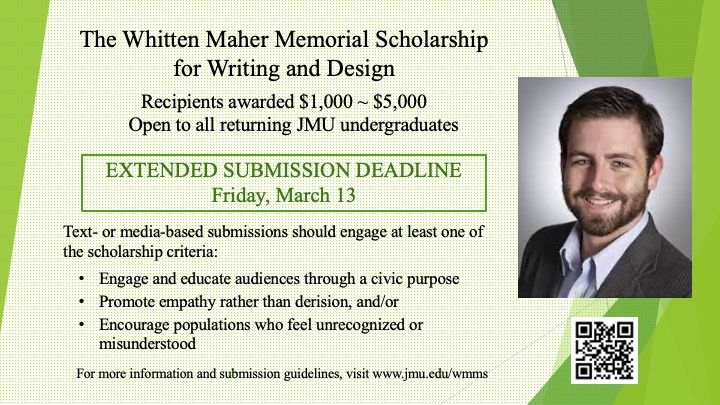
“It is the softer elements of Whitten’s character that I remember most fondly. He was at once understated and passionate… he had the extraordinary ability to stay true to his moral philosophy and still understand and empathize with the perspectives and beliefs of those with whom he didn't agree.”
These words from his friends and colleagues capture the quiet strength that defined Whitten Maher — a tenderness of heart guided by mighty ideals. Maher approached ideas with conviction, and people with care. In remembering Maher this way, his friends and colleagues point to the compassion and openness that shaped his life and work, work that continues to inspire the Whitten Maher Memorial Scholarship for Writing and Design (WMMS). For more than a decade, the scholarship has recognized student projects that reflect Maher’s commitment to empathy, thoughtful engagement, and meaningful dialogue across difference.
Throughout his 2007-2010 tenure as a Breeze contributing writer, columnist, Opinion Editor, and Design Editor, Maher highlighted the responsibility of using words to foster connection rather than division. Whether urging readers to care about the substance of public debate instead of media spectacle in Turn off the Media, or encouraging students in For You, Wherever You Are to “speak up in a sea of silence” to spark a dialogue, Maher’s columns model a form of principled engagement grounded in empathy and integrity. Across topics and audiences, he returned to one essential idea: communication must be intentional, sincere, and courageous.
In We’re Not Sorry, Really: The American Apology, Maher reflected on the limits of surface-level communication, writing, “To err is human, to forgive is divine and to apologize — soulfully and without reluctance to actually engage beyond ‘I’m sorry’ — well, that’s something we need to work on.” For Maher, words were never meant to be hollow gestures; they were meant to repair, to illuminate, and to connect. That conviction continues to shape the spirit of the WMMS Award, which celebrates undergraduate work, honoring the memory of the JMU alumnus whose life and promising future in writing and design were cut short on December 20, 2012. Maher’s legacy is evident in the work of this past year’s recipients, who approach difficult conversations and circumstances not with avoidance, but with care and courage.
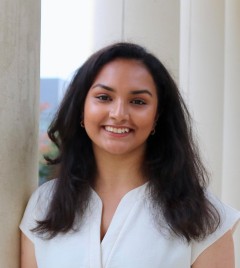 Iman Najeeb, a Pakistani and first-generation college student studying Health Services Administration with a Business Honors minor, became one of 20 JMU sophomores, juniors, and returning seniors to receive the WMMS award since its establishment in 2013. Najeeb applauds Maher’s spirit and values, saying, “I believe in building connection, empathy, and understanding, one conversation at a time. That’s something I believe Whitten Maher stood for, and it’s why my work feels so personal.”
Najeeb leads programs like Better Conversations Together: Deliberation at JMU’s Madison Center for Civic Engagement, where she prepared and presented the report Civic Outcomes From Deliberating Across Divides to help students engage in conversations about meaningful, but often difficult public issues. She aspires to highlight Whitten Maher’s legacy of using communication to build connections, and strives to promote empathy, understanding, and change in the community through dialogue.
 Jillian Kotin was also selected as a recipient of the WMMS Award for her essay, Life Without My Brother: A Family's Communication After Suicide. Kotin majored in Writing, Rhetoric, and Technical Communication and minored in Legal Studies, Family Studies, and British Media Communication. She served as a consultant in the University Writing Center and as an editor for the James Madison Undergraduate Research Journal.
In her deeply personal essay, Kotin reflects on how she and her family navigated the loss of her brother, exploring the ways their communication evolved in the aftermath of tragedy. Her work speaks to resilience, connection, and the importance of mental health awareness. As she writes, “I am incredibly inspired by Whitten Maher’s ability to empathize with those around him, and I constantly look to do the same. My goal was to educate on the realities of mental illness, suicide, and family grief.”
The 2025–2026 Whitten Maher Memorial Scholarship invites applications from all returning JMU undergraduates, whether enrolled full-time or part-time, across academic and extracurricular fields, genres, and media. Each recipient will receive a minimum award of $1,000 to be applied toward tuition for the upcoming academic year. Submissions rooted in writing and/or design should thoughtfully address one or more of the following themes:
- educate audiences through a civic purpose,
- promote empathy rather than derision, and/or
- seek to encourage populations who feel unrecognized or misunderstood
The extended 2026 application deadline is Friday, March 13. For detailed submission requirements, please visit the WMMS guidelines page. The site also features a selection of Maher’s Breeze columns in their original print format, along with remembrances from his JMU and Demos colleagues. For a more in-depth insight into Maher’s work, type “Whitten Maher” into The Breeze site’s search bar.


