

Study Abroad receives $100k in funding for winter programs
News


Over winter term, a record-breaking 149 students studied abroad on programs taking place in Brazil, the Caribbean, France, Ghana, Guatemala, Ireland, Jordan, South Africa, Sweden, and Taiwan. This group included 49 students whose studies were partially funded by a grant that JMU applied for and was awarded to expand Pell Grant-eligible students’ participation in high‑impact practices. The JMU Office of Financial Aid & Scholarships submitted the grant proposal to SCHEV to receive funds from the Pell Initiative for Virginia Program, and part of the approved grant allocation included more than $100,000 to fund study abroad scholarships. This award is part of an ongoing effort to increase accessibility of study abroad programming for all JMU students.
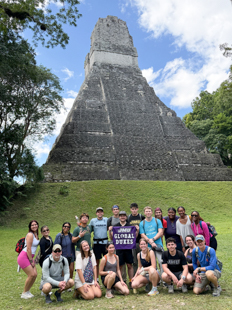
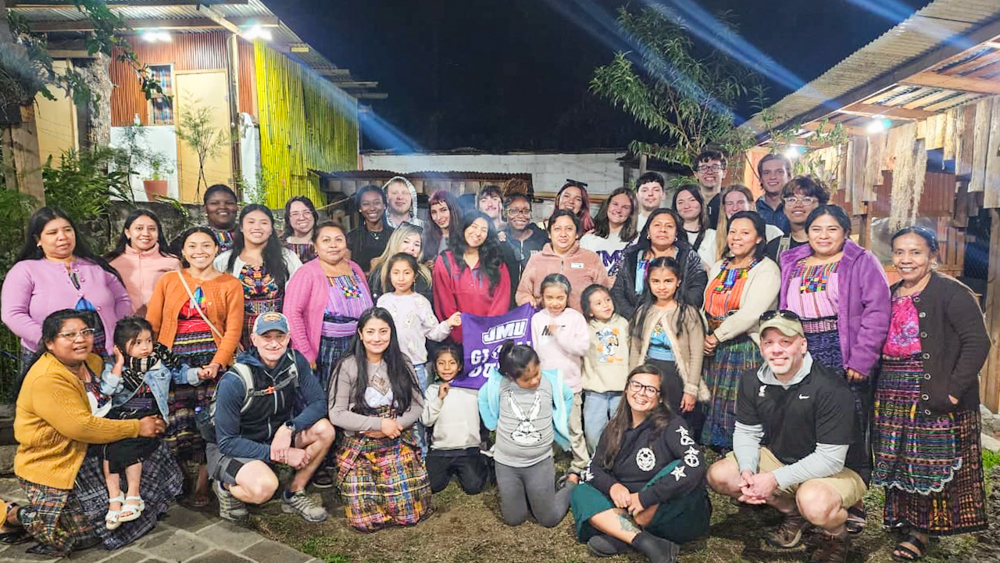
The program in Guatemala focused on history and culture, and is one example of how students' scholarship dollars have an exponential effect; not only did the scholarship money foster the opportunity for intercultural wonderment of JMU students, but the overall program expenses supported a local women-led cooperative designed to empower Indigenous women. IXACO Cooperative, based in San Juan La Laguna, uses textile weaving, small-business development, and community-based homestay models to support their mission. By combining economic opportunity with cultural exchange, the cooperative creates meaningful connections between local families and visiting students. Partnering with a local Guatemalan guide whose tours focus on sustainability and community development ensured that student and university program funds directly supported the Cooperative’s work and remained within the community of San Juan La Laguna.
The JMU students were able to live with the host families affiliated with the Cooperative, share meals, daily routines, and conversations, all experiences that offered insight into community values rooted in cooperation and gratitude. Shaun Mooney, the Executive Director of First-Generation Student Success and the Program Director of the Guatemala program, believes that through this homestay experience "students gained more than cultural exposure; they experienced an alternative way of organizing life that centers women's leadership, human interdependence, and cultural continuity." Jacob Clasen, a junior Kinesiology major, noted that “this wasn’t just learning in a classroom; it was learning by living alongside people.” Other students emphasized how these close interactions fostered gratitude, humility, and empathy, noting that even briefly sharing in others’ lived experiences turned their global understanding from jejune to in-depth and invaluable.
Mooney believes that "the days spent living alongside host families in San Juan La Laguna became the most lasting lesson of the program: that global learning is most powerful when it is relational, reciprocal, and rooted in community."


