

Q&A: New research questions the science behind cry-it-out sleep training
JMU Headlines


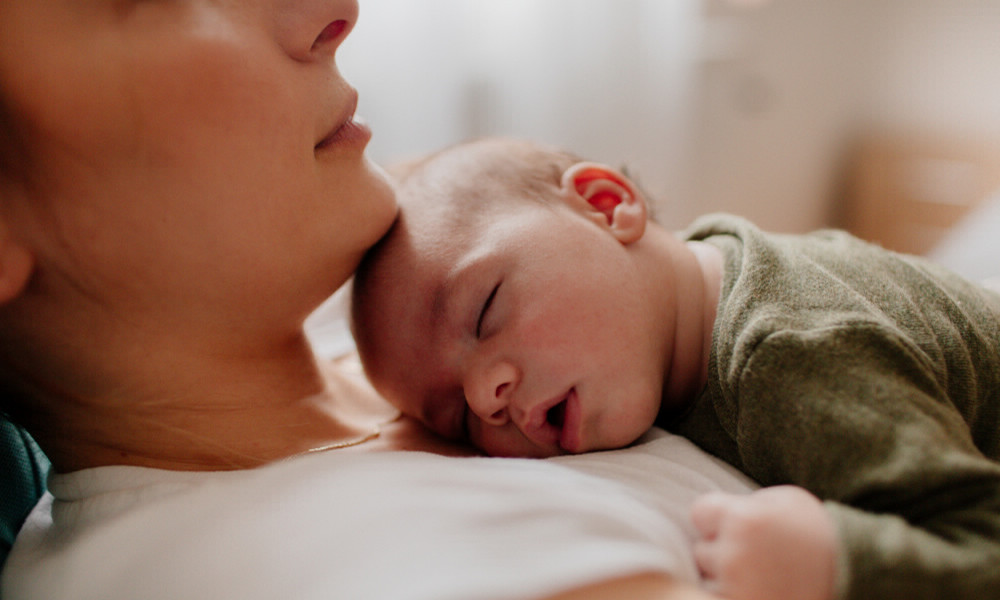
New research by Jennie Rosier, associate professor in JMU's School of Communication Studies, is challenging one of the most widely accepted parenting practices in the U.S.: cry-it-out sleep training.
In the book “Dispelling Cry-It-Out Sleep Training Myths and What to Do Instead,” Rosier and a team of interdisciplinary scholars argue that infant night waking is not a behavioral problem to fix, but a normal and developmentally expected part of infancy.
Q: What did your research into this topic reveal?
A: The research challenges the widespread assumption that cry-it-out sleep training is a necessary or developmentally appropriate solution for infant sleep difficulties. Drawing on evidence from psychology, neuroscience, anthropology, attachment theory, and infant development, the book argues that frequent night waking is a normal feature of infant development rather than a problem to be fixed. Our research team examined the historical origins of cry-it-out approaches, evaluated claims about their effectiveness, and explored how these methods may conflict with infants' biological and emotional needs. The book concludes by presenting evidence-based alternatives that support infant sleep while preserving caregiver responsiveness and attachment security.
Q: What evidence supports your findings?
A: The book synthesizes research from multiple disciplines rather than relying solely on sleep-training studies. Contributors examined developmental research showing that fragmented sleep and nighttime signaling are typical in infancy; attachment research demonstrating the importance of caregiver responsiveness during periods of distress; neuroscience findings related to stress regulation and brain development; and anthropological evidence regarding the caregiving environments in which human infants evolved. The book also provides a critical review of cry-it-out efficacy studies, highlighting methodological limitations and questioning whether reductions in crying necessarily indicate improved well-being or emotional self-regulation.
Q: How do the findings differ from common forms of sleep training or what pediatricians currently recommend?
A: Many mainstream sleep-training approaches begin with the assumption that infants should learn to sleep independently, and that caregiver responses to nighttime crying should be reduced or delayed to encourage self-soothing. The book challenges these assumptions by arguing that infant dependence, nighttime waking, and signaling for caregiver support are developmentally expected rather than problematic behaviors. While some pediatric advice emphasizes fostering independent sleep as early as possible, the book emphasizes responsiveness, co-regulation, and developmentally informed expectations about infant sleep. Rather than asking how to teach babies to need less support, the book asks whether infant sleep recommendations should be more closely aligned with what is known about human development and attachment.
Q: What practical advice can parents take away from the book?
A: One of the book's central messages is that parents do not need to choose between responding to their babies and getting better sleep. Parents are encouraged to develop realistic expectations about infant sleep, understand why night waking occurs, and recognize that sleep consolidation is a developmental process rather than a skill that must be trained. The book offers practical alternatives to cry-it-out methods, including strategies that support sleep through connection, responsiveness, environmental adjustments, and co-regulation. Ultimately, parents can take away the reassurance that infant sleep challenges are common, that frequent waking is often normal, and that there are evidence-informed approaches to improving family sleep without requiring babies to cry alone.
Q: Looking ahead, what do you hope changes in how parents, healthcare providers and society think about infant sleep?
A: I hope we move away from viewing infant sleep as a problem to be fixed and begin seeing it as a normal part of early human development. Babies are not designed to sleep like adults, and frequent waking, night feeding, and seeking comfort are biologically expected during infancy. When we understand infant sleep through the lens of development rather than independence, we can make decisions that are both evidence-based and compassionate.
I also hope healthcare providers receive more comprehensive training on the science of infant sleep, attachment and neurodevelopment. Parents deserve guidance that accurately reflects what the research tells us, not outdated assumptions or one-size-fits-all advice. Instead of asking, "How do we get this baby to sleep through the night?" I hope the conversation shifts toward, "How can we support this baby's development while also supporting the well-being of the parents?"
Ultimately, my hope is that parents feel empowered rather than pressured. There is no single "right" way to respond to a baby's sleep, but families should have access to accurate information so they can make informed decisions that align with both the science and their own values. When parents understand what is normal, they are far less likely to feel like they are failing and far more likely to trust themselves and their relationship with their child.


