


Monday, September 21, 2026
7:00pm
Forbes Recital Hall
featuring Sue Barber, bassoon; Lori Piitz, piano; Beth Chandler Cahill, flute; Šarūnas Jankauskas, clarinet; Ian Zook, horn; & Emily Brebach, oboe/English Horn (Atlanta Symphony Orchestra)
Please silence all electronic devices & dim screens.
Unauthorized videotaping or any other recording of this production is strictly prohibited in adherence with Federal copyright laws.
Program
Selections from Suite of Solo Pieces Op. 40 - Joseph Bodin de Boismortier (1689-1755)/trans. Sue Barber
Rondeau gracieusement
Rondeau
Menuets I & II
Emily Brebach, English horn; Sue Barber, bassoon
Doppler Effect - Adrienne Albert (b. 1941)
Beth Chandler Cahill, flute; Sue Barber, bassoon; Lori Piitz, piano
Trio for oboe, bassoon, and piano, FP 43 - Francis Poulenc (1899-1963)
Presto
Andante
Rondo
Emily Brebach, oboe; Sue Barber, bassoon; Lori Piitz, piano
--- INTERMISSION ---
Quintet in E-flat Major, K. 452 - Wolfgang Amadeus Mozart (1756-1791)
Largo, Allegro moderato
Larghetto
Allegretto
Emily Brebach, oboe; Šarūnas Jankauskas, clarinet; Sue Barber, bassoon; Ian Zook, horn; Lori Piitz, piano
French composer Joseph Bodin de Boismortier (1689-1755) was a prolific and highly successful composer whose works were largely intended for amateur musicians and were often adaptable to a variety of instrumental combinations. He wrote extensively for both the bassoon and the transverse flute, instruments for which he significantly expanded the available repertoire. Despite his remarkable productivity, Boismortier composed relatively few large-scale works.
The Suite of Solo Pieces, Op. 40, was first published in 1732 and was intended for performance by bassoon and violoncello, with optional basso continuo accompaniment. Boismortier also indicated that the pieces could be performed as solo works without the basso continuo. The suite consists of eight dances that were popular during the period, and they reflect the stylistic characteristics typical of Baroque dance forms, similar to those found in suites and partitas by many of his contemporaries. Originally written for bassoon(s) and cello or for two cellos, these pieces adapt well to the English horn, as presented in this performance.
Award-winning composer Adrienne Albert (b. 1941) has had her chamber, choral, vocal, orchestral, and wind band works performed throughout the United States and across the globe. She began composing her own music in the 1990s, and prior to her start as a composer she enjoyed a long career as a singer working with composers including Igor Stravinsky, Leonard Bernstein, Philip Glass, Gunther Schuller among others. Adrienne's own music has been supported by noteworthy arts organizations including the National Endowment for the Arts, American Composers Forum, Meet the Composer/Rockefeller Foundation, Subito Awards, Mu Phi Epsilon Fraternity, MPE Foundation, ACME, and ASCAP. A graduate of UCLA, Albert studied composition privately with Stephen Mosko, and orchestration with Albert Harris. Her music has been recorded on MSR, Naxos, Navona, Centaur, Little Piper, Albany, and ABC Records. Adrienne's publishing company is Kenter Canyon Music (ASCAP). Her music can also be found through Falls House Press, Flute World, Theodore Front Musical Literature, and TrevCo Music.
Albert's notes on Doppler Effect: "I had the notion of writing a piece based on the findings of an Austrian mathematician who observed the increase and decrease in the pitch of sound when the source and observer are getting closer or further apart came to me while traveling through Italy and hearing the myriad sirens passing by through the dense traffic. The motif descends by a minor second returning to the original harmony combined with the repeated minor seconds portraying the incessant sounds of car horns. The melodic lines portray the vibrancy and sensuality of the people in contrast to the craziness around them.
Francis Poulenc (1899-1963), French pianist, composer and member of the "Les Six;" a rebellious group of composers labeled as such in the 1920s through a loose association who drew inspiration from the creative ideologies of Eric Satie (1866-1925). Now considered to be one of the twentieth century's leading French composers, Poulenc's music during much of his lifetime was characterized as simple and accessible to unsophisticated listeners in contrast to trends of the period which included atonality and other experimental sounds and musical concepts.
"I know perfectly well," he wrote in 1942, "that I'm not one of those composers who have made harmonic innovations like Igor (Stravinsky), Ravel or Debussy, but I think there's room for new music that doesn't mind other people's chords."
Poulenc's style can perhaps best be defined by another statement he made about himself: "I'm a melancholy person who loves to laugh like all melancholy persons." As suggested by this paradox, there are contradictory threads that run through his music one of witty, sometimes sardonic humor and irony and a melancholy. Within these conflicting strains, his music is characterized using simple harmonies and dissonance and a sense of elegance with a gift for melody.
These traits are reflected in Poulenc's Trio for oboe, bassoon, and piano, his first major chamber music work written in 1926. It is dedicated to Manuel de Falla, the great Spanish nationalist composer, "to prove to him for better or for worse my tender admiration." The witty side of Poulenc's musical personality dominates the first and third movements, while the middle movement is melodic leaning toward melancholy. The first movement begins with a short operative recitative followed by an exuberant presto which is mainly light with a tender lyrical middle section. The second movement is an extended song for all players. The finale is a fast rondo, with a slight edge and an unexpected ending. The work may have been a catalyst that inspired many composers to write for this instrumental combination in the modern period. We find combinations of double reeds and keyboard instruments during previous musical style periods but there is a significant body of pieces for this ensemble in the modern period.
The Quintet in E-flat Major for Piano and Winds, K. 452 by Wolfgang Amadeus Mozart (1756-1791), was completed in 1784 and premiered later that same year with Mozart as the pianist. In a letter to his father Leopold, Mozart wrote that "I consider it the best work I have ever written..."
The Quintet was first presented int he spring of 1784, as part of a mammoth concert of Mozart's works entirely new or new to Vienna, in the capital's Burgtheater. The playbill listed a "Symphony with Trumpets and Drums" (probably the "Haffner," K. 385), a Piano Concerto (K. 451); the "Linz" Symphony; a group of piano improvisations by Mozart; and another symphony, possible the "Paris" (K. 297) of 1778, not previously heard in Vienna.
The Quintet is in the three-movement form similar to that of a concerto. The first movement is brief, with a slow, sonorous introduction, in which each of the five players is afforded lyrical solo statements, with a powerful concluding wind tutti over the piano. A gratifying surprise comes after only 20-odd measures have passed with the succeeding allegro, a tour-de-force of variety and inspiration, with each wind player given thei respective thematic moments. In this type of mixed ensemble Mozart chose to keep the individual statements brief and the piano serves as a partner to all. At this period in history the wind instruments were all undergoing significant changes in construction that allowed them to take leading roles in the orchestra so it's not surprising that they would find their way into the chamber music genre as well. The instruments are presented in pairs, in combinations of three, four, and five providing an interesting tapestry of colors through the various combinations. The second movement is a beautiful lyrical movement showing Mozart's gift for composing melodies and this presents a somewhat sadly sweet mellowness. The thematically filled rondo finale is the longest movement of the three, which concludes with a long cadenza for all five instruments.
Dr. Sue Barber
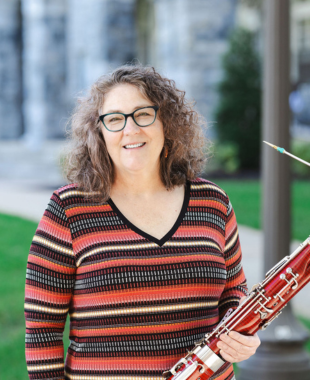 Sue Barber has served as Professor of Bassoon at James Madison University since 2000 and has been a member of the Artist-Faculty at the Brevard Music Center since 2004. An accomplished orchestral musician, she has performed with many of the leading artists of her generation in distinguished venues, including the John F. Kennedy Center for the Performing Arts, Carnegie Hall, and Lincoln Center.
Dr. Barber’s orchestral career has included positions with the Baton Rouge Symphony Orchestra, Natchez Opera, Acadiana Symphony Orchestra, Hartford Symphony Orchestra, Connecticut Opera, and Sarasota Opera. Internationally, she served as Assistant Principal Bassoon of the Orquesta Sinfónica de Galicia in Spain. She has also appeared as a regular substitute musician with the New Haven Symphony Orchestra, Rhode Island Philharmonic, New World Symphony, Florida West Coast Symphony Orchestra, and Santa Fe Chamber Orchestra. Additional festival appearances include the National Repertory Orchestra and the Banff and Sarasota Chamber Music Festivals.
An active freelance bassoonist, Dr. Barber currently performs with CityMusic Cleveland Chamber Orchestra, the Brevard Music Center Orchestra, and the North Charleston Pops! Orchestra. Her regional engagements have included performances with Opera on the James, the Richmond Symphony, the Roanoke Symphony Orchestra, and Opera Roanoke.
As a soloist, chamber musician, and educator, Dr. Barber has performed and presented master classes throughout the United States, Europe, Brazil, and China. She has also served as a Visiting Professor at the Jacobs School of Music at Indiana University, where she taught applied bassoon and presented master classes. Her appearances have included performances and presentations at the John F. Kennedy Center for the Performing Arts, International Double Reed Society Conferences, Virginia Music Educators Association Annual Conferences, the Midwest Clinic, the Meg Quigley Vivaldi Competition and Bassoon Symposium, National Flute Association conventions, and the International Alliance for Women in Music’s Annual Concert of Chamber Music by Women at the National Museum of Women in the Arts in Washington, D.C. She has appeared numerous times as a soloist and chamber musician at the Brevard Music Festival.
Dr. Barber earned a Bachelor of Music in Bassoon Performance from the Crane School of Music at SUNY Potsdam, a Master of Music from The Juilliard School, and a Doctor of Musical Arts degree from Louisiana State University.
Dr. Lori Piitz
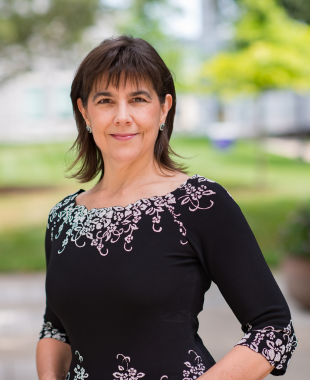 D.M., M.M. (Indiana University); BMus, (University of Ottawa, Canada); A.R.C.T., (Royal Conservatory of Music, University of Toronto), Certificate in Injury Preventive Piano Technique (Salem College). Piano professors with whom Dr. Piitz has studied include Menahem Pressler, Leonard Hokanson, Barbara Lister-Sink, Jean-Paul Sevilla, and Helgi Fatovic.
Pianist, Lori Piitz, has lived, performed and taught in both North America and Europe. Prior to moving to Virginia, Ms. Piitz lived in Germany for 9 years where she participated in recitals for the Wagner Society and the New Music Association of Germany, as well as at the International Flute Congress in Frankfurt. A frequent soloist with the Neusäss Chamber Orchestra, she also presented a cycle of Beethoven works for cello and piano, with Professor Helga Winold, in Munich and Augsburg. Ms. Piitz has been a guest at the Festival of the Sound in Canada, the Schleswig-Holstein and Villa Musica Festivals in Germany, and at the Mozart Bicentennial Series in Avery Fisher Hall, New York. She and her duet partner, Gabriel Dobner, have performed in Canada, Europe and the United States, including the Kennedy Center in Washington D.C. In 2006 they returned to Germany to present recitals commemorating the 250th anniversary of Mozart's birth.
Ms. Piitz holds a Bachelors degree in piano performance from the University of Ottawa where she was awarded the prestigious 'Isobel Firestone' performance scholarship. She received two full scholarships to the Banff Center of Fine Arts where she worked with Martin Isepp and Marek Jablonski. Ms. Piitz has been heard on both the French and English networks of CBC Radio, both as a soloist and chamber musician. She has been a winner in the Canadian Music Competitions (CMC) and was a finalist in CBC television's “Virtuoses en Herbe” Competition.
Since joining the piano faculty of James Madison University in 2002, Ms. Piitz has participated in the Contemporary Music Festival at JMU, the Bach Festival at EMU, the Richmond Chamber Music Festival and the Staunton Music Festival. Previous teaching engagements include the University of Ottawa, Indiana University, Eastern Mennonite University in Harrisonburg and the Augsburg/Nürnberg Hochschule für Musik.
Emily Brebach
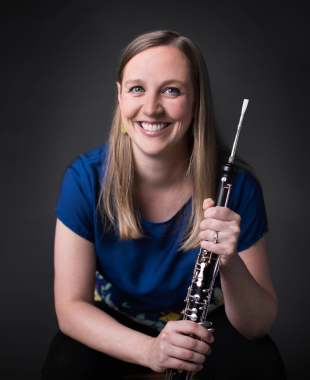 Emily Brebach joined the Atlanta Symphony Orchestra (ASO) as English horn and Oboe in the fall of 2012.
Dr. Beth Chandler Cahill
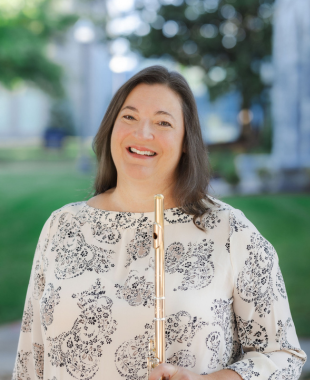 Beth Chandler Cahill, Professor of Flute, enjoys an active career as a soloist, chamber musician, orchestral player, and teacher. Praised for her musical versatility and colorful sound, Dr. Cahill has performed and presented at festivals throughout the United States and abroad, including engagements at National Flute Association Conventions, Mid-Atlantic Flute Conventions, the Midwest Clinic, and Música no Museu Festival Internacionale de Flauta, Oboé e Fagote in Rio de Janeiro, as well as universities nationwide.
As a soloist, she has performed at major venues throughout the world, including solo recitals at the John F. Kennedy Center for the Performing Arts in Washington, D.C., and the Portuguese Embassy in Rio de Janeiro, Brazil. She has won numerous awards and honors, including the top prize of the Flute Talk Competition, for which she was featured on the cover and in an interview in Flute Talk Magazine. Dr. Chandler has been a semifinalist in the Concert Artists Guild International Competition in New York City, National Flute Association (NFA) Piccolo Artist Competition, and the NFA Young Artist Competition, in addition to being a prizewinner in the NFA Masterclass Performers and Orchestral Audition Competitions. She has performed at the NFA Conventions in Orlando, Minneapolis, Washington, D.C., Las Vegas, Charlotte, New York City, Kansas City, Albuquerque, Pittsburgh, Columbus, Phoenix, Orlando, Boston, and Los Angeles. She has also been a featured performer at the Florida Flute Fair, Texas Flute Festival, and the Staunton Music Festival. She was the winner of the Myrna Brown Artist Competition and a recipient of the Mary Louise Remy Endowed P.E.O. Scholar Award. As a Fulbright Scholar, Dr. Chandler studied with Trevor Wye in Kent, England, as one of six students selected internationally. Other solo performances have included concerto appearances with the Dallas Chamber Orchestra, and closer to home, the James Madison University Symphony Orchestra, JMU Jazz Ensemble, and JMU Wind Symphony.
Prior to her faculty position at JMU, Dr. Cahill served on the faculty of the University of Florida, as a teaching assistant at the University of Cincinnati’s College-Conservatory of Music, and held teaching positions at the New England Conservatory Extension Division and the Boston Music Education Collaborative. Dr. Chandler maintained active private studios in Cincinnati, Boston, Waco, and Austin, Texas, in addition to presenting masterclasses and workshops throughout the United States. Her current and former students have enjoyed successes in regional, national, and international competitions, prestigious masterclasses and fellowships, as well as highly competitive summer programs, and have been accepted to top graduate programs. Many former students have attained college faculty and military band positions, jobs in public and private music education around the country, as well as internships and employment at arts centers and symphony orchestras nationwide. Dr. Chandler was honored to receive the 2016-17 JMU College of Visual and Performing Arts Distinguished Teaching Award.
She is a member of the Bluestone Winds, the faculty woodwind quintet in-residence at James Madison University. The ensemble performs both on and off campus, presents clinics in public and private educational settings, and has been featured at The Midwest Clinic in Chicago, the
Virginia Music Educators’ Association Conference, and in concert at the Kennedy Center. She frequently performs in various other chamber and large ensembles, including the Valley Wind Ensemble, as well as with regional orchestras.
She served as President of the National Flute Association from 2012 to 2014, having also served previously two years as Vice President. In addition to serving as a past member of the National Flute Association’s Board of Directors, she has also served as chair of the Commercial Members Committee, Nominating Committee, as a member of the Strategic Planning, Endowment, and Finance Committees, and as a judge for several of the NFA's annual competitions. She is the advisor for the JMU Flute Club and is also an active member of the Flute Society of Washington, for which she has served as Program Chair for the Mid-Atlantic Flute Convention.
A native Texan, Dr. Cahill received a Bachelor of Music magna cum laude from Baylor University as a student of Helen Ann Shanley, a Master of Music with Academic Honors from New England Conservatory, where she studied with Paula Robison, and a Doctor of Musical Arts in Flute Performance at the University of Cincinnati College-Conservatory of Music, with a cognate area in Arts Administration. Her other principal teachers include Jack Wellbaum (piccolo) and Trevor Wye.
She recently released TIME PLACE SPIRIT on the MSR Classics label, an album of music for flute and piano, with pianist Paulo Steinberg, which is widely available online and on CD. The stylistically broad program includes poignant works by Amirov, Chaminade, Karg-Elert, and Frazelle.
Beth Chandler Cahill joined the JMU School of Music faculty in 2001. She lives in the Harrisonburg, Virginia, community with her husband and twin teenage sons.
Please see bethchandler.com.
Dr. Šarūnas Jankauskas
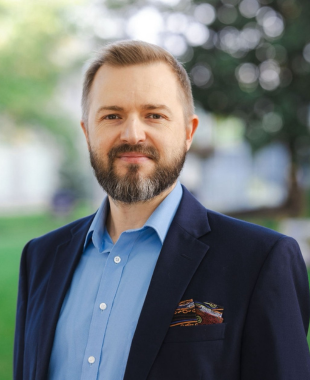 Clarinetist Šarūnas Jankauskas enjoys a rewarding performance and teaching career. Most of his professional activities take place at James Madison University in Virginia, where he guides an enthusiastic group of aspiring young musicians, teachers and entrepreneurs. Jankauskas joined the faculty in 2016 and is dedicated to exploring new ways of addressing playing techniques, expanding teaching literature and maintaining a highly positive learning environment. He is a recipient of the 2023 Madison Vision Teaching Award, a campus-wide recognition that is solely decided by the students.
His performance engagements have taken him through Europe, Canada, Brazil and various regions of the United States. Jankauskas appeared as a concerto soloist with Boulder Chamber Orchestra, Round Rock Symphony, numerous collegiate ensembles and collaborated with accomplished artists, including St. Petersburg and Jasper String Quartets, pianists Domenico Codispoti and Johan Botes. He participated at International Conservatory Week Festival (St. Petersburg, Russia), Musicalis Daunia (Italy), SoundSpace at Blanton, Chamber Music at the Barn, KNOB Festival of New Music, Electroacoustic Barn Dance, International Clarinet Association’s ClarinetFests®, College Music Society’s National Conference and various composer/new music symposiums. He also has been a fellow in prestigious summer programs: Sarasota Music Festival, New Music Workshop of Norfolk Chamber Music Festival, Round Top Festival-Institute and Texas Music Festival. His recent commissioning project focused on works for clarinet in various duo-partnership roles. After numerous premieres, it culminated in a digital and CD album Duos, released by Soundset Recordings in 2020. As a developing composer, Jankauskas has premiered a couple of his own works.
Dr. Jankauskas previously taught at Texas Lutheran and Wichita State Universities, in addition to serving as principal clarinetist of the Wichita Symphony Orchestra. He studied at the Academy of Music and Theatre in his native Lithuania, and, after moving to the U.S., received degrees from Grand Valley State University, Rice University and The University of Texas at Austin.
Visit Dr. Jankauskas’ YouTube playlist.
Ian Zook
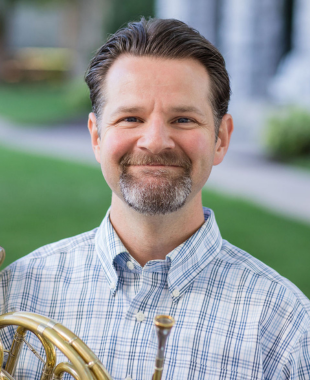 Ian Zook is an active orchestral and solo performer and has appeared in concerts throughout the United States, Europe, and Asia. He joined the faculty of James Madison University in 2009 and performs frequently with the Madison Brass and Montpelier Winds, both faculty ensembles in-residence at James Madison University. As soloist he has performed with numerous ensembles including the JMU Brass Band at the Kennedy Center, the JMU Wind Symphony, Percussion Ensemble, Chorale and KOR, the Charlottesville & University Symphony Orchestra, the Virginia Baroque Consort, and the Chamber Orchestra of Charlottesville.
Mr. Zook's orchestral experience is extensive and has included positions with the Princeton and Haddonfield Symphony Orchestras, and frequent performances as a substitute musician with the Philadelphia Orchestra, the Pennsylvania Ballet and the Harrisburg, Richmond, Roanoke, Delaware, and Vermont Symphonies. He has performed under many of the world's premiere conductors including Valery Gergiev, Charles Dutoit, Neemi Järvi, Michael Tilson Thomas, Rafael Fruhbeck de Burgos, Osmo Vänskä, David Zinman, Leonard Slatkin, Zubin Mehta, and James Conlon.
He has also presented numerous solo performances and lectures at universities, including Penn State, University of Michigan, Central Michigan University, Western Michigan University, UNC-Greensboro, Western Carolina University, Virginia Commonwealth University, and UNC – Chapel Hill, as well as the annual South East and North East Horn Workshops and International Horn Symposium.
Mr. Zook holds degrees from the University of North Carolina - Chapel Hill and the University of Michigan and attended the Verbier and Pacific Music Festivals, the National Orchestral Institute, Sarasota Music Festival, Aspen Music Festival, and the American Institute of Musical Studies in Graz, Austria.
Thanks for our generous Friends of the Arts & Design scholarship donors whose support allows our students to continue to create, perform, and inspire.
Arts & Design Hero ($5,000+)
- Patricia Gould & Hasan Karsiloglu
- Ann & Mark Siciliano
- Richard & Sue Orem
- Joshua & Trish Weinstein
Arts & Design Champion ($1,500-$4,999)
- Beth Chandler Cahill & Jim Cahill
- Jonathan Fox
- Rubén Graciani & Matt Pardo
- Marilou Johnson
- Matthew & Sarah Von Schuch
Arts & Design Advocate ($500-$1,499)
- John & Susan Allemeier
- Jerry Benson & Martha Ross
- Nancy Davis
- Patrick & Stephanie Driscoll
- Holly Haney & Bob Kolvoord
- Quillon Hall & Karin Tollefson-Hall
- Gina & Tom Holden
- Thomas McKenzie
Arts & Design Ally ($250-$499)
- Sue Agranoff
- Ellen & George Aschenbrenner
- Charles Boepple
- Reginald Bryson & Souha Khawam
- Eric & Jess Guinivan
- MiKyoung Lee
- Amy & Sean Myers-Payne
- Rebekah Noonan
- Cyndia & Dexter Taylor
- Heather & Theodore Tseng
- Bethany & Scott Vriesman
- Connie & Hugh Westfall
- Cecelia Wolf
- Diane & Leonard Young
Dear Patron,
Thank you for attending this School of Music performance, we appreciate your support! The JMU School of Music educates the most talented studnets from around the world to shape the fabric of society. We are ecstatic to showcase the talent and hard work of our students and faculty.
Scholarship contributions help young musicians blossom into mature artists. With your support, we will be able to offer our talented students more financial help in pursuing their goals. If you are interested in supporting our students' passion and dedication, please consider contributing to the Music Scholarship Fund at James Madison University by clicking the button below.