FLOW: French and Russian Piano Music
Tuesday, October 6, 2026
7:00pm
Forbes Recital Hall
Please silence all electronic devices & dim screens.
Unauthorized videotaping or any other recording of this production is strictly prohibited in adherence with Federal copyright laws.
This recital is given in partial fulfillment of degree requirements for a Doctor of Musical Arts. Denzel is from the studio of Dr. Gabriel Dobner.
Program
Suite in G Minor, RCT 6 - Jean-Philippe Rameau (1683-1764)
VII. Les sauvages
VIII. L'Enharmonique
IX. L'Egyptienne
Images Book I, L. 110 - Claude Debussy (1862-1918)
I. Reflets dans l'eau
II. Hommage à Rameau
III. Mouvement
Morceaux de fantasie, Op. 3 - Sergei Rachmaninoff (1873-1943)
III. Melodie (second version)
V. Serenade (second version)
Piano Sonata No. 5, Op. 53 - Alexander Scriabin (1871-1915)
Etude in F Major, Op. 111 No. 6 - Camille Saint-Saëns (1835-1921)
"Toccata d'après le cinquième concerto"
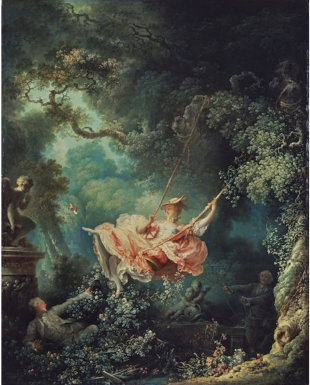
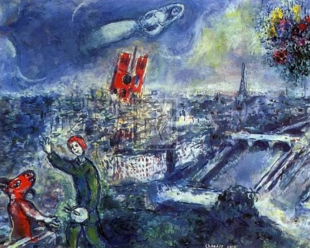
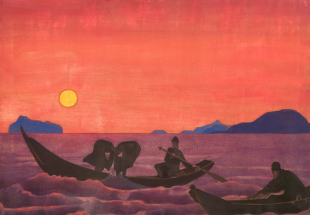
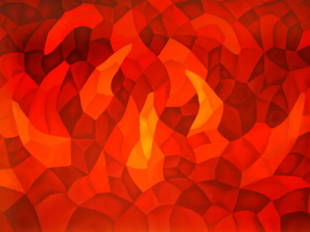
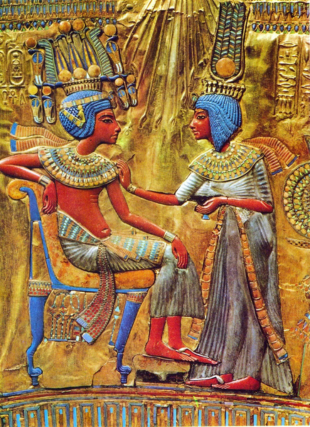
Paintings that accompany these pieces can be found at the bottom of the page. Click the image to see what musical selection corresponds to the art selection (they are in performance order).
When I conceptualized my second solo recital, I wanted to focus on repertoire in which I have not yet been fully immersed. When I looked at my repertoire list, I noticed a significant lack of French and Russian repertoire. I now aimed for this recital to highlight French piano solo works from the Baroque, Romantic, and Impressionist eras as well as Russian pieces from the Romantic and 20th century periods.
The title of the concert, FLOW, alludes to the connections between the pieces I chose to program. The French translation, courant, alludes to the multiple dances present in my program. I open with Jean-Philippe Rameau, a French composer and theorist who displayed the brilliance of the French clavecin school in his suite. For one of the dances, L’Enharmonique, he writes, “the effect experienced in the Reprise may not be to everyone’s taste right away: one can… even grow to awareness of all its beauty once the initial aversion.” Rameau alludes to one of the greatest “rule-breakers” in French repertoire, Claude Debussy. Debussy pays homage to Rameau by writing the second movement in his Images Book I as a sarabande, a slow, stately dance which Debussy infuses with his inventive approach to harmony and color.
The stage lights allude to Russian composer Alexander Scriabin’s clavier à lumières or “keyboard of lights.” Scriabin claimed to be a synesthete, a person who can see color when hearing sound. Because his synesthetic system involved changing colors based on keys (which probably would have meant rapidly changing lights on my faster pieces), I reimagined Scriabin’s idea. I selected one painting for each of the composers that I found fitting for each set. I then worked with the Forbes crew to select dominant colors to be flashed on stage, creating an impression of each painting through light. (You can see each painting below.) Scriabin’s fifth sonata alludes to his concept of light through sound, specifically through his marking con luminosita “with brightness” in one of the sonata’s brilliant climaxes.
As we finalized the program, I needed to select pieces that reflect my own personality, so I turned to Sergei Rachmaninoff and Camille Saint-Saëns. Rachmaninoff’s Melodie comes from his Morceaux de fantasie (Fantasy Pieces), the same set the contains his famous Prelude in C-sharp Minor. I found it fascinating that he only rewrote two movements from that early set. The music begins with a beautiful, tender melody on the tenor line (which I found myself singing every time I practice the piece). On the other hand, Camille Saint-Saëns’ Etude in F Major is probably the most exciting and joyful piece in this recital. The themes from this etude comes from the third movement of his fifth piano concerto, dubbed the "Egyptian". Aside from the titles, both Rameau’s L’Egyptienne and Saint-Saëns’ etude contain virtuosic displays of technique, particularly hand crossings.
I hope you enjoy my selections for this evening’s recital. I sincerely thank my professor, Dr. Gabriel Dobner, for his constant support and encouragement. I also thank the Forbes staff for their dedication and hard work.
Thanks for our generous Friends of the Arts & Design scholarship donors whose support allows our students to continue to create, perform, and inspire.
Arts & Design Hero ($5,000+)
- Patricia Gould & Hasan Karsiloglu
- Ann & Mark Siciliano
- Richard & Sue Orem
- Joshua & Trish Weinstein
Arts & Design Champion ($1,500-$4,999)
- Beth Chandler Cahill & Jim Cahill
- Jonathan Fox
- Rubén Graciani & Matt Pardo
- Marilou Johnson
- Matthew & Sarah Von Schuch
Arts & Design Advocate ($500-$1,499)
- John & Susan Allemeier
- Jerry Benson & Martha Ross
- Nancy Davis
- Patrick & Stephanie Driscoll
- Holly Haney & Bob Kolvoord
- Quillon Hall & Karin Tollefson-Hall
- Gina & Tom Holden
- Thomas McKenzie
Arts & Design Ally ($250-$499)
- Sue Agranoff
- Ellen & George Aschenbrenner
- Charles Boepple
- Reginald Bryson & Souha Khawam
- Eric & Jess Guinivan
- MiKyoung Lee
- Amy & Sean Myers-Payne
- James & Virginia Newman
- Rebekah Noonan
- Cyndia & Dexter Taylor
- Heather & Theodore Tseng
- Bethany & Scott Vriesman
- Connie & Hugh Westfall
- Cecelia Wolf
- Diane & Leonard Young
Dear Patron,
Thank you for attending this School of Music performance, we appreciate your support! The JMU School of Music educates the most talented studnets from around the world to shape the fabric of society. We are ecstatic to showcase the talent and hard work of our students and faculty.
Scholarship contributions help young musicians blossom into mature artists. With your support, we will be able to offer our talented students more financial help in pursuing their goals. If you are interested in supporting our students' passion and dedication, please consider contributing to the Music Scholarship Fund at James Madison University by clicking the button below.