



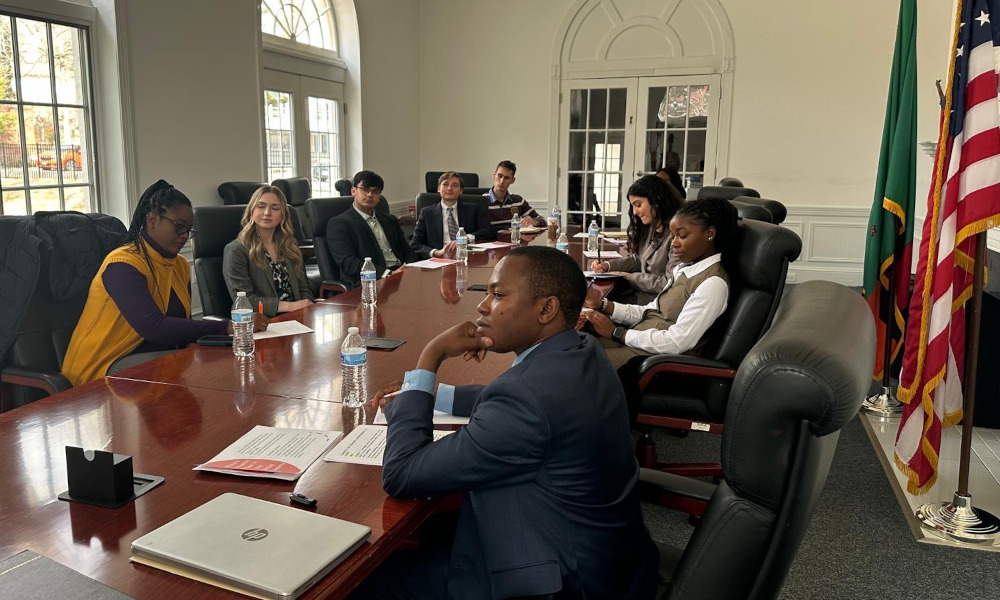
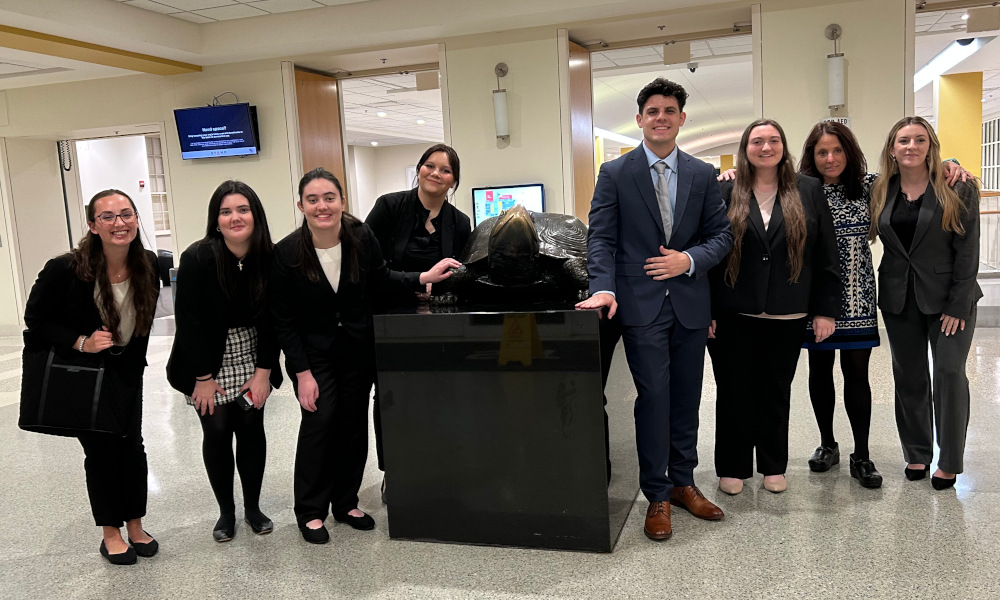

JMU’s Pre-Law Program encourages students to explore and develop their talents and interests under the guidance of a network of pre-law advisors. Advisors are available to discuss a range of topics, including considering law school, exploring legal career paths, seeking out community service, leadership, and internship opportunities, studying for the LSAT, preparing an application strategy, developing a personal statement, and financing legal education.
Pre-Law students can (and do!) pursue any field of study. There is no recommended major or minor for law school. Students who want to take courses that examine law from a variety of perspectives can pursue a minor in Legal Studies, but a pre-law pre-professional preparation can be paired with any major or minor.
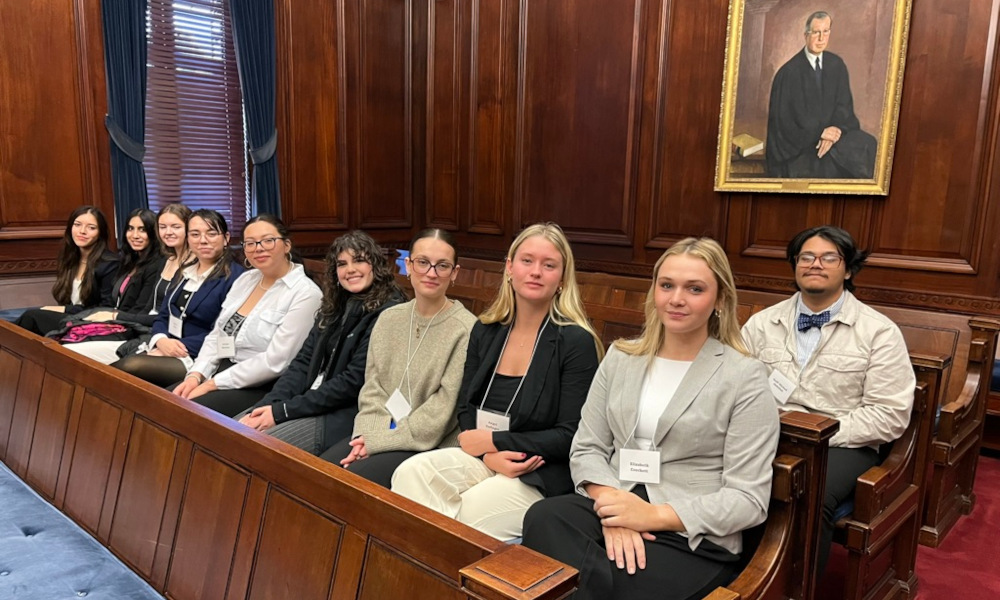
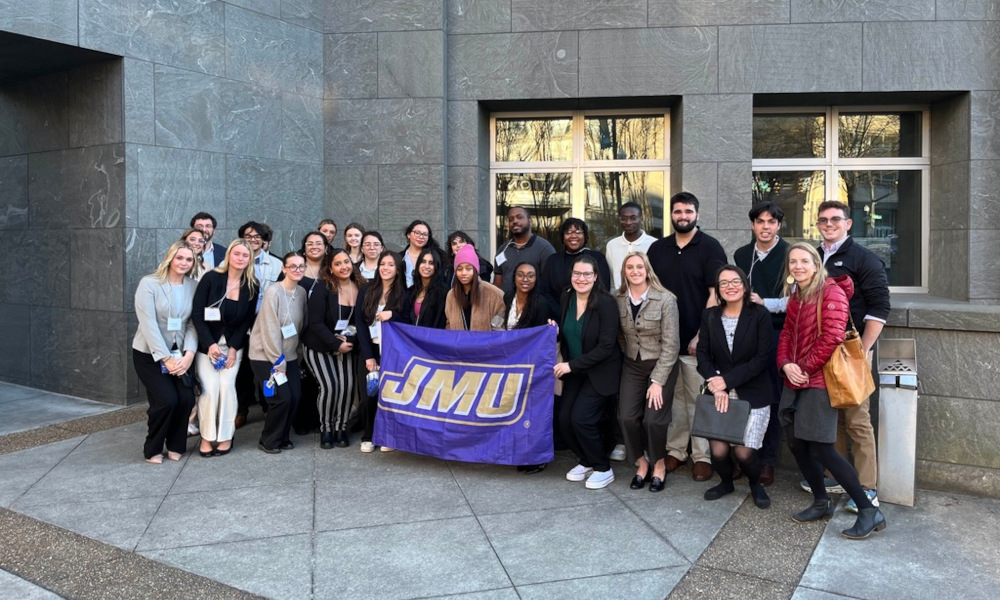
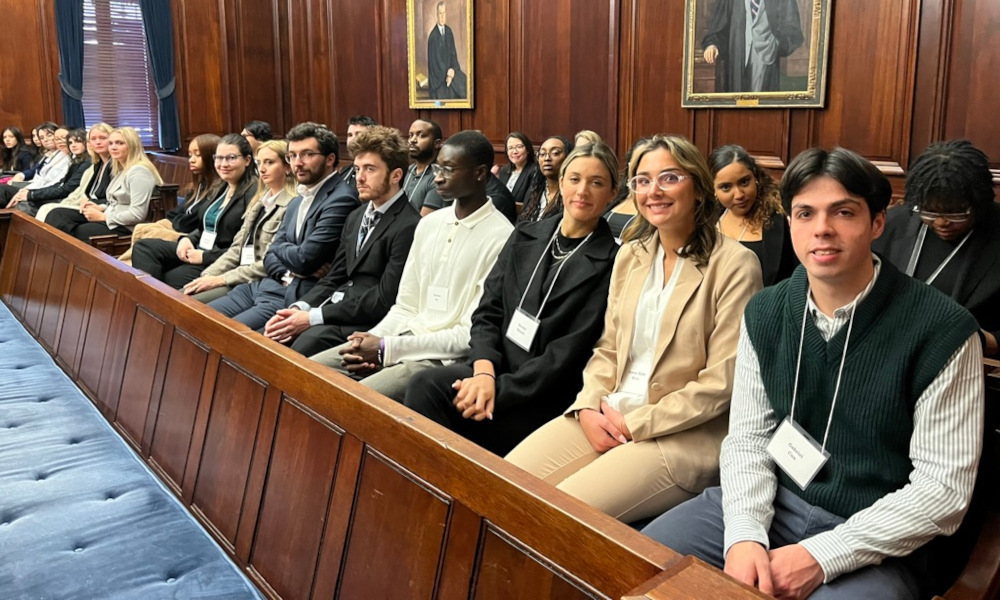
In addition to advising, JMU’s Pre-Law Program offers a range of programming and opportunities to students including career treks, student organizations like moot court and mock trial, alumni connections, and a scholarship for unpaid law-related internships.

Current Students
JMU’s Pre-Law Program is open to all students who are considering law school and interested in exploring legal careers. You can pair pre-law with any major. To receive updates on programming and campus events and to access the Pre-Law Canvas site, please register for the Pre-Law Pre-Professional Preparation through MyMadison. Follow these instructions for how to add a minor (even though Pre-Law is a pre-professional preparation).
Individual advising is a key part of the pre-law program. You should reach out to an advisor whenever you have questions. Advisors can help you explore legal careers, prepare for law school, and apply to law school.
Students interested in the Legal Studies minor can register for the minor through MyMadison. The cross disciplinary legal studies minor offers an interdisciplinary program of study that will give students the opportunity to examine law from a variety of perspectives.
In addition to individual advising, JMU’s Pre-Law Program offers a range of opportunities to enhance your undergraduate experience and prepare for law school and a legal career. These include:
- Career treks to observe court, meet with judges and lawyers, and explore different legal career pathways
- Alumni panels and networking and mentorship opportunities organized by our Alumni Law Board
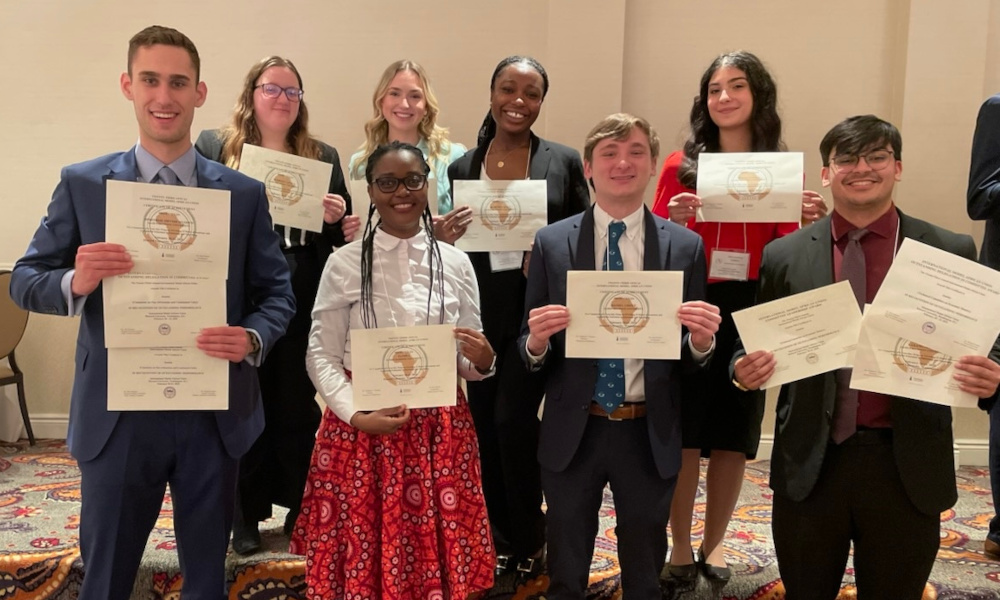
- Moot Court team that participates in American Moot Court Association (AMCA) organized competitions and mock trial club
- Phi Alpha Delta, a co-ed pre-law fraternity that provides professional development activities and social opportunities
- Scholarship for unpaid law-related internships
Prospective Students
JMU’s Pre-Law Program is open to all students who are considering law school and interested in exploring legal careers. Pre-law students can enroll in any JMU major. We follow the recommendations of the American Bar Association, which does not advise any particular major and suggests selecting an area of study that interests and challenges you and develops your research, writing, and critical thinking skills. No matter what you decide to study, individual advising helps you select courses and experiences that prepare you for law school and a legal career.
In addition to individual advising, JMU’s Pre-Law Program offers a range of opportunities to enhance your undergraduate experience and prepare for law school and a legal career. These include:
- Career treks to observe court, meet with judges and lawyers, and explore different legal career pathways
- Alumni panels and networking and mentorship opportunities
- Moot court team that participates in American Moot Court Association (AMCA) organized competitions and mock trial club
- Phi Alpha Delta, a co-ed pre-law fraternity that provides professional development activities and social opportunities
- Scholarship for unpaid law-related internships


